
























Trident Travel is your complete fly fishing travel service. We offer incredible fly fishing destinations around the globe, with new locations being added frequently. With Trident, you'll get our low-price guarantee, and you'll never pay any credit card or booking fees. For a limited time, you'll even earn reward points on every trip you book! If you find this review informative, please consider booking your next fly fishing trip through Trident Travel to support our reviews.
Back in May, I returned to one of my favorite destinations on the globe: Turneffe Atoll. Our Trident-hosted group spent May 16-23 at Turneffe Flats Lodge, with 11 anglers fishing six skiffs over six full days.
I had been anxiously awaiting this trip all winter. There is always something special about returning to a place you know well, seeing familiar faces, and sharing the experience with anglers who are seeing it for the first time. This year's group was particularly fun, with anglers ranging from experienced saltwater fishermen to a handful of college-aged guys on their first real flats trip.
By the end of the week, anglers had caught their first Bonefish, Tarpon, Barracuda, and Permit. We had a father and son land Permit just minutes apart, another guest catch a Bonefish while standing next to the swimming pool, and a crew of young anglers who somehow still had enough energy after a full day on the flats to throw poppers from the dock well into the wee hours.
We also had some challenging moments. The wind blew hard early in the week, the migratory Tarpon weren't around in the numbers we had expected, and the Permit behaved like Permit tend to behave anywhere in the world.
In other words, it was a pretty realistic week of saltwater fly fishing, and an excellent reminder of why I love Turneffe so much.
Traveling to Turneffe Flats
Getting to Belize is relatively easy for North American travelers. On this year's trip, we had anglers traveling from the American West, Midwest, South, New England, and Calgary, Alberta.
Our Canadian friend had the most adventurous journey. Their plane departing Calgary hit a bird and had to reroute midflight, but fortunately everyone still made it to Belize City in time for our scheduled transfer to the lodge.
I always arrive in Belize one day early. International travel has enough variables that I would rather spend an extra night in Belize City than risk missing the lodge transfer and losing fishing time. I've enjoyed staying at the Fort George Hotel, which is only a couple of blocks from the marina where we board the transfer boat. It has a pool, restaurant, and everything you really need to relax after a day of flying.
The boat ride from Belize City to Turneffe Atoll takes roughly 90 minutes. It can get bumpy when the trade winds are blowing, so I recommend having Dramamine handy if you're prone to seasickness. This year's crossing was smooth sailing.
When we arrived, lodge managers Angel and Johnny (who is new to Turneffe Flats for 2026), were there to greet us. Johnny is Belizean and has spent years working in hospitality management. Turneffe has always done an excellent job hiring good people, and one thing I appreciate about the lodge is how many staff members stay there for years. Angel has been part of the Turneffe family for his entire life!
Our luggage was taken to our rooms while everyone gathered in the main lodge for cocktails, appetizers, and a short welcome briefing.
One of the things I like to do on hosted trips is get everyone's rods rigged the evening before the first fishing day. The guides are happy to help in the morning, but I'd rather take care of leaders and flies while everyone has a drink in hand than burn valuable fishing time the next morning.
By bedtime, we had a small armory of Bonefish, Permit, Tarpon, and Barracuda rods ready to go.
Day 1: Exploring the Atoll With Chris Encalada

I fished the week with guide Chris Encalada, and due to the odd number of anglers in our group, I had his skiff to myself on the first day.
Normally, I'll pair myself with another solo angler during a hosted week and give that guest as much bow time as possible. If we're wading, I'll often head off on my own while the guest fishes with the guide. Having the boat to myself for a day was unusual, but it gave me a great opportunity to get to know Chris better, learn his guiding style, and shake some rust off my saltwater casting.
Chris grew up on Turneffe Atoll at a lobster camp. As a kid, he remembers seeing some of the first fishing guides working the Atoll and telling his dad that someday he wanted to become one himself. When he turned 16, that's exactly what he did. He’s now been guiding on Turneffe for over 20 years. During the week, we even stopped to talk with lobstermen working from the same camp where Chris grew up. Fittingly, the camp looks out over one of my favorite Permit flats.
Chris is all business on the skiff. He's quiet, observant, extremely knowledgeable, and takes putting his anglers on fish seriously. I managed to get him laughing a handful of times during the week, but when there were fish spotted, his focus immediately went back to the water. I really appreciated his style. He doesn't just point at fish. He pays attention to your casting, presentation, and technique and will tell you what needs to improve. He loves hunting Permit and Tarpon, but he's equally willing to spend an afternoon chasing Bonefish, Triggerfish, or whatever else interests you.
Our first day covered water I had never seen on previous Turneffe trips, looking for Tarpon and Permit, and building a rapport. That became a theme for my week. Despite having been to Turneffe several times, I realized there was still an enormous amount of the Atoll I had never explored.
Days 2-4: Belly Laughs With Chris T.
For the rest of the week, I shared the skiff with Chris T., a solo angler who had joined us from Calgary.
Chris is a strong angler who has traveled quite a bit and had previous experience fishing for large Tarpon in Costa Rica and Cuba. For his first visit to Turneffe, however, he wanted to experience the diversity of the fishery rather than dedicate six straight days to one species. That's exactly what I recommend for most first-time Turneffe anglers. Over the next several days, we bounced between Tarpon channels, Permit flats, and the ocean-side fringe reefs for Bones and Triggers.
The wind was howling early in the week, with gusts over 20 mph at times. That made fishing the exposed ocean side difficult, but one of Turneffe's major advantages is the amount of protected water available. The western, leeward side of the Atoll and the extensive network of lagoons gave us plenty of options. Each day, the wind dropped a little more. By the end of the week, we had little more than a comfortable breeze and beautiful conditions across nearly every part of the Atoll.
Chris T. and I got along extremely well. Sharing a skiff is a lot more fun when everyone can laugh at themselves, and we spent plenty of time doing exactly that.
We had four or five legitimately good Permit opportunities during the week. Some casts missed the mark, some fish spooked, and one Permit followed Chris's fly for several agonizing seconds before deciding that something wasn't quite right. That's Permit fishing!
If you dedicate an entire week to Permit at Turneffe, the healthy population generally gives you opportunities. When you're dividing your time among several species, getting a handful of quality shots at Permit is a successful week in itself.
Our “Team Tarpon”
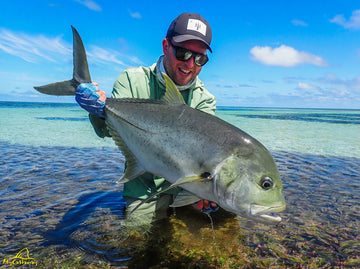
A memorable moment came on Day 4 while we were poling the far northwestern side of Turneffe. Chris T. was on the bow holding a 9-weight rigged for Permit when a large Tarpon suddenly rolled just off the boat. I was already holding an 11-weight Atlas with a black Durabrush ready to fire.
There wasn't time for Chris to put down the Permit rod and grab the Tarpon setup, so he immediately waved me onto the bow.
I hopped up, flipped the fly toward the fish, and almost before I understood what was happening, the Tarpon engulfed it. Chaos followed.
The fish exploded out of the water only a few meters from the skiff, then tore off across the flat. Within moments, it appeared to be 200 yards away. I never get tired of seeing how quickly a big Tarpon can separate an angler from his fly line.
The next 20 minutes or so were a serious slog. I slowly worked the fish back toward us, bowing through several more jumps and trying to apply as much pressure as possible.
As the fish finally came boatside, Chris anchored the skiff, jumped into the water, and grabbed it. A quick photo followed with our "Team Tarpon" before we sent the fish on its way.
I call it Team Tarpon because, realistically, that should have been Chris T.'s fish. He was on the bow. But saltwater fishing doesn't always give you time to make things perfect. He had the wrong rod in his hand, I had the right one, and the Tarpon wasn't going to wait around while we reorganized the boat. We simply reacted to the situation we were given.
There's a practical lesson there as well. When fishing somewhere like Turneffe, where a Permit, Tarpon, or Barracuda can suddenly appear, it pays to have multiple rods rigged, stripped out, and ready to cast. Sometimes you have only a few seconds to make a decision. Being a good boat partner means managing your buddy’s line and keeping secondary rods stripped out and ready for a quick handoff if needed.
That night, we celebrated over blackened snapper, Belikins at the bar, and NHL playoffs streamed from my laptop. I may be on a remote island in the Caribbean, but I'm still not missing an Avalanche playoff game if I can help it.
Bonefish, Triggers, and the Value of Variety

The final two days brought more fun moments, and the best wind conditions of the trip.
Chris T. jumped several Tarpon and put the hammer down on Bonefish. We continued looking for Permit whenever we were in the right water, but never sealed the deal.
The Bonefishing throughout the week was typical Turneffe.When the tide is moving and the fish are comfortable, Turneffe's Bonefish can be relatively forgiving by saltwater standards. At other times, they'll remind you very quickly that they're still Bonefish and can be finicky, especially the big ones.
We fished them both from the skiff and on foot depending on the flat and the footing. In the boat, Chris T. and I generally took turns. Catch one, miss a couple of shots, and hand over the bow. When we waded, I usually sent Chris T. with Chris Encalada and headed in the opposite direction on my own. I spent quite a bit of those wading sessions looking for Triggerfish.
Triggers are one of my favorite flats species and are overlooked by many anglers visiting Belize. Along Turneffe's ocean-side fringe reefs, you'll find them cruising and feeding across the coral flats.
They're highly visual, easy to spot, extremely spooky, and just all-around challenging. You need to move quietly, get yourself into the right position, and make an accurate cast without sending the fish racing toward the reef. They're also excellent practice for Bonefish and Permit. I had tons of shots during the week and proceeded to blow essentially all of them.
I also saw quite a few large Parrotfish while wading the reef flats. They're even more cautious than the Triggers, but they do eat small crustaceans and can be caught on fly. Landing one at Turneffe has become a personal goal of mine.
Some of my favorite memories from the entire trip weren't from the skiff at all. They were simply standing out on those enormous coral flats, listening to waves break on the reef only a short distance away and looking across what feels like an endless expanse of water. There are moments when I wish those wading sessions would never end.
A Very Good Week for the Rest of the Crew
Back at the lodge each evening, the stories started rolling in from the other five boats. Bonefish were caught throughout the group, along with Tarpon, snapper, plenty of Barracuda, and one particularly memorable pair of Permit.
The Hagins, a father and college-aged son, were on their first real flats trip. The son had primarily trout fished before Belize, while his dad had some redfish and bluewater experience but hadn't done much traditional flats skiff fishing. They listened to their guide “Dubs”, they made tricky shots in the wind, and landed Permit only minutes apart.
The younger guys in particular developed an affinity for Barracuda. Cudas are one of the most underappreciated fish on a flats trip. They get big, they're incredibly aggressive, and they'll crush baitfish patterns and poppers. For younger anglers, or anyone interested in mixing some conventional tackle into a flats week, they're a fantastic target. They can also save a difficult day when Permit, Tarpon, and Bonefish aren't cooperating.
Most of the guys caught Barracuda throughout the week, and the fishing didn't always stop when the skiffs returned to the dock. Our group included several dads and college-aged sons, and those guys brought a ton of energy to the lodge. Every evening, they were out on the dock casting poppers under the lights after everyone else had retired to bed. They caught multiple Cudas after dark, including a giant that required Johnny's help to safely release. They were throwing a combination of Yo-Zuri conventional poppers and Bob's Bangers with wire bite leaders. Apparently six full hours on the flats wasn't quite enough fishing for them!
My favorite Bonefish story of the week may have been even less conventional. One afternoon after fishing, several of the dads were relaxing in the pool when they noticed a school of Bonefish tailing on the lodge's home flat. One of them hopped out, grabbed an 8wt, and started casting from the seawall. A few shots later, he hooked up. Another dad helped land the fish, and somewhere there is now a fantastic photo of a very happy angler standing on the seawall in his swim trunks holding a Turneffe Bonefish. It's difficult to imagine a better advertisement for the lodge's location.
What’s New at Turneffe Flats Lodge in 2026

I've written extensively about Turneffe Flats Lodge in previous trip reports, and the fact that I don't have a huge list of changes to report is a good thing. This is already an extremely well-oiled program.
One noticeable improvement for 2026 is the addition of Seadeck foam decking to the lodge's Dolphin skiffs. Anyone who has spent six days standing on the bow of a flats boat will appreciate the difference. The softer surface is noticeably more comfortable on your feet, knees, and back over a full fishing day.
Otherwise, Turneffe continues to make small improvements behind the scenes without changing what already works. The food remains excellent without trying too hard to be fancy. It tastes like good home cooking, and with an all-Belizean kitchen staff, plenty of local flavor works its way onto the menu.
Conch fritters are always one of our favorite appetizers, steak night remains popular, and fresh fish dishes like blackened snapper are exactly what I want after being on the water. I put Marie Sharp's hot sauce on just about everything, and fortunately, the gift shop sells bottles, so you can bring the habit home with you.
Understanding the Migratory Tarpon Window
One of the more interesting lessons from this trip involved migratory Tarpon. We often talk about the seasonal timing of migratory species as though fish have calendars. In reality, migration windows are educated predictions, not guarantees. Two years earlier, our April hosted group encountered good numbers of large migratory Tarpon in Turneffe's deeper channels and cuts. This year, even though we were fishing in the second half of May, the big fish were noticeably harder to find. Everyone around the lodge seemed to be seeing the same thing. There simply weren't many large Tarpon rolling.
Our roughly 80-pound fish was the clear exception. Most of the other Tarpon we encountered were in the 40- to 50-pound class, which is toward the upper end of what I would consider Turneffe's resident fish. Interestingly, reports later in the summer suggested that the migratory fish had simply arrived late. As recently as early September, several guests Turneffe guides have told me they were still seeing great numbers of big Tarpon around the Atoll.
Water temperature, currents, wind patterns, bait movements, and countless other variables can affect when migratory fish arrive and leave. The spring of 2026 saw cooler water conditions around Turneffe, influenced in part by persistent winds and ocean currents, and the Tarpon timetable appears to have shifted accordingly.
I still favor April and May at Turneffe.The weather is generally comfortable, temperatures haven't reached the peak summer heat, and the risk of major tropical weather is lower than later in the season. I would normally expect increasing numbers of migratory Tarpon by May, but this year's trip was a good reminder that nothing in nature is guaranteed. That's also why I encourage anglers not to build a Turneffe trip around one species unless they're comfortable accepting the consequences. Come prepared to chase Tarpon, Permit, Bonefish, Barracuda, Triggerfish, and whatever else the Atoll gives you. Stay flexible and listen to your guide.There is almost always something interesting to fish for!
A Bigger Atoll Than I Realized
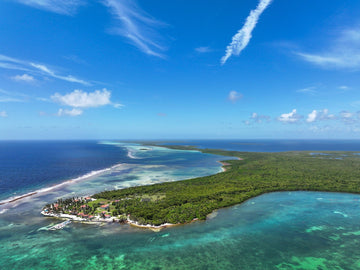
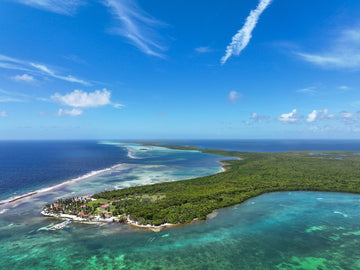
Despite having fished Turneffe several times, this trip changed my perspective on the fishery. The windy conditions early in the week pushed us into different areas, and by the end of six days, it felt like we had nearly circumnavigated the entire Atoll. Turneffe is enormous.
There are lagoons, mangrove shorelines, deep channels, oceanside reef flats, protected western flats, cuts, bays, and seemingly endless stretches of water that can hold fish. More importantly, the habitat appears incredibly healthy. Bonefish pushing across flats, Permit tailing, Tarpon rolling, Barracuda waiting in ambush, Triggerfish and Parrotfish working the reef, rays, sharks, baitfish, birds, and miles upon miles of healthy mangroves. The mangroves and shallow nursery habitats are a huge part of what makes a fishery like Turneffe so reliable year after year.
Angling pressure also remains remarkably low relative to the sheer size of the Atoll. Belize's fisheries protections, the work of organizations like the Turneffe Atoll Trust, and decades of conservation advocacy from Turneffe Flats owners Craig and Karen Hayes have all played a role in protecting this ecosystem and Belize's flats species. Having fished a good number of flats destinations around the world, I don't take that for granted.Turneffe is a very special place.
Final Thoughts

Our final evening was exactly what you hope for at the end of a hosted trip. There were tired faces around the lodge, plenty of sunburn, a week's worth of fishing stories being retold, and already some talk about doing it all again next year. The staff put together another great final dinner, we had a few last drinks, and eventually everyone wandered back toward their rooms to start packing for the morning boat ride to Belize City.
When I think about this trip now, lots of memories come to mind. the team Tarpon, the father-son Permits, the poolside Bonefish, and a group of college kids throwing poppers into the darkness long after the rest of us had called it a night.
I'll return to Turneffe for as long as I'm able, and I hope you'll join us to see what makes this little corner of the Caribbean so special.
Trident will return to Turneffe Flats Lodge for another hosted week May 15-22, 2027, with very limited availability.
If you'd like to learn more about Turneffe Flats Lodge or join us on a future trip, give us a call at 888-413-5211 or drop us a line at [email protected].
Comments
(0)No comments yet. Be the first!