

Seychelles
Cosmoledo Atoll
Request a Reservation
Thanks for your interest in Cosmoledo Atoll. Fill out the form below and our team will contact you shortly to discuss availability and details.
Email the travel team
How do you want to send it?
We've written the email for you. Add your dates and it's ready to send.
Trip Summary
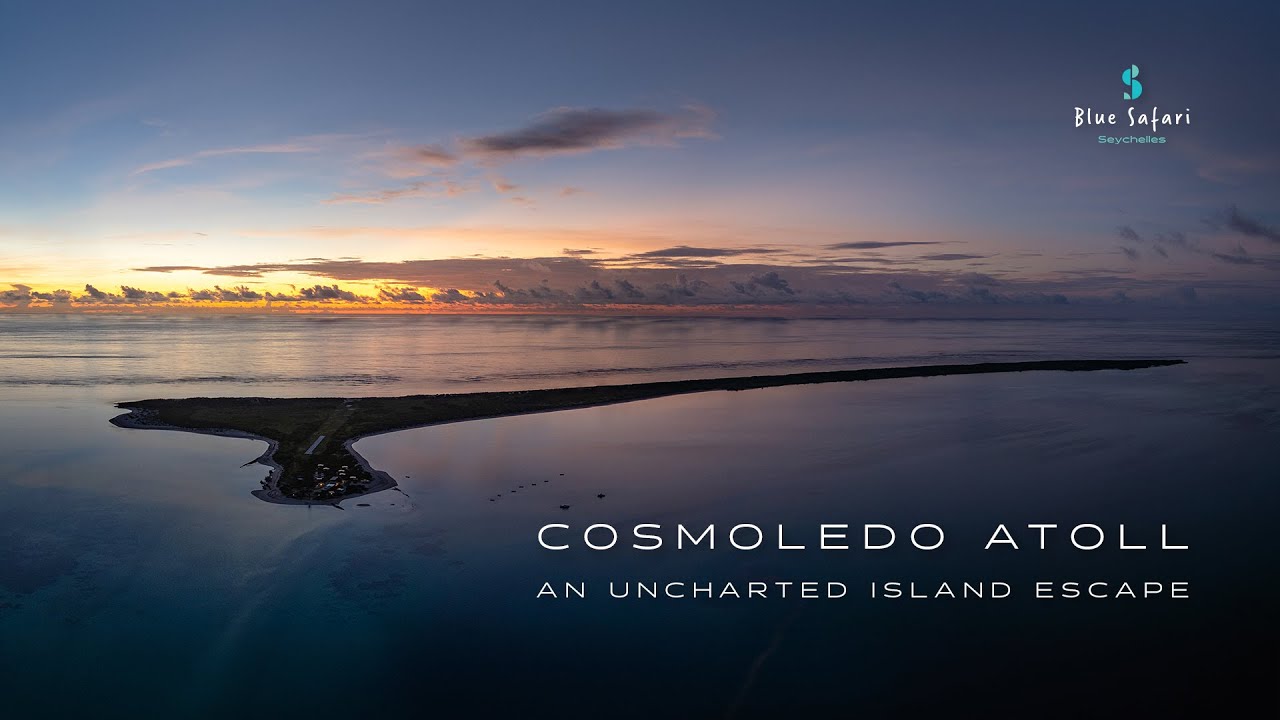
Cosmoledo Atoll lies in the remote Outer Islands of the Seychelles, 560 nautical miles southwest of Mahé, and is best known for the sheer number of Giant Trevally that patrol its white sand flats, lagoon edges, and channels. Blue Safari Fly Fishing hosts a maximum of 10 anglers per week at its land-based Eco Camp on Wizard Island, with two anglers per guide and Baymaster skiff. Most fishing is done on foot across hard sand, turtle grass, and coral flats, sight-casting to GTs alongside large Bonefish, Indo-Pacific Permit, Moustache and Yellowmargin Triggerfish, Bluefin Trevally, Milkfish, and Barracuda. Reaching the atoll requires a charter flight to Astove and a boat crossing, which keeps fishing pressure low and the focus squarely on the flats.
Who's It For?
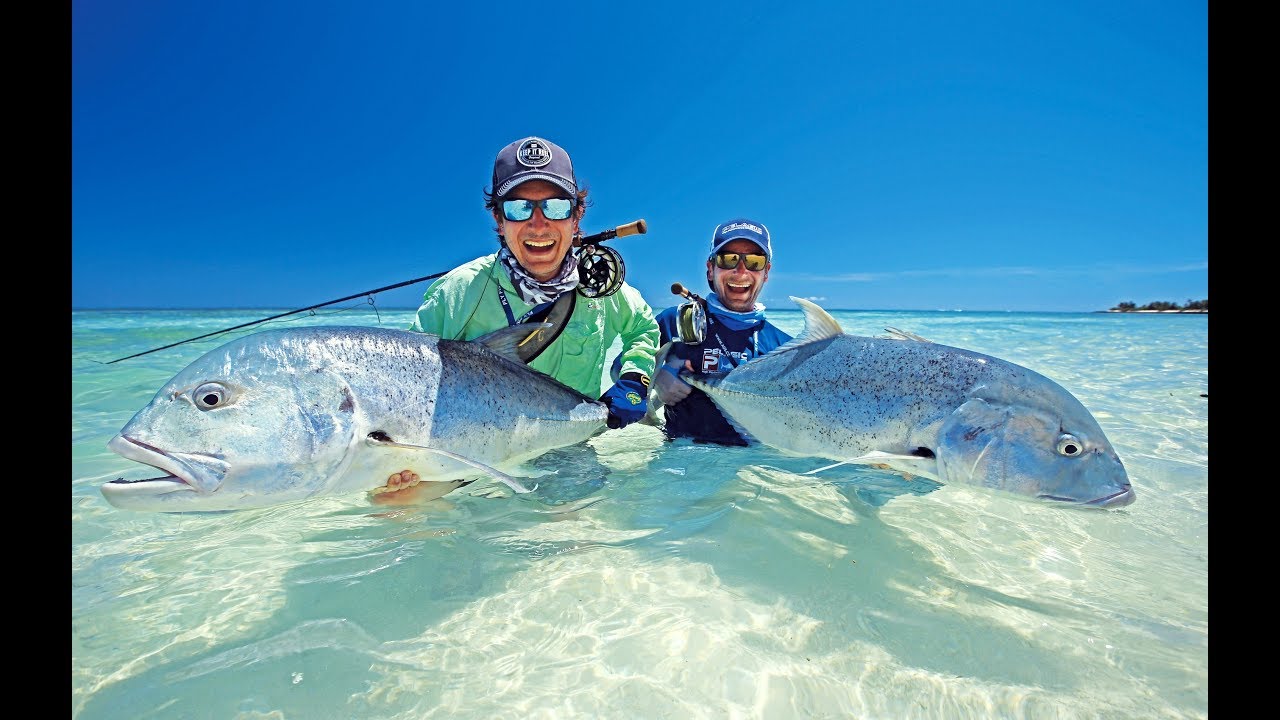
Abundant Giant Trevally across flats, channels, and surf
GTs are the headline species at Cosmoledo, hunting white sand flats, lagoon edges, channels, and the surf line. Shots depend heavily on tides and conditions, so anglers who keep a heavy rod ready and deliver a fast, accurate cast make the most of each opportunity.
Wadeable flats of sand, turtle grass, and coral
Most fishing is done on foot over hard white sand, turtle grass, and coral, with guides working the surf and channels on spring tides and sight-fishing clear shallows and lagoon edges on neaps.
Large Bonefish, Permit, and Triggerfish
Beyond GTs, Cosmoledo holds Bonefish that commonly run 6 to 10 pounds, Indo-Pacific Permit spread across the entire fishery, and Moustache and Yellowmargin Triggerfish tailing on the flats and reef edges.
Comfortable land-based Eco Camp
Eight air-conditioned, en-suite Eco Pods sit just meters from the beach on Wizard Island, and the package includes snorkeling, kayaking, guided island and atoll excursions, and scuba diving for advanced-certified divers.
CHOOSE YOUR ADVENTURE
WHY BOOK WITH TRIDENT
- No Credit Card Fees
- Same Price as Booking Direct
- Earn Trident Rewards
Trident Travel's expert planning service is free of charge.
The rates below are the same as you would pay by booking directly with the outfitter.
All rates below are per person for seven nights and six days of fishing. Rates and inclusions are subject to change at any time. Contact us for the most current pricing.
2027
Double Occupancy / Shared Skiff (Per Person) = $18,790
Single Occupancy / Shared Skiff (Per Person) = $23,290
Private Skiff Upgrade (Per Angler, Per Week) = $4,500
Angler + Non-Angler / Shared Room (Per Couple) = $33,568
2028
Double Occupancy / Shared Skiff (Per Person) = $18,950
Single Occupancy / Shared Skiff (Per Person) = $23,450
What's Included:
Seven nights at the Cosmoledo Eco Camp on Wizard Island
Six days of fully guided fishing
Two anglers per guide and Baymaster skiff
Round-trip domestic charter flights between Mahé and Astove
Boat transfers between Astove and Cosmoledo
All meals and snacks
Beer, wine, sparkling wine, spirits, cocktails, soft drinks, water, tea, and coffee
Loaner Thomas & Thomas fly rods and Shilton reels (reserve in advance)
Snorkeling, kayaking, stand-up paddleboarding, and guided island and atoll excursions
Scuba diving and equipment for advanced-certified divers (pre-booking required)
Room amenities and laundry service
Wi-Fi in the communal area
VAT
What's Not Included:
International airfare
Lodging and meals on Mahé
Ground transfers on Mahé
Mandatory conservation donation and environmental levy ($266 per guest, per week)
Travel and medical insurance
Required from-scene-of-accident medical evacuation coverage
Bluewater fishing
Top-shelf beer, wine, champagne, and spirits
Flies, fly lines, leaders, tippet, and other personal tackle
Loaner rod breakage ($150 per rod)
Gratuities for guides and camp staff
Satellite telephone and email charges
Gallery


Seasonal Fishing
Calendar
The season opens in late November, after the southeast trade winds have eased. The first few weeks can bring a strong, cooling breeze and occasionally rough crossings from Astove, but calm spells produce excellent visibility across the white sand flats. All of the atoll's primary species are available from opening week, and anglers who add optional bluewater days will find Yellowfin Tuna most often near the start and end of the season.
Mid-season falls within the northwest monsoon, when humidity is high and passing showers, cloud cover, and shifting winds are more common. Some days make sight fishing more difficult, while others are calm and clear with ideal light on the flats. Weekly conditions are shaped far more by the tide cycle than the calendar: spring tides push strong water across the atoll and bring GTs into the surf and channels, while neap tides favor sight fishing for Bonefish, Permit, and Triggerfish in clear shallows.
Rainfall generally tapers through the late season, although weather remains variable and the final weeks can bring a stronger breeze. The full range of flats species remains available, with Milkfish targeted when conditions bring them into feeding range and Yellowfin Tuna again showing up more regularly offshore. The season closes at the end of April, before the southeast trade winds return.
Lodging & Accommodations

Accommodations
Guests stay at the Cosmoledo Eco Camp on Wizard Island, the only camp on the atoll. The camp has eight custom-designed Eco Pods set up as doubles or twins, each with a private en-suite bathroom, full air-conditioning, a front verandah with seating, and an outdoor shower. Meals and evenings are shared in a large central dining and lounge tent with bare sand floors and a fully stocked bar, and the beach is only meters from the rooms. The camp hosts up to 10 anglers and 6 non-angling guests, with a minimum age of 12. Expect comfortable, low-impact accommodations built for a remote outer atoll rather than the amenities of a resort.
Food
Breakfast is served at 7:00 a.m. before teams head out at 8:00, and each day anglers choose between a packed lunch on the flats or lunch back at camp. Dinners are shared in the communal tent, with Creole and international dishes built around fresh fish and produce grown on Alphonse Island. A wide selection of beer, wine, sparkling wine, spirits, cocktails, and soft drinks is included, top-shelf brands are available at an extra charge, and beach sundowners are part of the week. Tap water comes from the camp's desalination plant and is safe to drink, while bottled mineral water is supplied only if requested before arrival.
Connectivity
Complimentary Wi-Fi is available in the camp's communal area, but given the atoll's extreme remoteness, guests should expect limited speed and reliability, and should not count on cellular coverage. A satellite phone is switched on only at set times for logistics, and calls and email sent through it are billed by the minute and by the megabyte, so family and friends should use the Alphonse Island office number provided with your pre-trip information for urgent messages. The camp has 24-hour power at 240 volts with British-style plug points, so bring a Type G adapter.
Target Species

Giant Trevally

Bonefish

Indo-Pacific Permit

Moustache Triggerfish

Yellowmargin Triggerfish

Bluefin Trevally

Milkfish

Barracuda
12-Day Itinerary
Each day is carefully planned to maximize your fishing success while experiencing the best of what this destination has to offer. Itineraries are flexible based on conditions and guest preferences.
Depart your home airport and begin your international journey to Mahé, Seychelles (SEZ). Most itineraries from North America involve an overnight flight and one or more connections, commonly through Middle East hubs such as Dubai, Doha, or Abu Dhabi, or through Addis Ababa or Europe. Upon arrival, transfer to a prearranged hotel on Mahé for the night. Blue Safari expects guests to arrive at least one day before the Cosmoledo charter, since any delay on departure day would mean missing the flight.
Cosmoledo weeks run Thursday to Thursday. Meet the Blue Safari team at the Mahé domestic terminal one hour before the scheduled charter departure, keeping in mind the strict limit of 15 kg (33 lbs) of checked luggage and 5 kg (11 lbs) of carry-on per person. The charter flies approximately three hours to Astove Atoll, where the crew meets the group and transfers everyone to the boat for a crossing of about two hours to Cosmoledo. On arrival at the Eco Camp, guests settle into their rooms over refreshments before the guides help set up tackle for the week.
Breakfast is served at 7:00 a.m., with teams leaving camp at 8:00 a.m. Each pair of anglers fishes with one guide and a Baymaster skiff, and the guides plan each day around the tides, wading white sand and turtle grass flats, walking the surf on spring tides, and working lagoon edges, channels, and coral heads as conditions allow. Lunch is either packed for the flats or served at camp, and teams return to camp around 5:00 p.m. ahead of dinner. On the final evening, the guides help anglers de-tackle and pack rods, reels, and gear for departure.
The departure plan is confirmed at dinner the night before, and the transfer vessel typically leaves early in the morning for the crossing back to Astove. From Astove, the charter flies approximately three hours to the Mahé domestic terminal, sometimes with a stop at Alphonse Island. Blue Safari advises booking international flights at least four hours after the scheduled landing in Mahé, and we recommend another night on Mahé as a buffer against weather or charter delays.
After an overnight stay on Mahé, transfer to Seychelles International Airport and begin your journey home. Depending on your routing and connections, you may arrive home the same day or the following day.
Frequently Asked Questions
GET IN TOUCHCosmoledo combines one of the Indian Ocean's most respected Giant Trevally fisheries with easy, wadeable flats and a land-based camp. Unlike Providence, which is fished from a mothership, anglers at Cosmoledo return each evening to air-conditioned Eco Pods on Wizard Island, and the camp offers diving, snorkeling, and guided excursions for non-angling partners. With only 10 rods per week and access by charter flight to Astove followed by a boat crossing, fishing pressure stays light across the atoll's flats, lagoon, and channels.
Giant Trevally are the headline species, with Bonefish, Indo-Pacific Permit, Moustache and Yellowmargin Triggerfish, Bluefin Trevally, Milkfish, and Barracuda all available on the flats and lagoon edges. Bohar Snapper and several grouper species can also be encountered around coral and deeper edges. Offshore, Dogtooth Tuna, Yellowfin Tuna, Wahoo, and Sailfish can be targeted on optional bluewater days, which are not included in the standard package.
Cosmoledo has built its reputation on GTs, and anglers encounter them on white sand flats, along lagoon edges, in the channels, and in the surf on spring tides. That said, GT fishing is never automatic. Opportunities depend on tides, light, and wind, some days produce several shots while others produce few, and many fish are lost to coral or a slow response. Fish range from smaller GTs to genuine trophies over a meter, and anglers who stay ready, cast a heavy rod well, and apply maximum pressure immediately after the eat give themselves the best chance.
Cosmoledo's Bonefish run larger than those on most Seychelles atolls, with fish commonly in the 6 to 10 pound range and occasional larger fish. They are most consistent on neap tides and harder to find when big spring tides move water across the flats. Indo-Pacific Permit are present across the fishery but remain one of the most difficult fish in saltwater fly fishing, and landing one should be considered a highlight rather than an expectation. Moustache Triggerfish are the largest of the triggers caught here, while Yellowmargin Triggerfish can exceed 15 pounds, and both demand precise crab presentations and immediate pressure to keep them out of coral.
Blue Safari operates Cosmoledo from late November through April, and the primary species are available throughout the season. Weekly conditions depend far more on the tide cycle than the month. Spring tides around the full and new moon bring strong water movement, surf fishing for GTs, and tougher conditions for Bonefish, while neap tides offer calmer water and better sight fishing for Bonefish, Permit, and Triggerfish. Weather varies throughout the season, with more humidity and passing showers mid-season and the chance of a stronger breeze in the opening and closing weeks. We can help match your dates to the tides that best suit your goals.
Cosmoledo is best suited to experienced saltwater fly anglers who can cast accurately in wind, handle a 12-weight rod, and clear line quickly when a fish appears. Most of each day is spent wading in strong tropical sun and heat, often covering considerable distance on foot, so good fitness and stamina are important. First-time saltwater anglers have caught GTs here, but casting practice before the trip, particularly with heavy rods, will make a meaningful difference.
Most of the fishing is done on foot over hard white sand, turtle grass, and coral flats, which makes for comfortable wading by flats standards. The Baymaster skiffs carry anglers between fishing areas, and guides also fish from them when working channels, deeper coral heads, or water outside the atoll. Proper flats wading boots with thick soles and ankle support are essential, as standard neoprene dive booties do not offer enough protection from coral, stonefish, and cone shells. Shuffling your feet helps avoid the stingrays that are common on some flats.
The standard package includes two anglers per guide and Baymaster skiff, with a maximum of 10 anglers per week and eight skiffs based at the atoll. Guides rotate through the week, so anglers fish with several members of the Blue Safari team, all of whom are English-speaking, STCW-qualified skippers with first aid training who carry VHF radios on the water. A private skiff can be added for an additional charge, subject to availability, with a limit of two private skiffs per week. See Rates & Packages for current pricing.
Blue Safari recommends two 9-foot 9-weight rods for Bonefish and Permit, one 9-foot 10-weight for Triggerfish and Milkfish, and two 9-foot 12-weight rods for GTs, Bluefin Trevally, Barracuda, and bluewater, so you have a spare in both key weights. Pair each rod with a large-arbor saltwater reel with a smooth, strong drag, backed with 200 to 300 meters of 50 lb braid on the lighter outfits and 300 meters of 80 lb braid on the 12-weights, and use tropical weight-forward floating lines throughout. Pack fluorocarbon tippet from 15 to 30 lb, plus 100 lb mono and 150 lb shock leader for GTs. Recommended flies include Gotchas, Pillow Talks, and Fleeing Crabs for Bonefish; Alphlexo and Fishient Crabs, Merkins, and shrimp patterns for Permit and Triggerfish; Milkydreams for Milkfish; and GT Brush Flies, Flaming Lamborghinis, Bucktail Deceivers, and Barrel Poppers for GTs. Loaner Thomas & Thomas rods with Shilton reels are available if reserved in advance, and flies and lines can be purchased or pre-ordered at camp.
Guests fly internationally to Mahé and should arrive at least one day before the Thursday charter, which flies about three hours to Astove before a boat crossing of roughly two hours to Cosmoledo. Checked luggage on the charter is strictly limited to 15 kg (33 lbs) per person, plus 5 kg (11 lbs) of carry-on, so soft bags and careful packing are essential, and excess luggage can be stored on Mahé. No visa is required for a holiday visit, but every visitor needs an approved Seychelles Travel Authorization, which can be applied for no earlier than 29 days before arrival. A yellow fever certificate is required if you are arriving from an endemic region, and proof of from-scene-of-accident medical evacuation coverage must be provided to Blue Safari before arrival.
Yes. The camp accommodates up to six non-angling guests alongside 10 anglers, and Blue Safari offers a shared-room package for an angler traveling with a non-fishing partner. Included activities range from snorkeling, kayaking, and stand-up paddleboarding to a Wizard Island tour, reef flats expedition, atoll exploration excursion, mangrove hike on Menai Island, and an offshore wildlife trip, with sea turtles, sharks, rays, dolphins, and large seabird populations all part of the experience. Scuba diving is included for advanced-certified divers and must be pre-booked. Guests must be 12 or older, and some activities run only once a week depending on tides.
Medical emergencies and evacuations can happen in remote destinations, which is why we strongly recommend enrolling with Global Rescue before your trip. Global Rescue provides industry-leading medical and security evacuation services, and they also offer comprehensive travel insurance plans serviced through IMG. This all-in-one solution allows anglers to secure both emergency evacuation coverage and travel insurance through a single provider, helping ensure you’re protected if something unexpected occurs before or during your trip.
Trip Resources & Downloads