

Seychelles
Alphonse Island
Request a Reservation
Thanks for your interest in Alphonse Island. Fill out the form below and our team will contact you shortly to discuss availability and details.
Email the travel team
How do you want to send it?
We've written the email for you. Add your dates and it's ready to send.
Trip Summary
Alphonse Island sits in the Alphonse Group of the Seychelles Outer Islands, about 215 nautical miles southwest of Mahé and a one-hour charter flight away, and is known for its exceptional numbers of Bonefish. Guests stay at Alphonse Island Lodge, a full-service island resort, and ride a mothership each morning to neighboring St. François Atoll, where more than 10,000 acres of hard white sand flats are fished mostly on foot with two anglers per guide and skiff. No more than 12 anglers fish St. François each day, sight-casting to Bonefish, Milkfish, Giant Trevally, Indo-Pacific Permit, Moustache and Yellowmargin Triggerfish, Bluefin Trevally, and Barracuda. With a dive center, a spa, and a full activity program, Alphonse is the Blue Safari destination best suited to anglers traveling with non-fishing partners or families.
Who's It For?
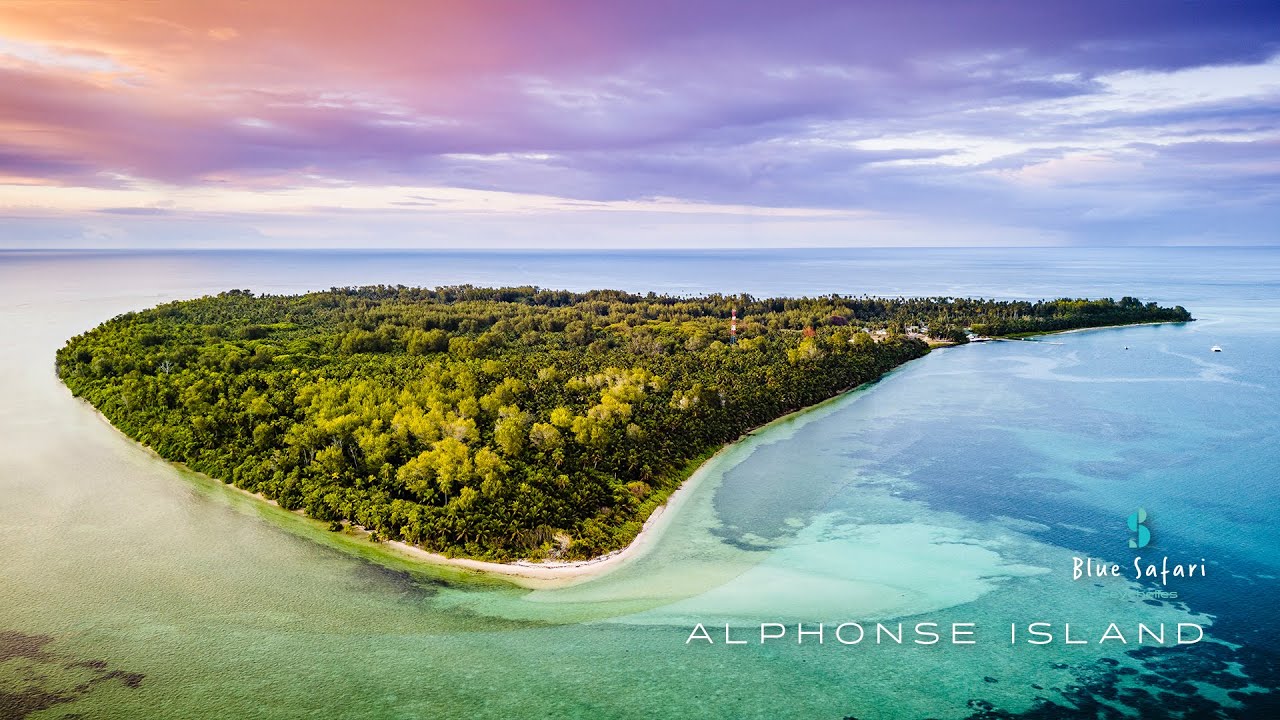
Prolific Bonefish flats on St. François
St. François is roughly seven miles long and four miles wide, with more than 10,000 acres of hard white sand flats laced with channels and cuts, which makes for easy, comfortable wading by flats standards. Bonefish are the backbone of the fishery, from tailing singles and doubles to cruising pods and large schools that stream off the flats on the falling tide. Most fish run 4 to 6 pounds with occasional larger fish, so newer saltwater anglers get plenty of shots while experienced anglers can hunt bigger singles.
Birthplace of Milkfish on the fly
Alphonse guides developed the flies and techniques that turned Milkfish into a fly rod target, and Blue Safari reports that more Milkfish are caught on these atolls than at all other destinations combined. When conditions bring them up to feed on plankton near the surface, these fast, acrobatic fish are targeted with small algae patterns on a 10-weight and fight as hard as anything on the flats. Feeding windows depend on conditions, so Milkfish are an opportunity during the week rather than a daily certainty.
Diverse species beyond the Bonefish
Giant Trevally patrol the flats and channel edges, Indo-Pacific Permit are spread across the entire fishery, and Moustache and Yellowmargin Triggerfish tail over coral and turtle grass. Bluefin Trevally are common, and Blue Safari's largest Barracuda come from Alphonse, where they hunt the Bonefish schools. Alphonse holds fewer GTs than Cosmoledo or Astove, but they are encountered consistently, and Sailfish can be found within about a mile of the Alphonse mooring on optional bluewater days.
Family-friendly island resort
Alphonse Island Lodge has 22 air-conditioned Beach Bungalows, five one-bedroom Beach Villas with private pools, and two four-bedroom Beach Retreats, along with a PADI dive center with more than 30 dive sites, a spa, a gym, a tennis court, an organic farm, and a children's program. Children of all ages are welcome and a doctor is based on the island, while non-anglers snorkel with manta rays, join turtle patrols, feed giant tortoises, or kayak the lagoon as anglers fish St. François.
CHOOSE YOUR ADVENTURE
WHY BOOK WITH TRIDENT
- No Credit Card Fees
- Same Price as Booking Direct
- Earn Trident Rewards
Trident Travel's expert planning service is free of charge.
The rates below are the same as you would pay by booking directly with the outfitter.
All rates below are per person for seven nights and six days of fishing unless noted. Beach Bungalow fishing packages are single occupancy. Rates and inclusions are subject to change at any time. Contact us for the most current pricing.
2027
Beach Bungalow / Single Occupancy / Shared Skiff (Per Person) = $15,280
Beach Villa / Double Occupancy / Shared Skiff (Per Person) = $20,180
Beach Villa / Single Occupancy / Shared Skiff (Per Person) = $28,930
Private Skiff Upgrade (Per Angler, Per Week) = $4,500
Angler + Non-Angler / Shared Beach Bungalow (Per Couple) = $27,160
2028
Beach Bungalow / Shared Skiff (Per Person) = $16,240
What's Included:
Seven nights at Alphonse Island Lodge
Six days of fully guided fishing on St. François Atoll
Two anglers per guide and skiff
Round-trip domestic charter flights between Mahé and Alphonse
Daily boat transfers between Alphonse and St. François
All meals
Beer, wine, sparkling wine, spirits, cocktails, soft drinks, water, tea, and coffee
Loaner Thomas & Thomas fly rods and Shilton reels (reserve in advance)
Ten scuba dives with equipment (pre-booking required)
Snorkeling, kayaking, stand-up paddleboarding, and scheduled guided activities
Room amenities and laundry service
Wi-Fi
VAT
What's Not Included:
International airfare
Lodging and meals on Mahé
Ground transfers on Mahé
Mandatory conservation donation and environmental levy ($266 per guest, per week)
Travel and medical insurance
Required from-scene-of-accident medical evacuation coverage
Bluewater fishing
Surfing
Additional scuba dives beyond the package allowance
Spa treatments, private dining, and special meal setups
Top-shelf beer, wine, champagne, and spirits
Flies, fly lines, leaders, tippet, and other personal tackle
Loaner rod breakage ($150 per rod)
Gratuities for guides and lodge staff
Satellite and landline telephone charges
Gallery


Seasonal Fishing
Calendar
The main season opens in September as the southeast trade winds begin to ease, and St. François returns to a full week of up to 12 anglers. Wind usually drops further through October and November, the transition between the trade wind and monsoon seasons, which often brings calm, bright days and excellent visibility on the white sand flats, although the opening weeks can still bring a cooling breeze. All of the flats species are available, and anglers who add bluewater days tend to find Yellowfin Tuna most often near the start and end of the main season.
Mid-season falls in the northwest monsoon, with high heat and humidity, lighter and more variable winds, and passing showers and cloud cover that can make spotting fish harder on some days. Calm, clear days in between offer excellent sight fishing on the flats and reef edges. Tides shape each week more than the calendar: falling tides push Bonefish off the flats in large schools, spring tides bring strong water movement through the channels, and calmer neap tides favor careful sight fishing for Permit and Triggerfish.
The late season stays hot, with rainfall tapering and the northwest monsoon giving way to another calmer transitional period, though the final weeks can bring a stronger breeze as the southeast trades begin to return. The full range of flats species remains available, Milkfish are targeted whenever conditions bring them up to feed near the surface, and offshore days can again produce Yellowfin Tuna.
From May into September, Alphonse runs its Explorer season, with a smaller group of six pre-booked anglers and charter flights about once a week. The southeast trade winds are at their strongest and can blow 20 to 25 knots for days at a time, making casting and spotting fish more demanding, although the trades also bring cooler, cleaner water to the flats. Bonefish fishing remains consistent, and the guides work the tides and wind to find fishable water, but anglers should come prepared for windy conditions and plan on casting practice before the trip.
Lodging & Accommodations

Accommodations
Guests stay at Alphonse Island Lodge, the only resort on Alphonse and a full-service island property that runs on solar power. The standard fishing package places each angler in one of 22 air-conditioned Beach Bungalows along the island's eastern shoreline, each just meters from the beach with an ocean-facing verandah, day bed, bathtub, and outdoor shower. The five one-bedroom Beach Villas add a large lounge and a private pool, while the two four-bedroom Beach Retreats, each sleeping up to eight adults and four children, have a full kitchen, private plunge pool, and golf cart for families and groups. Every room has a ceiling fan, minibar, Nespresso machine, and safe, and every guest gets a bicycle for getting around the island. A PADI dive center, spa, gym, tennis court, and medical clinic with a doctor on site make this a genuine island resort rather than a fishing camp.
Food
On fishing days, breakfast is served at 6:00 a.m., and packed lunches are made to order at breakfast and eaten on St. François. Dinners and evenings are back on Alphonse, with Creole-inspired and international menus built around line-caught pelagic fish and produce from the island's own farm, which supplies most of the fresh fruit and vegetables served. For sustainability reasons, shellfish and crustaceans are limited to farmed prawns, and special menus are available for children. A wide selection of beer, wine, sparkling wine, spirits, cocktails, and soft drinks is included, top-shelf brands are available at an extra charge, and guests can bring wine or spirits from duty-free for the bar staff to serve during the week. Complimentary sundowners are served at the beach bar, while private dining, beach picnics, and cooking classes can be booked at an additional cost. Tap water comes from the island's desalination plant and is safe to drink, and reusable aluminum flasks are provided in place of plastic bottles.
Connectivity
There is no cellular signal on Alphonse. Wi-Fi is available in every bungalow, villa, and retreat and is complimentary in the bar and lounge, and each room also has a satellite landline, though guests should expect the speed and reliability of a remote island connection. Satellite and landline calls and email sent through the lodge are billed by the minute and by the megabyte, so family and friends should use the Alphonse Island office number provided with your pre-trip information for urgent messages. The island has 24-hour power at 240 volts with British-style plug points, so bring a Type G adapter.
Target Species

Bonefish

Milkfish

Giant Trevally

Indo-Pacific Permit

Moustache Triggerfish

Yellowmargin Triggerfish

Bluefin Trevally

Barracuda
12-Day Itinerary
Each day is carefully planned to maximize your fishing success while experiencing the best of what this destination has to offer. Itineraries are flexible based on conditions and guest preferences.
Depart your home airport and begin your international journey to Mahé, Seychelles (SEZ). Most itineraries from North America involve an overnight flight and one or more connections, commonly through Middle East hubs such as Dubai, Doha, or Abu Dhabi, or through Nairobi, Johannesburg, or Europe. Upon arrival, transfer to a prearranged hotel on Mahé for the night. Blue Safari advises arriving at least one day before the Alphonse charter, since any delay on departure day would mean missing the flight.
Alphonse weeks typically run Saturday to Saturday, with additional charters on selected Wednesdays. Meet the Blue Safari team at the Mahé domestic terminal one hour before the scheduled departure, keeping in mind the strict limit of 20 kg (44 lbs) of checked luggage and 5 kg (11 lbs) of carry-on per person. The charter flies about an hour to Alphonse, where the team meets guests for refreshments and an orientation, followed by a briefing and tackle setup at the fishing center. Anglers are welcome to fish the Alphonse flats unguided for the rest of the afternoon.
Breakfast is served at 6:00 a.m., and teams meet at the fishing center at 7:00 a.m. to board the mothership for the ride of about an hour to St. François Atoll, where fishing begins around 8:00 a.m. Each pair of anglers fishes with one guide and skiff, and the guides plan the day around the tides, wading the white sand flats for Bonefish, working channels and coral edges for Triggerfish, Permit, and GTs, and watching for Milkfish when they come up to feed. Packed lunches, ordered at breakfast, are eaten on the flats or aboard the mothership, and lines come in around 4:00 p.m. for the ride back to Alphonse ahead of drinks and dinner. On the final evening, there is time to de-tackle and pack gear for departure.
The departure plan is confirmed at dinner the night before. The charter flies about an hour back to the Mahé domestic terminal, usually landing in the early afternoon. Blue Safari advises booking international flights at least four hours after the scheduled landing, so evening departures can work, although another night on Mahé adds a buffer against weather or charter delays.
Transfer to Seychelles International Airport and begin your journey home, either the same evening or after a night on Mahé. Depending on your routing and connections, you may arrive home the same day or the following day.
Frequently Asked Questions
GET IN TOUCHAlphonse combines one of the Indian Ocean's most productive Bonefish fisheries with a full-service island resort only an hour's flight from Mahé. Anglers fish the hard white sand flats of neighboring St. François Atoll, where no more than 12 anglers fish each day, while non-angling partners and children enjoy a dive center, a spa, and a full program of snorkeling, conservation, and island activities on Alphonse. The more remote outer atolls are built around small groups of experienced anglers chasing GTs or Bumphead Parrotfish, while Alphonse suits mixed groups, families, and anglers of every level, and it is where Milkfish on the fly was pioneered. Alphonse can also be paired with a week on Cosmoledo, Farquhar, Providence, or Astove.
St. François holds an exceptionally dense Bonefish population, and fish are found tailing in singles and doubles, cruising in pods, and moving in large schools as they leave the flats on a falling tide. Most fish run 4 to 6 pounds, with larger fish possible, and double-digit days are common for anglers who cast reasonably well. The firm white sand flats are easy to wade, which makes Alphonse an excellent place to learn saltwater sight fishing, while experienced anglers can spend their time picking out larger singles. Lighter winds and good light make the fishing easier, while overcast or windy days make spotting fish harder at any time of year.
Yes. Alphonse is where Milkfish on the fly began. The island's guides developed the flies and techniques used to catch them, and Blue Safari reports that more Milkfish are caught and released on these atolls than at all other destinations combined. Milkfish feed on plankton and algae, so they are targeted when conditions bring them up to feed near the surface, using small algae-style flies such as the Milkydream on a 10-weight. They are fast, powerful, and acrobatic, and a good fish can take you deep into your backing. Feeding activity varies, so treat Milkfish as a prized opportunity rather than a daily guarantee.
Giant Trevally are encountered consistently on the flats and channel edges, though Alphonse holds fewer GTs than Cosmoledo or Astove. Indo-Pacific Permit are spread across the fishery and remain one of the hardest fish in saltwater fly fishing, so landing one should be treated as a highlight of the week. Moustache Triggerfish, the largest of the triggers caught here, and Yellowmargin Triggerfish tail on the flats and reef edges, Bluefin Trevally are common, and large, solitary Barracuda hunt the Bonefish schools. Offshore, Sailfish are found close to the Alphonse mooring, along with Wahoo, Dogtooth Tuna, and Yellowfin Tuna, but bluewater fishing is booked separately at an additional charge, so let us know before booking if it is a priority.
Alphonse is fished year-round, but the experience changes with the season. The main season runs from September to May, when no more than 12 anglers fish St. François each day. The transitional months of October and November and of March and April often bring lighter winds and excellent visibility, while December through February brings heat, humidity, lighter variable winds, and passing showers. From May to September, the Explorer season brings strong southeast trade winds, often 20 to 25 knots, with a smaller group of anglers and weekly charter flights. Bonefish are available throughout the year, and tides shape each week more than the month, so we can help you choose dates that suit your goals and your tolerance for wind.
Alphonse is one of the best Seychelles destinations for newer saltwater anglers. Abundant Bonefish provide plenty of shots to practice spotting fish and making quick, accurate casts, and the hard white sand bottom makes for easy wading. Most of each day is still spent on foot in strong tropical sun and heat, with midday temperatures around 90°F, so good fitness and stamina help. Casting practice with a 9-weight in the wind before the trip will pay off, and anglers who want to target GTs should be comfortable casting a 12-weight.
Each morning, all fishing guests ride the mothership from Alphonse to St. François Atoll, about an hour away, where they transfer to 16- to 18-foot skiffs. The standard package includes two anglers per guide and skiff, solo anglers are paired with another angler, and guides rotate through the week. Most of the fishing is done wading, with the skiffs used to move between flats and to fish channels and coral heads. All Blue Safari guides speak English, are STCW-qualified skippers with first aid training, and carry VHF radios on the water. A private skiff can be booked for an additional charge, subject to availability, with a limit of two per week; see Rates & Packages for current pricing. Anglers are also welcome to fish the Alphonse flats unguided on the afternoon they arrive.
Blue Safari recommends two 9-foot 9-weight rods for Bonefish and Permit, one 9-foot 10-weight for Triggerfish and Milkfish, and two 9-foot 12-weight rods for GTs, Bluefin Trevally, and Barracuda, so you have a spare in both key weights. Pair each rod with a large-arbor saltwater reel with a smooth, strong drag, backed with 200 to 300 meters of 50 lb braid on the lighter outfits and 300 meters of 80 lb braid on the 12-weights, and use tropical weight-forward floating lines throughout. Pack fluorocarbon tippet from 15 to 30 lb, plus 100 lb mono and 150 lb shock leader for GTs. Recommended flies include Gotchas, Golden Knights, Pillow Talks, and Fleeing Crabs for Bonefish; Alphlexo Crabs, Fishient Crabs, Merkins, and shrimp patterns for Permit and Triggerfish; Milkydreams for Milkfish; and GT Brush Flies, Flaming Lamborghinis, Bucktail Deceivers, and Barrel Poppers for GTs. Loaner Thomas & Thomas rods with Shilton reels are available if reserved in advance, and flies, lines, and tackle can be purchased or pre-ordered at the lodge's fly shop. Flats wading boots with thick soles and ankle support are essential, as neoprene dive booties do not protect against coral, stonefish, and cone shells.
Guests fly internationally to Mahé and should arrive at least one day before the charter to Alphonse, which typically departs on Saturdays, with additional flights on selected Wednesdays, and takes about an hour. Checked luggage on the charter is strictly limited to 20 kg (44 lbs) per person, plus 5 kg (11 lbs) of carry-on, so soft bags are recommended, and excess luggage can be stored on Mahé. No visa is required for a holiday visit, but every visitor needs an approved Seychelles Travel Authorization, which can be applied for no earlier than 29 days before arrival. A yellow fever certificate is required if you are arriving from an endemic region, and proof of from-scene-of-accident medical evacuation coverage must be provided to Blue Safari before arrival. The Seychelles and Alphonse are malaria-free.
Yes, and Alphonse is the Blue Safari destination best suited to them. Children of all ages are welcome, with a children's program for ages 12 and under, special menus, and child minders available at an additional charge. The island's PADI dive center offers more than 30 dive sites and courses from beginner to Divemaster, and a set number of dives is included with each stay. Other included activities range from manta ray and sailfish snorkeling trips, kayaking, and stand-up paddleboarding to a St. François nature hike, a Bijoutier Island visit, a flats lunch on a St. François sandbank, yoga, and turtle patrols and giant tortoise feeding with the Island Conservation Society. Spa treatments, surfing, and private charters are available at an extra cost, and some activities run only once a week depending on tides.
The standard fly fishing package gives each angler a private Beach Bungalow, which suits solo anglers and couples. Two anglers who want to share a room, or an angler traveling with a partner who wants more space, can choose one of the five one-bedroom Beach Villas, which add a large lounge and private pool. Families and groups can book one of the two four-bedroom Beach Retreats, each with four en-suite bedrooms, a full kitchen, a private plunge pool, and room for up to eight adults and four children. Villas and Retreats are limited, so it pays to plan well in advance, and we can price any combination of anglers and non-anglers.
Medical emergencies and evacuations can happen in remote destinations, which is why we strongly recommend enrolling with Global Rescue before your trip. Global Rescue provides industry-leading medical and security evacuation services, and they also offer comprehensive travel insurance plans serviced through IMG. This all-in-one solution allows anglers to secure both emergency evacuation coverage and travel insurance through a single provider, helping ensure you’re protected if something unexpected occurs before or during your trip.
Trip Resources & Downloads