































Beautiful "old school" locking click
"Beautiful "old school" locking click reel"
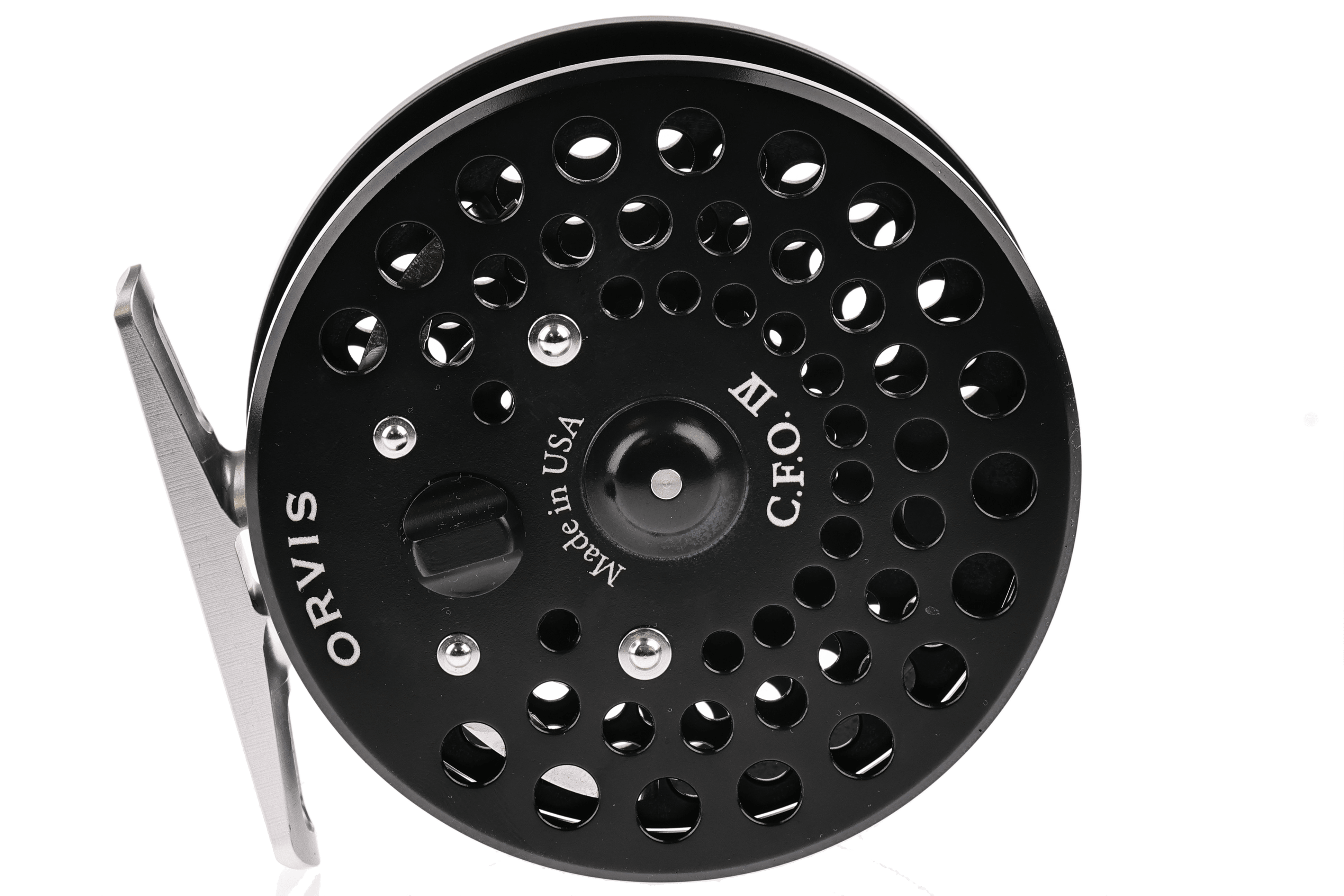


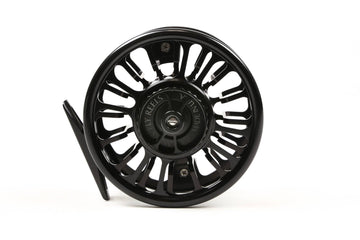
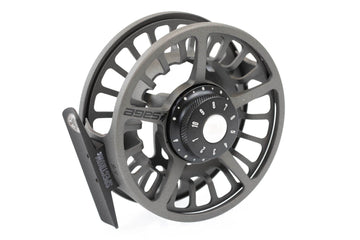
The Orvis C.F.O Fly Reel is a click and pawl trout reel, and every other thing about it follows from that one fact. There is no disc stack in this reel, no drag cartridge and nothing sealed. A spring loaded pawl bears against a check gear that turns with the spool, and the tension that spring puts on the pawl is the whole drag. Orvis names it plainly in the owner booklet as an external, adjustable spring and pawl drag system. The lineage is genuinely old: the ventilated port reel Charles Frederick Orvis patented in 1874, revived by fly reel designer Stan Bogdan in 1971, and reissued by Orvis as a 50th anniversary tribute to that 1971 reel in the same black frame and spool with silver accents. This is the machined in the USA click and pawl version, Orvis item 3C9F, in sizes II, III and IV covering 1 through 7 weight lines. Buy it if you want to feel a trout through the rod and the rim of the spool instead of reading it off a numbered knob, and if you want to hear it happen. Orvis describes the sound as a notable outgoing growl as line is peeled from the spool.
The signature of the C.F.O is the one sided frame. Orvis credits it with allowing quick and easy spool changes without pinching or tangling line, and it is the reason the reel looks the way it does: a single ported side plate with the spool sitting open on the outboard face. Both the frame and the spool carry the double row of round ventilation ports that traces back to the 1874 patent, so the reel sheds metal and shows the backing at the same time. Because there is no outer cage on the outboard side, the smooth spool rim sits fully exposed, and Orvis intends it to be used: the booklet directs you to palm that rim for additional resistance and precise control of a hard running fish. The spool comes off with a quick release mechanism at the center of the spool face rather than a threaded cap or a nut, with the quick release lever, cover, spring and pivot pin all listed as serviceable parts. The drag adjustment knob sits on the back of the reel frame, out of the way of your hand. Retrieve conversion is done at the pawls, not with a tool kit: the reel ships set for left hand wind, and you rotate the engaged left pawl clockwise to disengage it and rotate the right pawl clockwise to engage it. Frame diameters run 2.73 inches in the II, 3 inches in the III and 3.23 inches in the IV, and the reel ships in a neoprene case. One warning worth stating up front, because it is Orvis's own: the spool on this generation is not backwards compatible with previous C.F.O reels.
Orvis publishes one finish spec for this reel and it is a good one: type III anodizing, which the company describes as durable and corrosion resistant. Type III is the hardcoat class of anodizing rather than the thinner decorative grade, so the surface layer is converted oxide that wears and dulls rather than a coating that chips off an edge. There is a single colorway, the black frame and spool with silver accents that Orvis specifies as matching Bogdan's 1971 icon, and the silver shows up on the reel foot and the spool hub. There is no second finish to choose between, so the decision at checkout is size only. On corrosion, be realistic about what an open click and pawl is. The drag is external by design and nothing about it is sealed against grit, and the Orvis booklet asks you to clean and lubricate the reel after extensive use or after contact with dirt, sand or salt water, and to clean and lubricate it twice a year regardless. This is a freshwater trout reel that will survive a rinse, not a flats reel.
Orvis states in the owner booklet that each click and pawl C.F.O is machined in the USA to the same exacting standards as the original, and the booklet is stamped MADE IN THE U.S.A. Machined, not cast, matters on a frame cut this open: the porting removes a lot of material from the side plate and the frame still has to hold the spool to frame gap tight enough that light backing does not creep in on a run. What Orvis does not publish anywhere is the alloy, so we are not going to name one. The same goes for the materials in the check components. The exploded parts list names a check pawl, check cam, check spring, check pivot, wave washer, check gear, spindle bushing and a tension adjusting knob as individual replaceable parts, which tells you the mechanism is meant to be serviced rather than thrown away, but Orvis does not say what any of those pieces are made from and we are not going to guess. A neoprene reel case is included.
Type - An external, adjustable spring and pawl click drag. That is Orvis's own phrase, and it is worth reading literally. External means the mechanism is open to the frame, not sealed and not a cartridge. Spring and pawl means resistance comes from a spring pressing a pawl against a check gear, and the amount of pressure that spring exerts on the pawl is what sets spool resistance. It is adjustable, which is the thing most people assume a click and pawl reel is not: a tension adjusting knob on the back of the frame turns clockwise to increase spool resistance and counter clockwise to decrease it. What you get across that range is a light, constant check rather than a curve you can dial into a hard number. Orvis's stated job for it is to apply sufficient resistance to prevent line overrun while fighting a fish, and to supply more pressure than that you palm the spool rim with your fingertips or your palm. That division of labor is the point of the reel. The spool never loads up more than the check gives it, so a light tippet is protected by the fact that the reel cannot suddenly grab, and the pressure that actually beats the fish is metered by your hand in real time. Orvis publishes no maximum drag figure for the C.F.O, and on a reel like this that number would not tell you much anyway. If you want a sealed disc drag you can crank down mid fight, this is the wrong reel and Orvis builds others.
Materials - Orvis does not publish the material of the pawl, the check gear or the check spring, so nothing is claimed here about carbon, cork, brass or stainless. What the parts diagram does establish is the architecture, and it is more involved than a bare pawl on a post. The check assembly is built around a check pawl and check cam riding on a check pivot, a check spring on its own spring pivot, a wave washer, a check gear on the spindle, and a spindle bushing, with the tension adjusting knob feeding pressure into the spring through a spring pivot nut. It also carries a left hand check guard and a right hand check guard, which is the hardware that makes the retrieve conversion a matter of rotating a pawl rather than reversing a bearing. Every one of those is called out as a numbered part, so a worn check component is a repair rather than a new reel.
Orvis does not publish an arbor designation for the C.F.O, so we are not going to assign it one. What is documented is the geometry, and the geometry tells the story. Frame diameters are 2.73 inches in the II, 3 inches in the III and 3.23 inches in the IV, and the exploded diagram shows a narrow classic center hub rather than the tall wide arbor of a modern large arbor reel. That is a deliberate part of the historical design and it has consequences you should know before buying. Line pickup per turn of the handle is modest compared to a large arbor reel of the same nominal line weight, and line stored on a small diameter hub all season will carry more coil memory into the first casts of the morning. In exchange you get the low weight the reel is famous for, 3.3 oz in the II, 3.6 oz in the III and 4.1 oz in the IV, on a reel that balances a short cane or glass or fine graphite trout rod the way those rods were designed to be balanced. Backing capacities are honest about the same trade off. On 20 lb Dacron, the II takes a WF1 plus 100 yards, a WF2 plus 75 or a WF3 plus 50. The III takes a WF3 plus 100, a WF4 plus 75 or a WF5 plus 50. The IV takes a WF5 plus 150, a WF6 plus 125 or a WF7 plus 100. Orvis publishes no inches per turn retrieve rate for this reel and we have not measured one.
Your Orvis C.F.O reel is unconditionally guaranteed against defects in materials and workmanship, and Orvis states more broadly that its reels are guaranteed for life against defects. Damage that Orvis's repair specialists judge to be a material or workmanship defect is repaired free. Everything else is handled as a paid repair on an individual basis. As of August 2026, Orvis charges a $30 handling fee plus the cost of any parts required, not to exceed $50 without prior approval, and work begins once Orvis has a credit card on file for payment. Orvis also sells a cleaning and reconditioning service separate from warranty work, which checks knots, splices, line and backing, cleans the old line, and checks, cleans and lubricates the reel, with loading of new line or backing available for an additional charge. Given that this is an open spring and pawl mechanism, that service is worth more on a C.F.O than it would be on a sealed reel. Orvis technical advisors handle reel questions directly, and the booklet routes them through [email protected] and 1-800-778-4778 in the US.
| Reel Model | Diameter | Weight | Line Weight | Capacity | Price | Stock |
|---|---|---|---|---|---|---|
| II | 2.73in. | 3.3 oz. | 1, 2, 3 | 50 yards 20lb | $349.00 | In Stock |
| III | 3in. | 3.6 oz. | 3, 4, 5 | 50 yards 20lb | $379.00 | In Stock |
| IV | 3.23in. | 4.1 oz. | 5, 6, 7 | 100 yards 20lb | $398.00 | In Stock |
Overall rating: 5.0 / 5 from 2 reviews.
Review topics: [].
"Beautiful "old school" locking click reel"
"Nice reel. Works great with a 3 or 4 weight rod. Nice sound."