
























Trident Fly Fishing is a full-service fly shop. We spend a lot of time testing gear and writing reviews to give you all of the tools to make your next trip a success. We are not a blog or a review site. 100% of our funding comes from your gear purchases, so if this blog post helps you on your next fly fishing adventure, please support us by buying your gear from us
The Hendrickson dry fly was first tied in 1916 by Roy Steenrod for a friend named Albert Hendrickson for fishing the Beaverkill River's famed spring mayfly hatch. The Ephemerella subvaria mayfly and the Hendrickson dry fly eventually became synonymous, and anglers now refer to the insect by the pattern's name. You do not have to be in the Catskills in May to fish the Hendrickson dry fly; the pattern fishes well as a general attractor in faster pocket water, thanks to a design that allows the fly to sit higher in the water column. Follow along as Karl gives step-by-step instructions on tying this essential Catskill-style dry fly.
Recipe
- Hook: TMC 100 size 14
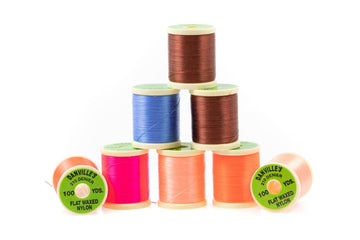
- Thread: Danville 6/0 in Yellow
- Tail: Whiting Blue Dun Hackle Feather Fibers
- Body: Hareline Superfine Dubbing in Hendrickson Pink
- Hackle: Blue Dun hackle feather from a Whiting Cape
Step 1

Start your thread about one hook‑eye length behind the eye and wrap back toward the bend of the hook.
Step 2


Prepare a single mallard flank feather by stripping off the fluffy fibers at the base and keeping the thinner fibers toward the tip. Trim off the very soft, brittle tip section.
Step 3


Stroke the fibers on the mallard flank back with your fingers to create a clump for the wings. Tie this in on top of the hook shank with the tips pointing forward, extending past the hook eye. Trim the excess stem behind the tie‑in point.
Step 4


Split the forward‑facing wing clump down the middle and pull the fibers to each side of the hook shank. Make 8–10 figure‑eight wraps between the two clumps to separate and position the wings.
Step 5

Once the wings are positioned, add a small drop of superglue to the thread wraps to help lock them in place. After the glue dries, wrap the thread back to the bend of the hook.
Step 6


Select a Whiting Blue Dun feather and strip off the fluff at the base, leaving the finer fibers in the middle of the feather. Strip 7–10 fibers from the stem and tie them in at the bend so they extend about one hook‑shank length beyond the back of the hook for the tail.
Step 7


Make a thin, even dubbing noodle with Hairline Superfine Dubbing and wrap it forward to form a smooth, tapered abdomen, stopping just behind the wings.
Step 8

Prepare another, slimmer Whiting Blue Dun feather by trimming the fibers off the bottom of the stem to create a clean tie‑in point.
Step 9

Tie this feather in just behind the wings at a slight angle to make wrapping easier. Wrap the feather 3–4 turns around the hook shank behind the wings to create the hackle.
Step 10

Gently pull the wings back while you wrap the same hackle feather 1–2 turns in front of the wings, leaving a small gap between the hackle and the hook eye.
Step 11

Build a small thread head, then add 2–3 whip finishes behind the hook eye and secure with a tiny drop of superglue.
Step 12

Your Hendrickson dry fly is finished and ready for the mayfly hatch. Stock up from our selection of dry flies and spinners for more proven patterns.

Comments
(0)No comments yet. Be the first!