





Description
The Thomas & Thomas DNA Short Spey Rod is an 11ft 2in two-hander built for the water where a 13 foot rod stops being an advantage. Short spey is its own discipline rather than a scaled down version of the long belly game: you are fishing runs you have to wade into, with alders behind you and a bank that will not let you make a long sweep, and the answer is a shorter rod carrying a heavier, more compact head. That trade has consequences you feel on the first cast. A short head loads the rod in a fraction of the sweep a mid belly line needs, it turns over a sink tip and a weighted fly from a standing anchor, and it lets you fish a seam properly from the one place you can actually stand.
Thomas & Thomas built the Short Spey specifically to match compact fly lines and shooting heads, and tuned it as a lightweight two-hander with quick recovery, an action that generates high line speed, and enough sensitivity in the blank to register a subtle grab at the end of the swing rather than just the ones that hook themselves. The range is two rods, both 11ft 2in and both four piece: the DNA 1126-4 in 6wt and the DNA 1127-4 in 7wt. That puts it squarely on large migratory trout, and on light duty Atlantic salmon and steelhead, where the fish are worth a two-hander but the river does not justify a full size spey rod. It is worth being clear about where this sits in the DNA family, because the names run together. The DNA TroutSpey is the lighter, longer trout tool at 11ft 6in and 11ft 9in in 3wt through 5wt, and we carry it as a separate rod; the full DNA Spey series starts at 11ft 7in and runs to 15ft in 6wt through 10wt. The Short Spey is the compact, heavier grained rod between them.
Blank
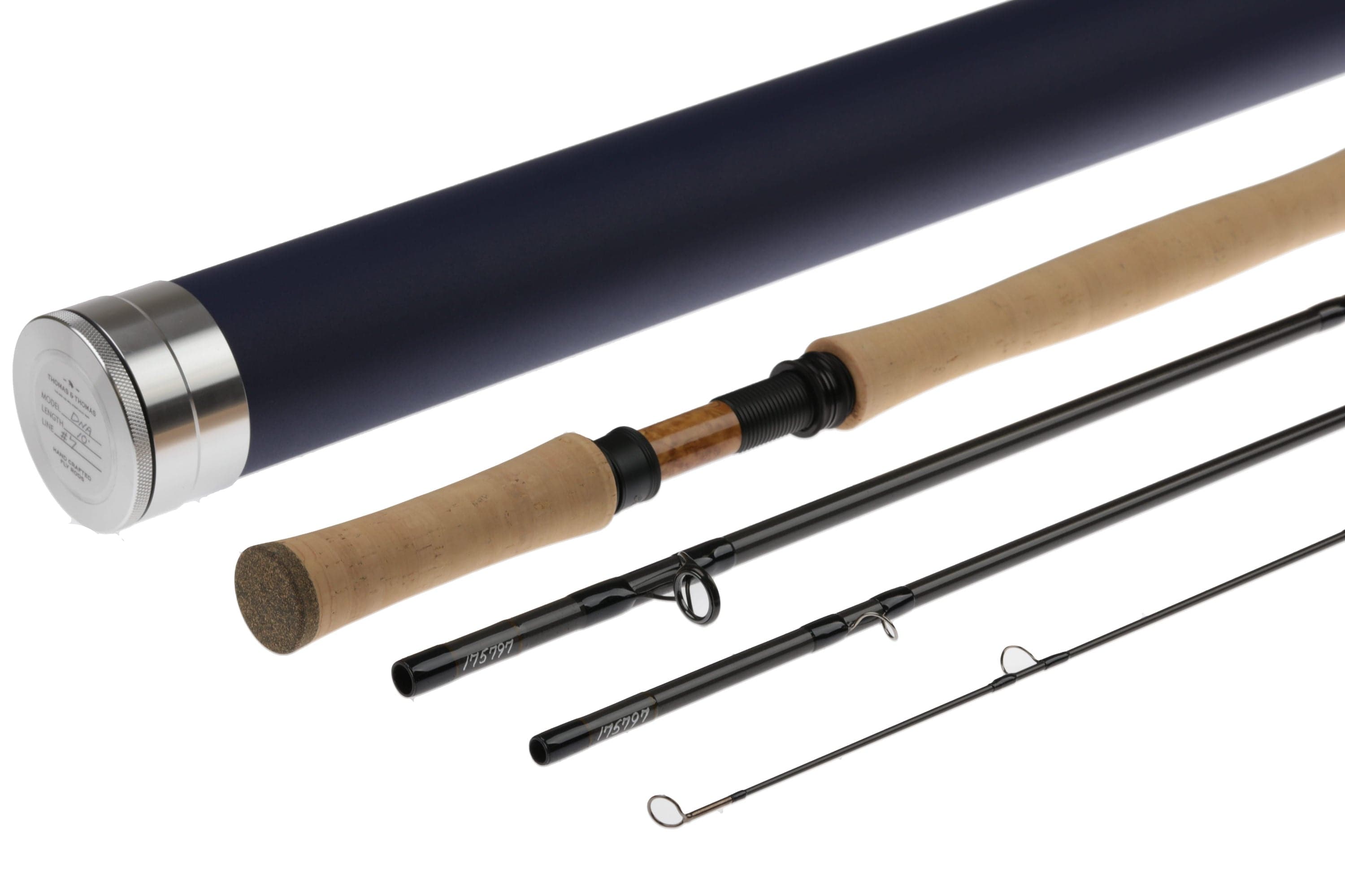
Multi-Modulus Graphite - The blank is a four piece multi-modulus graphite build. Multi-modulus means the layup uses more than one grade of carbon rather than a single sheet spec through the whole rod, so the butt section can be built for lifting and turnover while the tip stays light and quick. On a rod this short that matters more than it does on a 14 footer, because you have less blank to work with and every section has to do a specific job. Thomas & Thomas describe the result as lightweight with quick recovery, generating high line speeds while keeping the sensitivity to detect subtle strikes immediately.
Quick Recovery at Short Range - Recovery is the trait that decides whether a short spey rod is pleasant to fish. A short head carries a lot of grain over a short belly, so it dumps its energy into the blank quickly and all at once, and a rod that keeps oscillating after the stroke throws that energy into wobble rather than line speed. A quick recovering blank stops moving with the stroke, which is what produces a tight, stable loop off a compact head, and it is also what makes the rod castable in the confined space you bought it for.
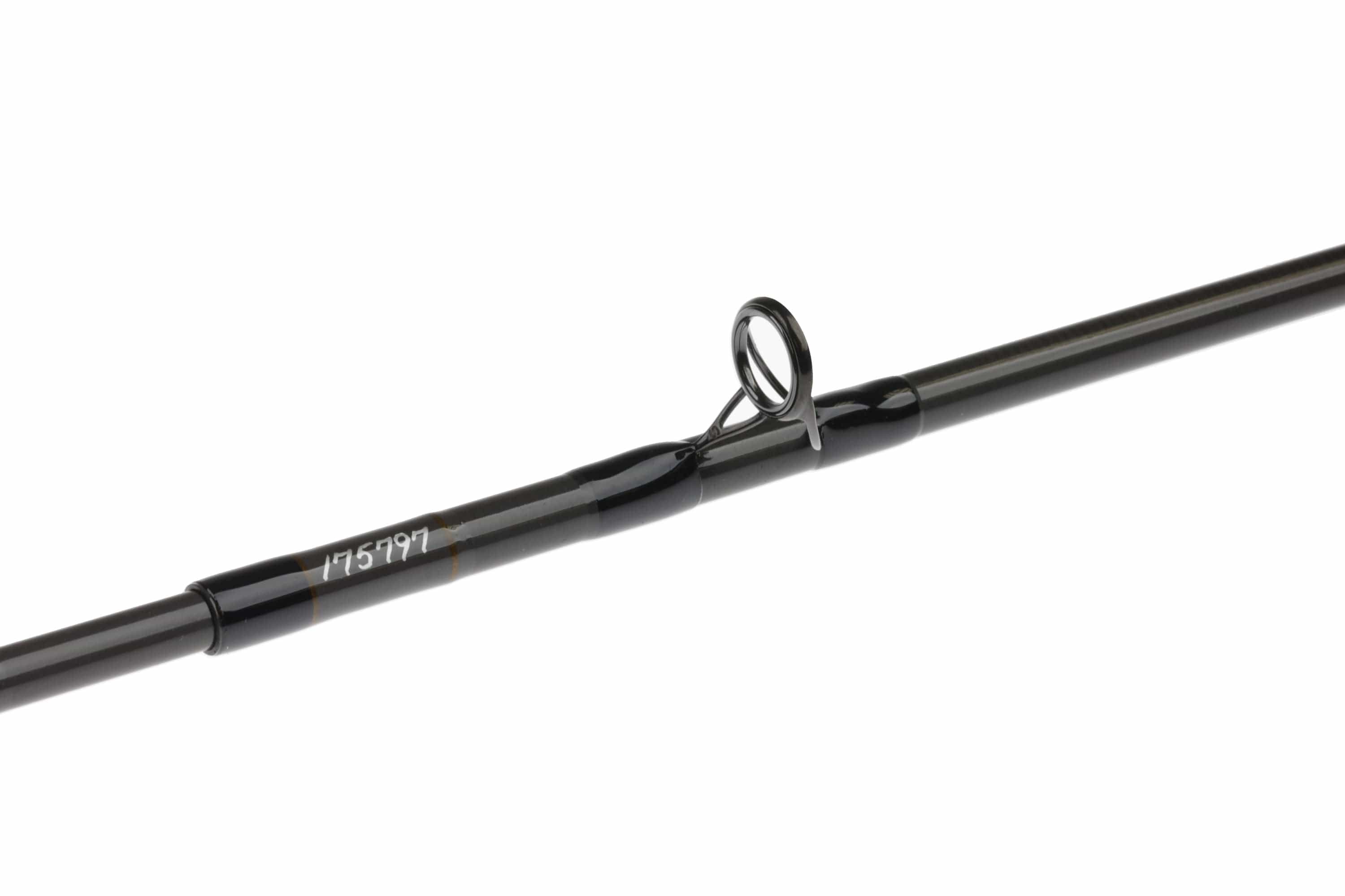
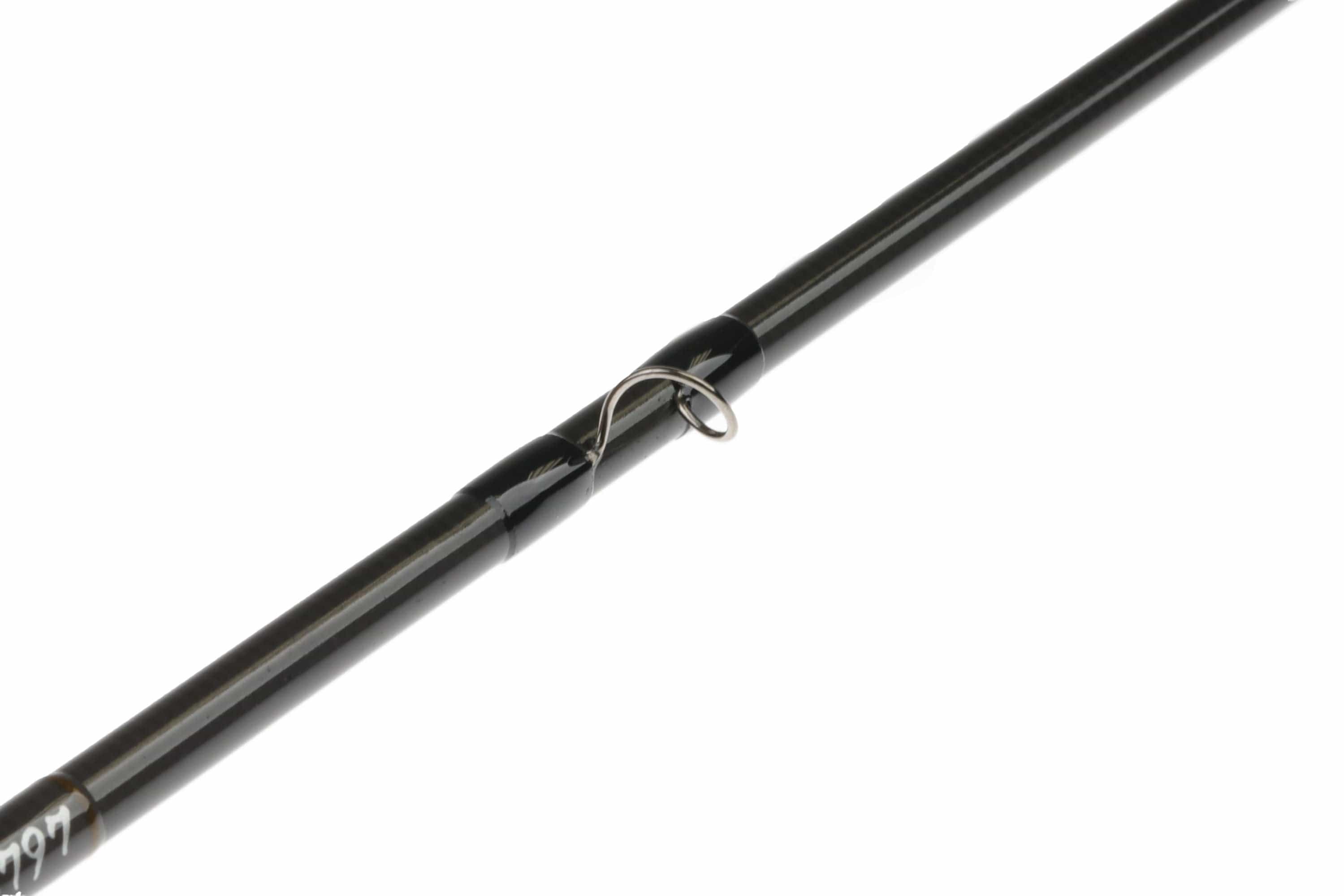
Finish and Wraps - The Short Spey carries the newer semi-gloss blue finish rather than the older low friction blue, with green wraps and red edging.
Guides
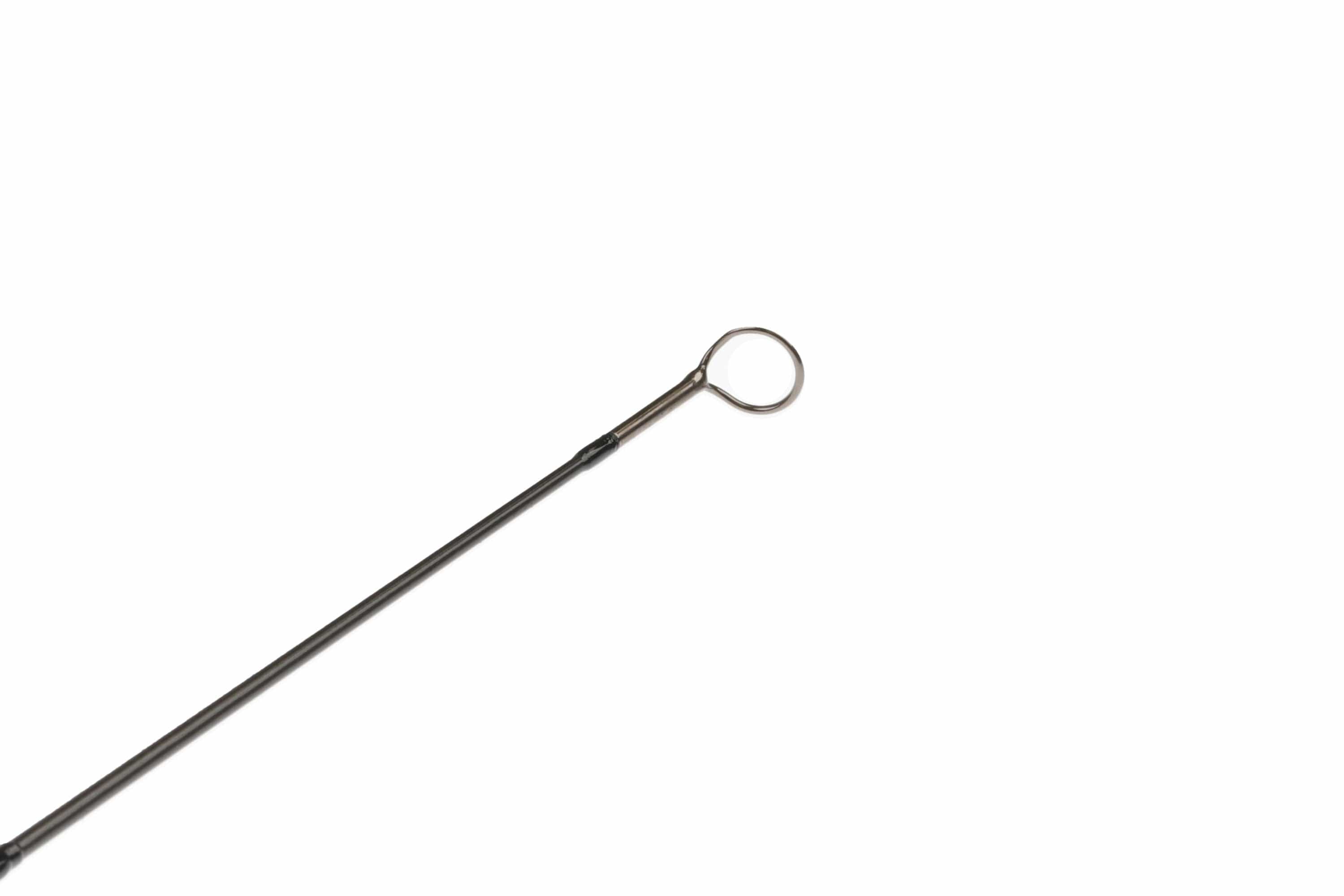
Stripping Guides - Thomas & Thomas fits titanium stripping guides. Titanium is the right frame material on a rod that spends its life in cold water and wet hands: it does not rust and there is no plating to chip and start a corrosion site underneath, which is the usual failure on a chromed stainless frame that catches a rock or a boat gunwale. It is also lighter than steel, and on a spey rod the stripping guide takes the hardest duty of any guide on the blank, since every cast fires the entire shooting line through it under full load.
Snake Guides - Universal Snake Brand guides run the length of the blank. Snake Brand builds these from stainless steel and makes them in the USA, and the detail that distinguishes them is the patented concave foot: the underside is radiused to match a round blank, so the guide is self-orienting and self-aligning and sits flush without being ground or twisted into place by the builder. They also run a smaller outside diameter than a conventional snake, which saves weight out toward the tip and puts less drag on the line, and the wire diameter is graduated down the rod rather than uniform.
Reel Seat
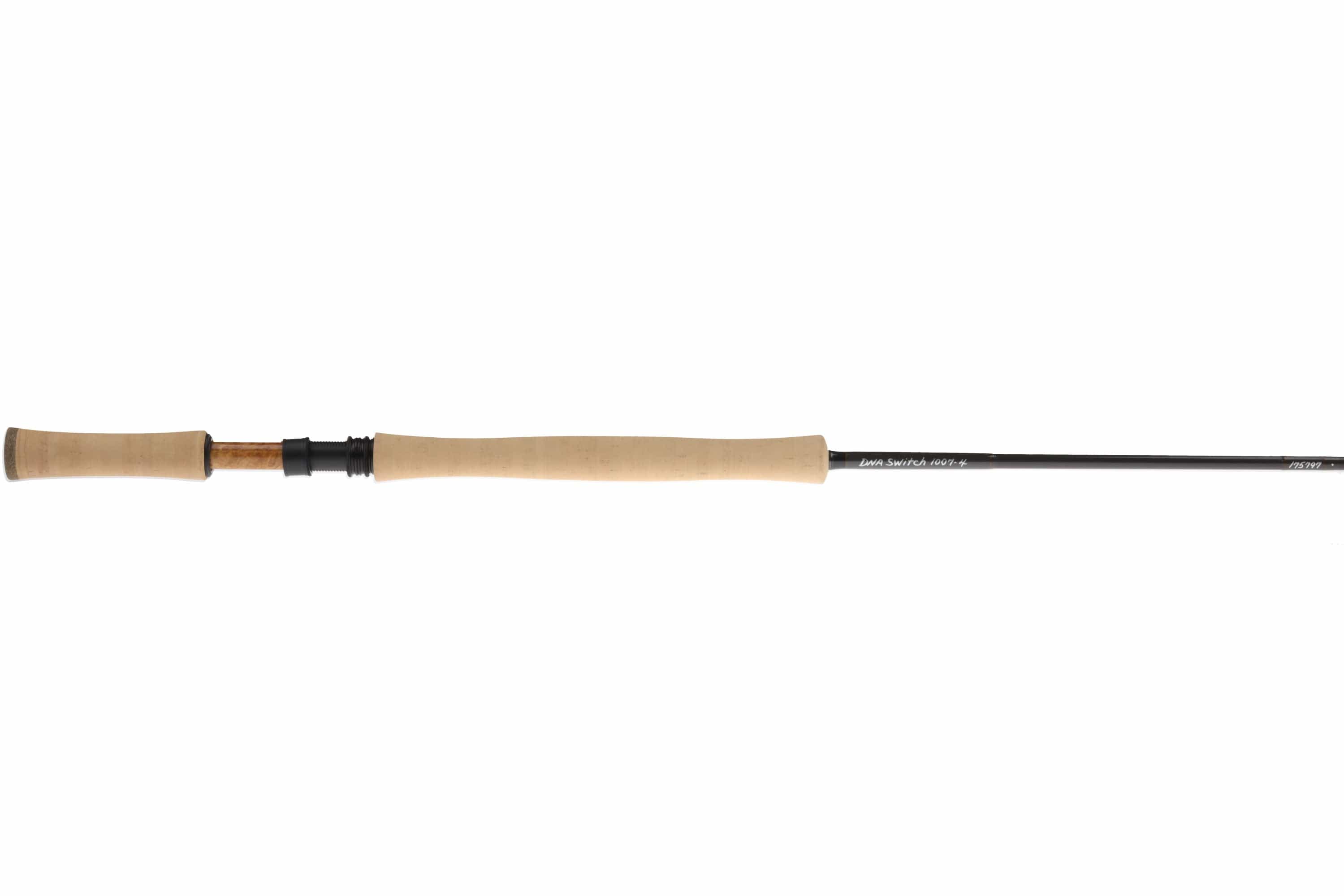
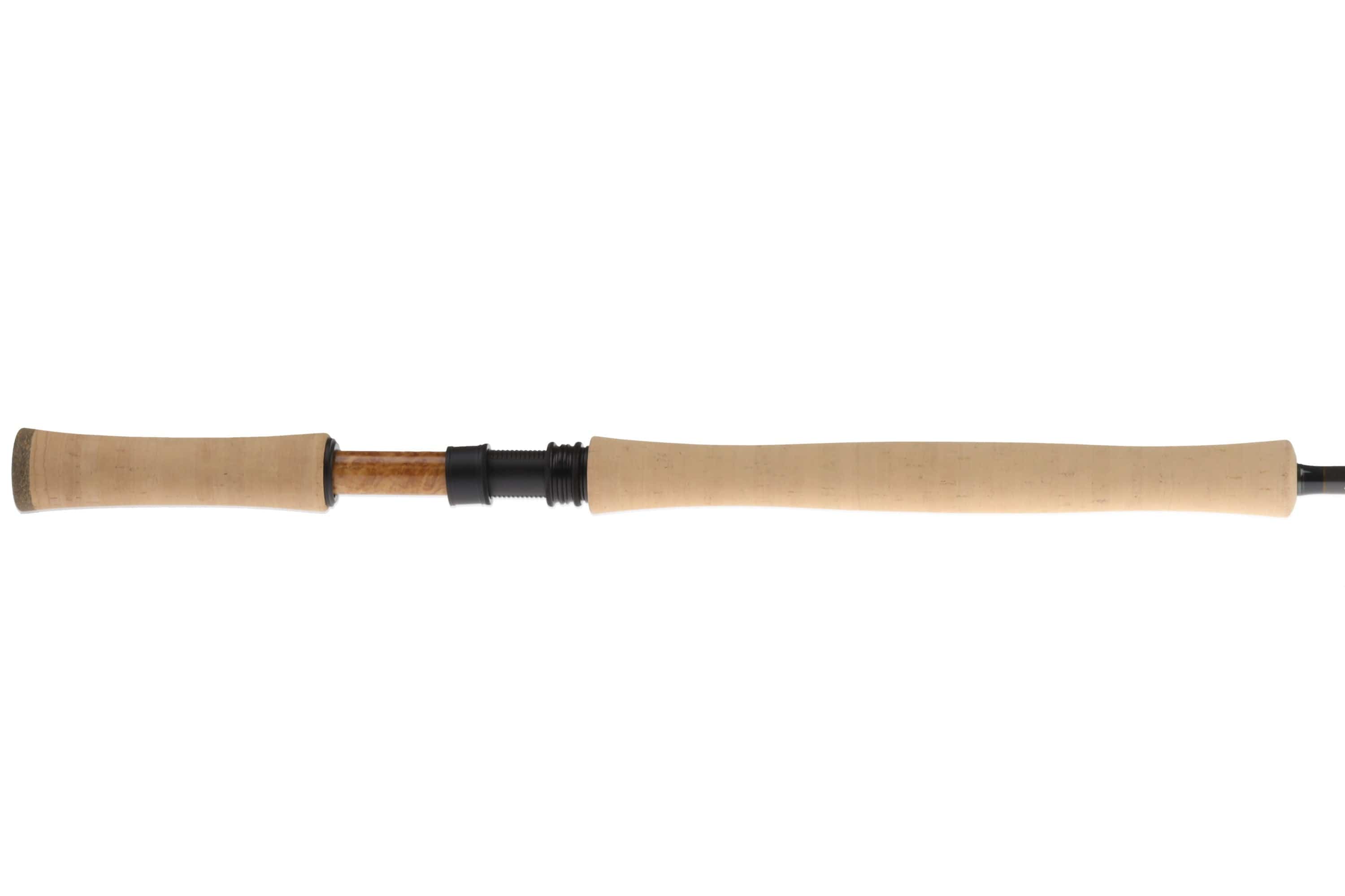
The Short Spey uses a matte-black milled aluminum down-locking reel seat. Milled means it is machined from solid bar stock rather than formed from tube, which is why the threads and the hood hold their tolerance under the load a heavy spey reel puts on a seat over thousands of casts. Down-locking is the correct configuration on a two-hander and not a style choice: it seats the reel toward the butt, behind your lower hand, so the reel weight works as a counterbalance against the rod tip instead of hanging off the middle of your grip. The matte black finish is also the low maintenance option, with no wood insert to swell or check after a season of rain and wet cork.
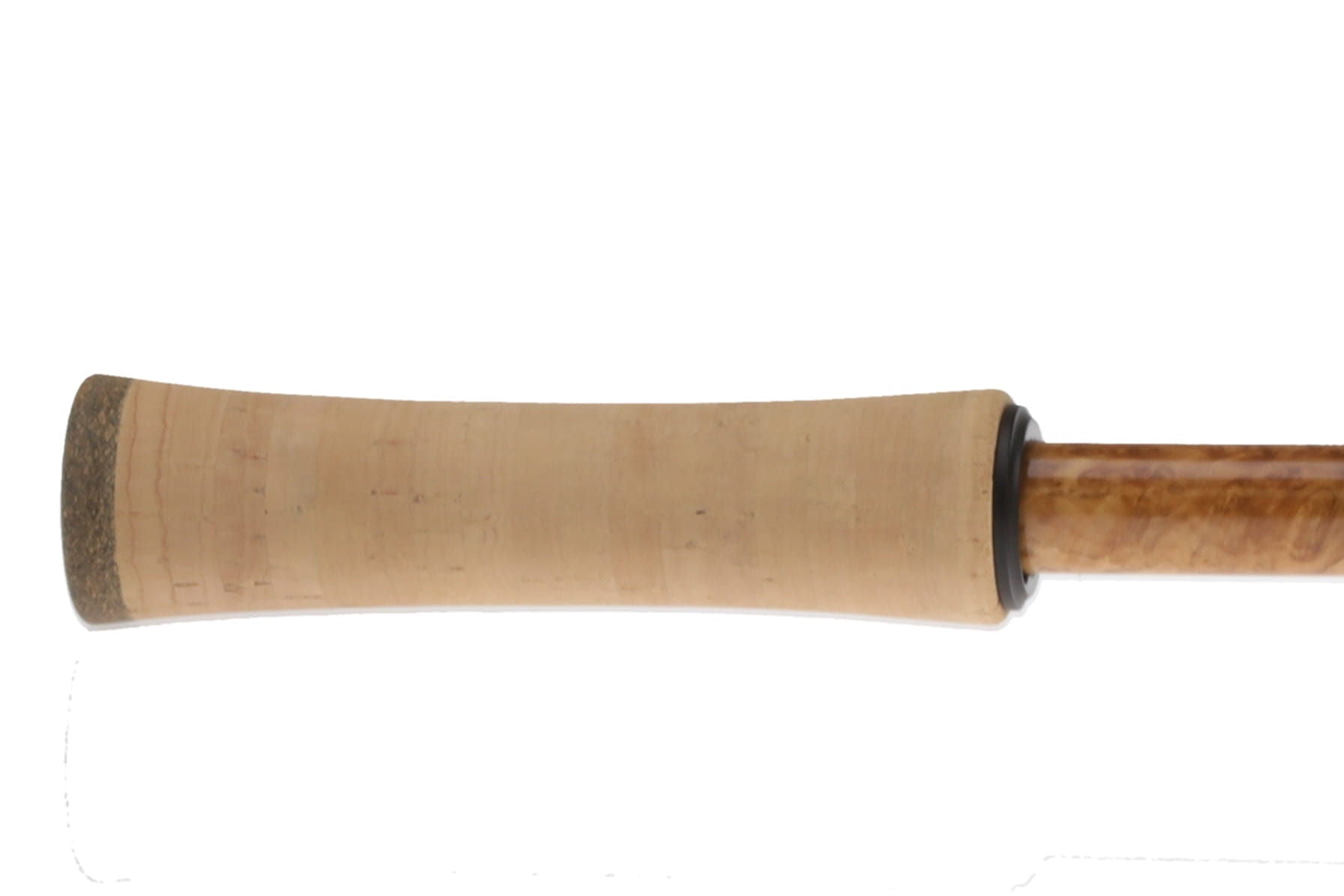
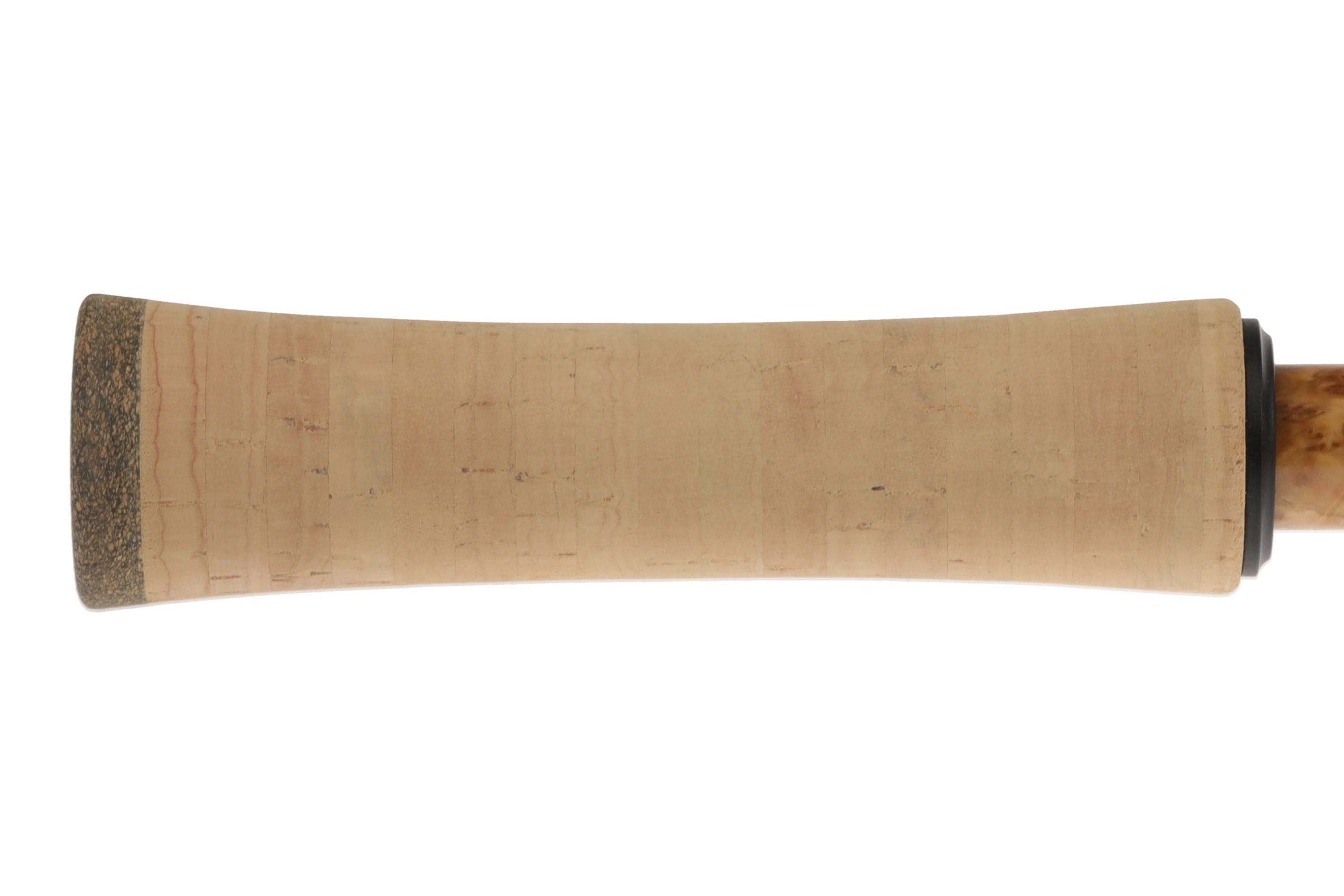
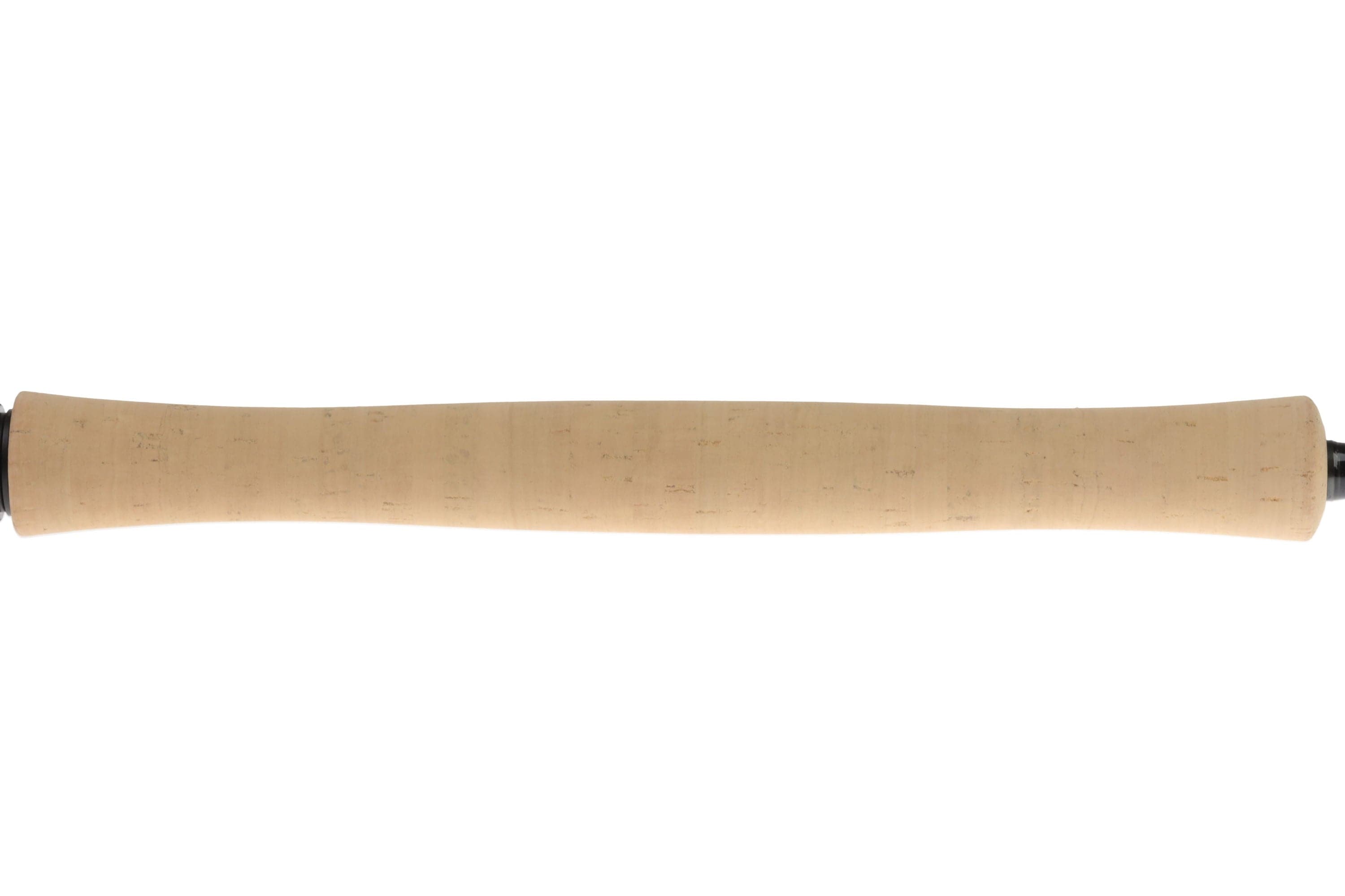
Ahead of the seat is a Full Wells Spey grip. A full wells profile swells at both ends with a waist in the middle, so your hand indexes into the cork by feel and stays put without you squeezing it, which is the whole point on a rod where the upper hand is on the grip for a few hundred casts a day. On a two-hander that shape also gives the lower hand something to pull against on the delivery, since the spey stroke is as much a pull with the bottom hand as a push with the top.
Rod Tube
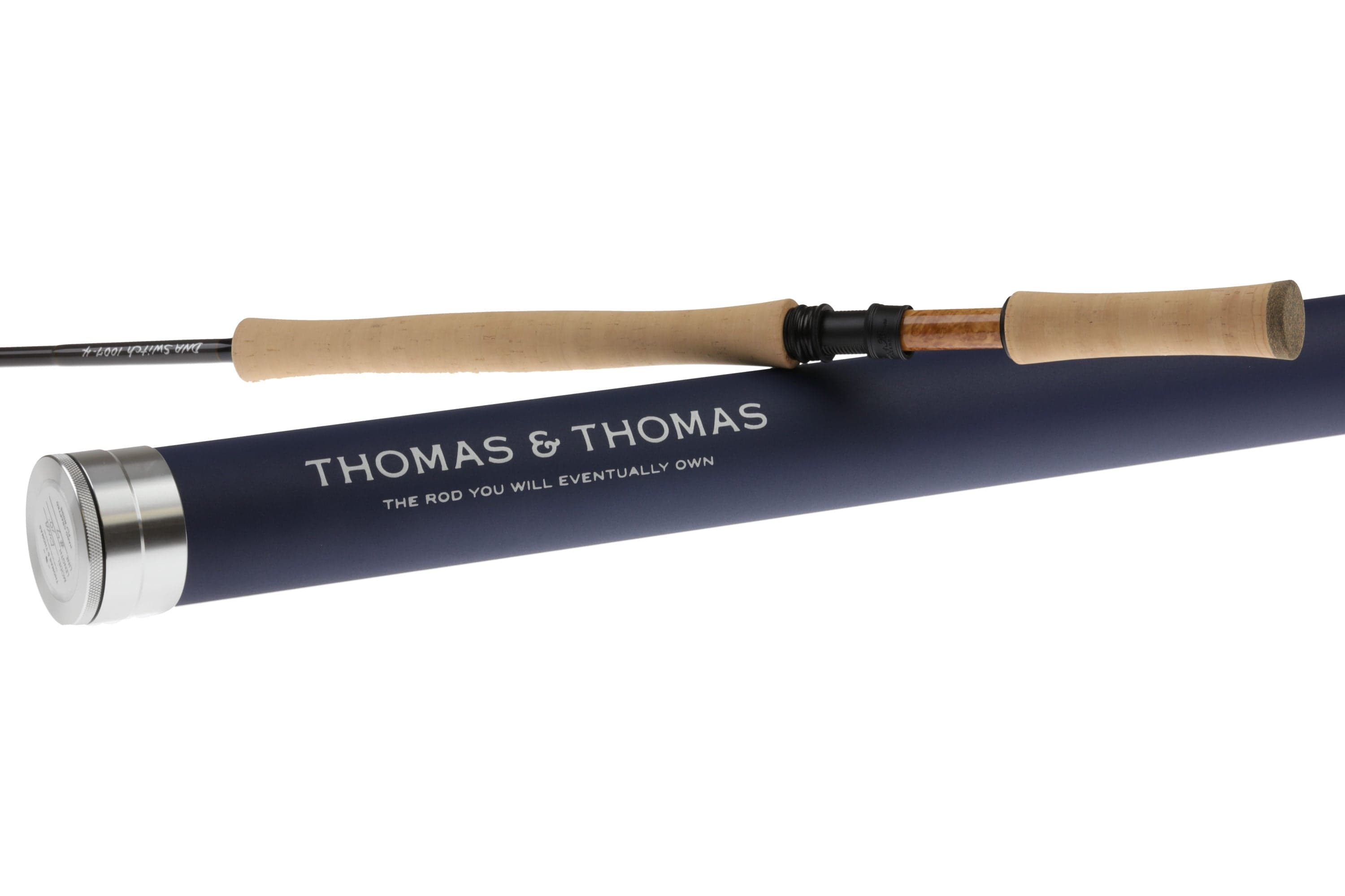
The rod ships in the standard Thomas & Thomas aluminum rod tube, built around a machined bar-stock aluminum collar and cap on a blue powder coated body carrying a pewter Thomas & Thomas logo, with a cloth rod sock. The powder coat is worth having on a rod that travels, because it absorbs the scuffing of a truck bed and a jet boat without the wear marks a bare anodized tube collects, and the machined collar gives the cap real threads rather than the friction fit that works itself loose in transit.
Warranty
Thomas & Thomas warrants its graphite and fiberglass rods against breakage caused by defects in materials, manufacturing or workmanship for the life of the original purchaser, for as long as that person owns the rod, with ordinary wear and tear excepted. Two conditions apply: the rod has to be bought from an authorized Thomas & Thomas dealer, and the warranty card or online registration has to reach Thomas & Thomas within 30 days of purchase. Register the rod before it goes fishing. The coverage does not follow a second owner.
Damage that is not a defect is handled separately. Thomas & Thomas will repair or replace a rod damaged outside warranty coverage at a reasonable charge rather than declining the job, which covers the ordinary broken tip. Excluded from warranty are lost sections and lost rods, damage from use other than the rod's intended purpose, intentional breakage, abuse or neglect in use, transport or storage, and damage caused by anyone else attempting to modify or customize the finished rod. All work returns to Thomas & Thomas. You cover the cost of shipping the rod in, tracked and insured, and a return shipping, handling and mailing insurance charge is applied to the repair. Rods are built and repaired by hand in Greenfield, Massachusetts.
More Info
- Rod Action: Medium with quick recovery
- Best For: Short belly and compact head spey casting on small to mid-size rivers and in tight quarters; swinging streamers, wet flies and small spey patterns for large migratory trout, light duty Atlantic salmon and steelhead
- Grip Style: Full Wells Spey grip, two-handed cork
- Ability Level: Intermediate to Expert
- Line Weight Range: 6wt and 7wt, 11ft 2in, 4 piece
- Models: DNA 1126-4 in 11ft 2in 6wt and DNA 1127-4 in 11ft 2in 7wt
- Blank: Multi-modulus graphite in semi-gloss blue with green wraps and red edging
- Reel Seat: Matte-black milled aluminum, down-locking
- Guides: Titanium stripping guides, Universal Snake Brand snake guides
- Built: Handcrafted in Greenfield, Massachusetts
Recommended Lines
Thomas & Thomas rates these rods by line weight and points you toward compact lines and shooting heads rather than publishing a grain window for each model, so buy the head first and size it inside the line maker's own recommendation for an 11ft 2in 6wt or 7wt. For the Skagit side, sink tips and weighted flies, the Rio Elite Skagit MAX Power Shooting Head is the closest match in intent: Rio built it for casting big flies and heavy tips in tight quarters on small to mid-sized rivers where backcast room is limited, on a short aggressive taper that loads deep and turns a T-tip over, and it runs 350gr through 650gr so the light end of the range lands where these rods live. If you want to go lighter still, the Scientific Anglers Spey Lite Skagit Head is built specifically for lightweight two-hand work and runs 180gr through 420gr, with a short aggressive taper that integrates a sink tip cleanly and still presents a small wet fly. For floating line work, touch-and-go casts and skated or swung soft hackles once the water warms, the Rio Elite Scandi Body Shooting Head is the other half of the system, with a rear-weighted stepped taper that loads the rod easily and a front taper built to turn over long leaders and VersiLeaders, in 250gr through 610gr. All three are shooting heads rather than integrated lines, so plan on a running line and loop-to-loop connections as well.
Rod Specs
| Length | Line Weight | Action | Color | Price | Buy |
|---|---|---|---|---|---|
| 11ft 2in | 6wt | Medium | Blue | $1,195.00 | |
| 11ft 2in | 7wt | Medium | Blue | $1,195.00 |