



Rod and reel purchase
"Very slow shipping. 3 days before shipping and a week and half before I got them. Ordered another rod and reel from another company and got it on two days."
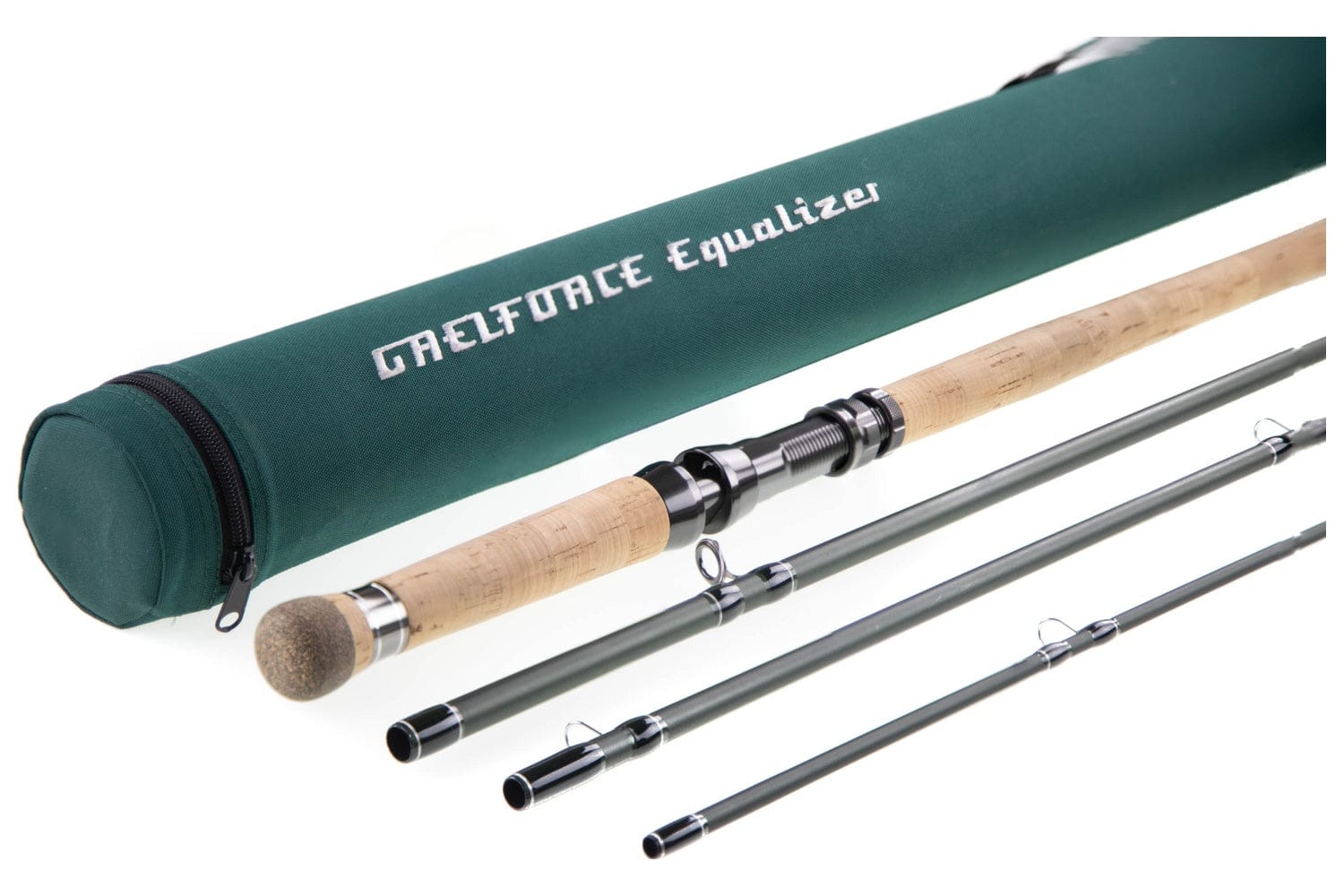


The Gaelforce Equalizer Spey Rod is the graphite-blank original in a family that has been quietly popular on the Spey, the Dee and the Tweed for years, and it is still the taper Gaelforce builds everything else around. Gaelforce is the work of James Chalmers, a World Champion speycaster from northeast Scotland, and the Equalizer profile is what he is known for: a deep progressive bend that loads well down into the butt section, paired with a strong, responsive tip. That pairing is the whole point. The progressive bend gives you time to set an anchor and let a D loop build instead of punishing anything short of perfect timing, and the strong tip lifts a long line cleanly off the water and holds the rod true to plane under load, so the line goes out in a straight path rather than deflecting off to the side. The practical result is a rod that will still make a fishable cast when your stroke is a little late or a little hurried, which is most casts on most days.
We stock all eleven models Gaelforce builds in this range, from an 11ft 3in 7/8wt switch up to a 16ft 10/11wt, and the length you pick matters more than the number printed on the blank. The 11ft 3in switch is the small-water tool, at home with hitched flies, micro tubes and dry flies on spate rivers and on the headwaters of bigger systems. The 12ft 8/9wt is the tight-canopy rod, short enough to work under overhanging trees and to keep your profile low on a small river in low water, and it casts overhead well enough to fish from a boat. The 13ft and 13ft 6in models are the mid-river lengths, long enough to cover holding lies without putting the fly in the far bank. The 14ft 9/10wt is the default first salmon rod for most people, comfortable with a shooting head at its 9wt rating and with a long-belly spey line at its 10wt rating. The 15ft models are the classic big-river lengths for the Tay, the Ness, the Gaula and the Restigouche, and the 16ft models are distance specialists: the 9/10wt Clearwater Special is the long and light one, built for all-day floating-line work, and the 16ft 10/11wt is the heavy-water rod for 1.5in copper tubes and full-sinking spey lines.
The Equalizer blank is built from high-grade graphite, not graphene. This is the point worth being precise about, because Gaelforce also sells a G+ Equalizer Graphene series that shares the Equalizer name and the Equalizer tapers but uses a graphene-reinforced layup, carries different blank weights, and costs more. Every model in this standard range is described by Gaelforce as using its finest new graphite materials, and none of the eleven product pages makes a graphene claim. If you want the graphene blank, that is a separate listing.
Action - Gaelforce rates the action as progressive and the tip as strong on all eleven models, and that consistency is the signature of the series. Recovery speed is the one thing that shifts by model: the 11ft 3in switch, the 13ft 8/9wt, the 13ft 6in, the 14ft, both 15ft models and both 16ft models are rated fast, while the 12ft 8/9wt, the 13ft 7/8wt and the 14ft 6in are rated medium. That is a deliberate taper decision rather than an inconsistency, and it tracks with how those rods get fished: the medium-recovery models reward a slower, more relaxed stroke and a heavier head, and the fast-recovery models suit a shorter, crisper stroke.
Line Versatility - The blank design does not restrict you to one line style. The same rod will cast a floating or sinking long-belly spey line, a Scandi or Skagit shooting head, or a multi-tip head, which is why Gaelforce publishes a different recommended line list for every model rather than a single grain number. That matters on a salmon rod you may own for a decade across changing water levels.
Blank Weight - Published weights run 195g (6.9oz) on the 11ft 3in 7/8wt switch, 7.25oz on the 12ft 8/9wt, 9oz on both 13ft models, 276g (9.75oz) on the 13ft 6in 9wt, 269g (9.9oz) on the 14ft 9/10wt, 289g (10.2oz) on the 14ft 6in, 304g (10.75oz) on the 15ft 10wt, 11.75oz on the 15ft 11wt, 12oz on the 16ft Clearwater Special and 13.35oz on the 16ft 10/11wt.
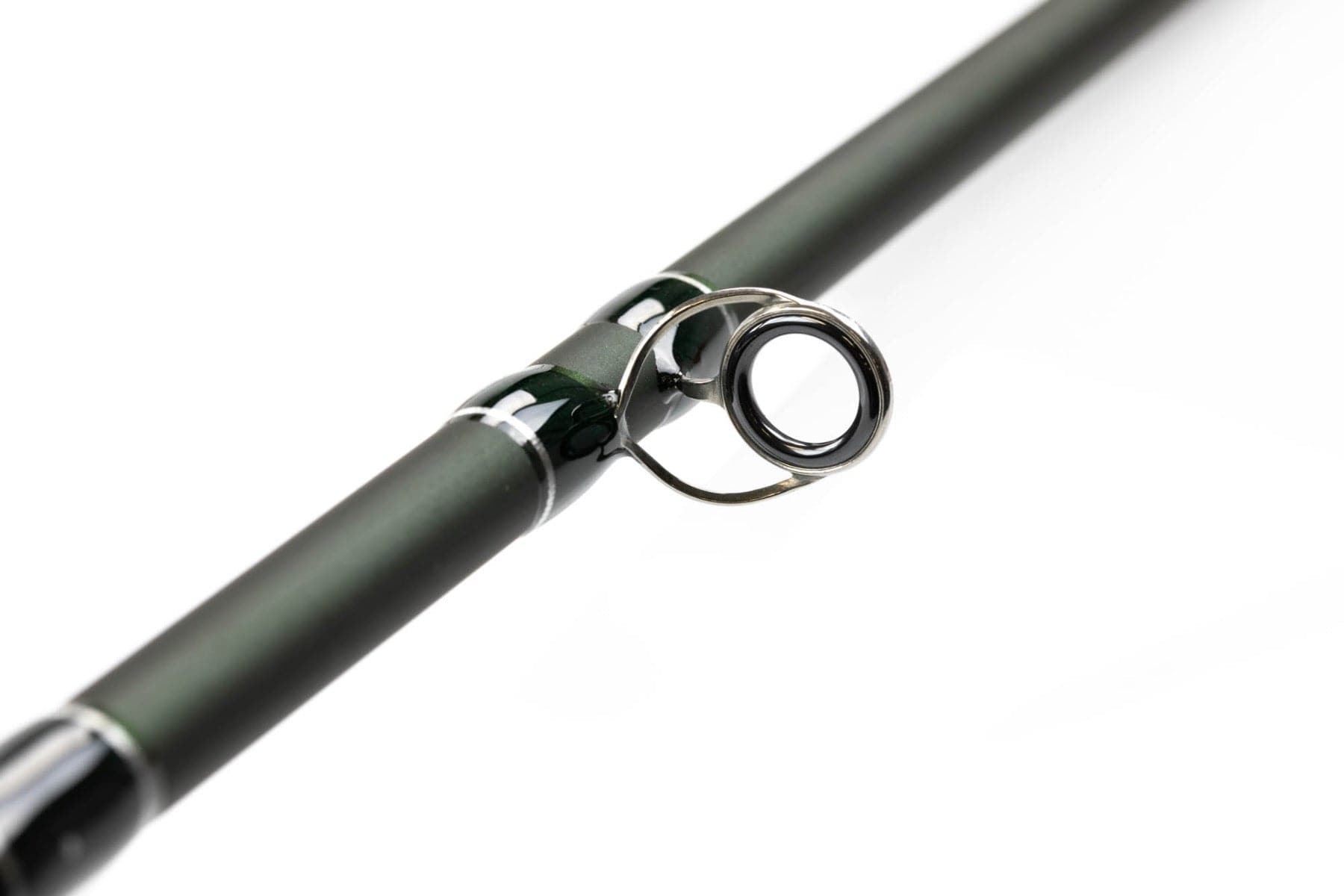
Finish - Matte green for low glare and low visibility, with rich silver whippings. Every section carries an alignment dot, so assembling a four-piece 15ft rod in poor light takes a glance rather than a squint down the blank, and it keeps the guides genuinely in line, which is what protects a long blank from the uneven loading a twisted joint creates.
Stripping Guides - Fuji stripping guides. This is the hardest-working contact point on a two-hander, because every cast fires a long length of running line through it under load. Low friction at the stripper means more of the energy you built in the D loop actually reaches the far bank, and a hard insert will not groove and start shredding line coating after a season of grit and sand.
Snake Guides - Hard chrome snake guides run the length of the blank. Hard chrome is the durable, unglamorous choice for a salmon rod: it resists the corrosion that comes with months of rain, wet hands and tidal beats, it adds almost no weight out toward the tip where weight costs the most on a 15ft or 16ft rod, and it shrugs off the constant clatter of loop-to-loop connections and sink tips coming through on the retrieve.
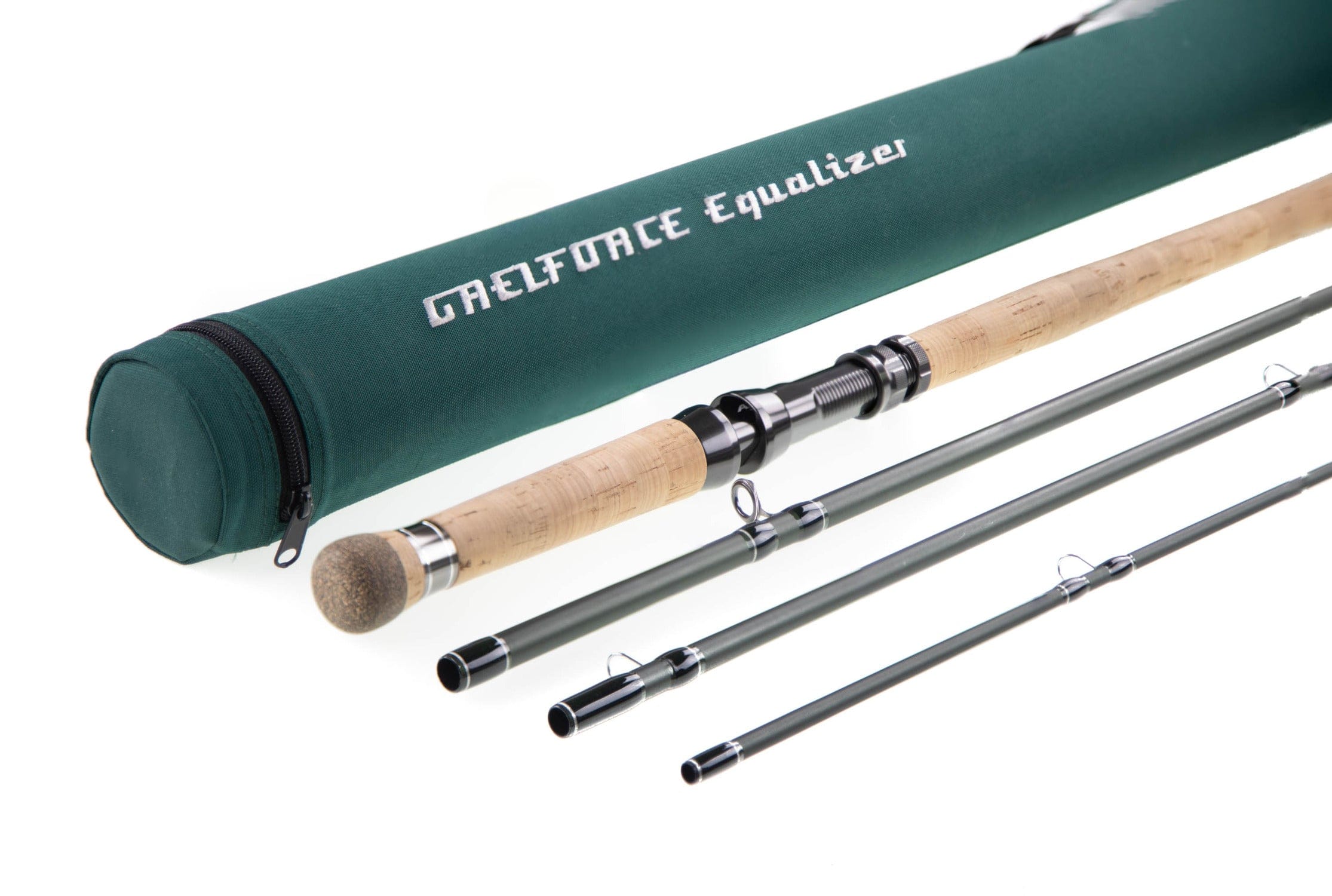
The reel seat is a superior-grade Alps Tri-Lock down-locking unit. Down-locking is the traditional and correct arrangement on a long two-hander, because it moves the reel rearward and shifts the balance point back toward your lower hand, which is what makes a 15ft rod feel manageable instead of tip-heavy. The Tri-Lock mechanism earns its place over a season: it clamps a heavy salmon reel down and keeps it there through thousands of casts, where a conventional single-ring seat works loose across a long day. Ahead of it, Gaelforce fits its finest AAAA-grade slim cork handles. AAAA is the top cork classification, with the fewest pits and fills, and the slim profile is a deliberate choice on a two-hander: both hands are on cork all day, so a slimmer grip is less tiring to hold and gives you more feel for what the blank is doing.
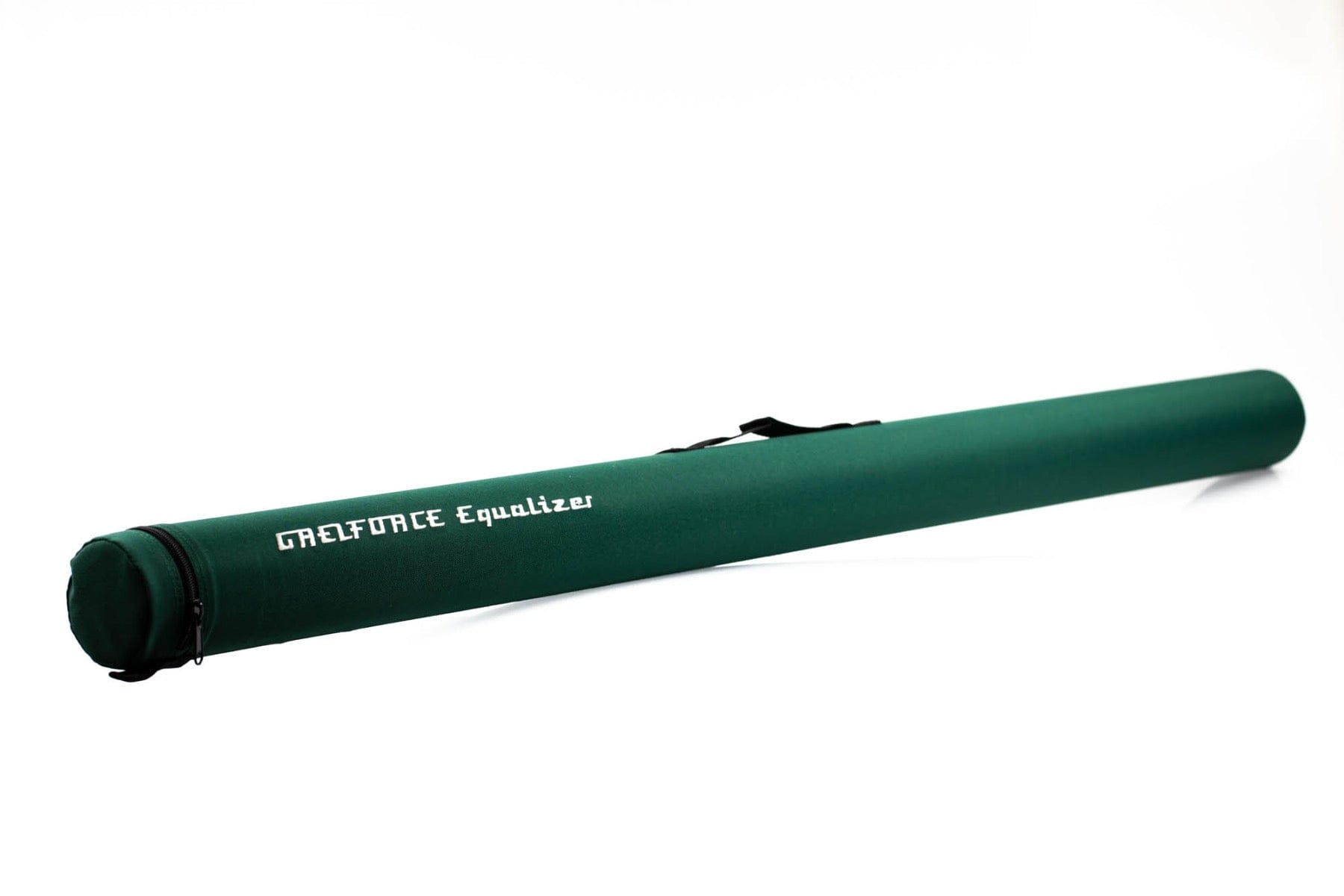
Every Equalizer ships in a Cordura rod tube with a quality cloth bag. Note that this is the fabric-covered tube, not the aluminum tube used on the G+ Graphene series, so it is lighter to carry and easier to strap to a pack, and it will take a knock in a truck bed without denting. Published tube lengths run 97cm on the 12ft, 100cm on the 13ft models, 120cm on the 14ft and 14ft 6in, 125cm on both 15ft models and 135cm on the 16ft models. Check that number against your travel plans before booking a flight with one of the longer rods.
Gaelforce does not publish written warranty terms for its rods, so we are not going to quote you a coverage period or a fee schedule that we cannot stand behind. Rods are covered against defects in materials and workmanship, and claims are handled case by case through the dealer network. If you have a problem with a rod, get in touch with us and we will point you to the current process. Keep your receipt and keep the tube, since both make any claim simpler.
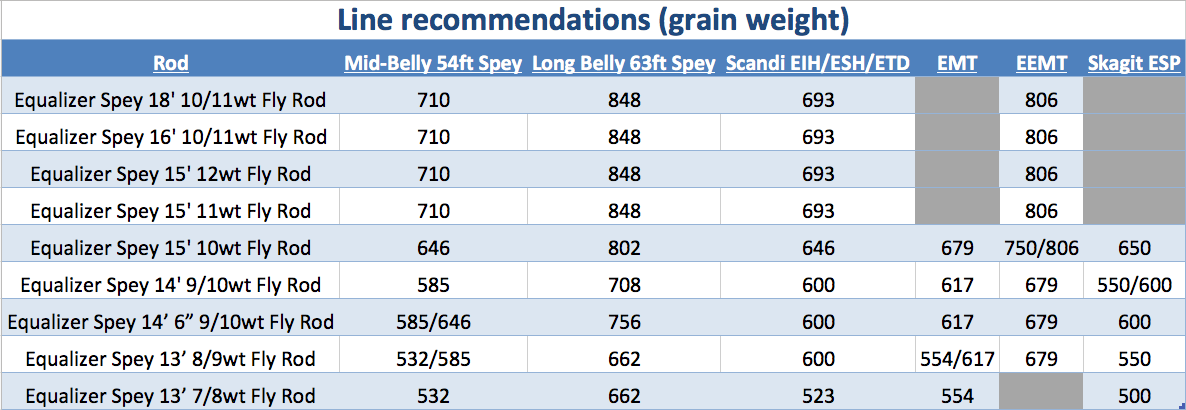
A two-hander is matched to a grain weight and a head length, not to the number on the blank, and on this range both move with model. Check the Gaelforce figures for your exact rod, then match grain and head length together. We carry the Gaelforce lines these rods were actually designed around, which takes the guesswork out of it. The Gaelforce Equalizer Spey Fly Line - 54ft is the workhorse: a 54ft head in 462gr, 532gr, 585gr, 646gr and 710gr, and it is on the recommended list for everything from the 12ft 8/9wt up to the 15ft 10wt. The same taper is also built in 63ft, 73ft and 83ft head lengths running up to 910gr if you fish the longer rods the traditional Scottish way, with a long belly and a long controlled swing. For a shorter, more modern head that still fishes a floating line well, the Gaelforce Equalizer EIH Integrated Shooting Head Line runs 425gr to 646gr in a 37ft to 40ft head with the running line built in, which covers the 11ft 3in switch through the 15ft. When the water is cold and high and you are throwing heavy tips and big tubes, the Gaelforce ESP Skagit Patriot Shooting Head is the matched Skagit option at 450gr to 650gr in a 24ft to 26ft head, and it pairs with a separate running line and sink tips.
| Length | Line Weight | Action | Weight | Price | Buy |
|---|---|---|---|---|---|
| 11ft 3in | 7/8wt | Medium-Fast | 6.9 oz. | $1,164.99 | |
| 13ft | 7/8wt | Medium-Fast | 9 oz. | $1,344.99 | |
| 13ft | 8/9wt | Medium-Fast | 9 oz. | $1,344.99 | |
| 14ft | 9/10wt | Medium-Fast | 10 oz. | $1,419.99 | |
| 14ft 6in | 9/10wt | Medium-Fast | 10 oz. | $1,489.99 | |
| 13ft 6in | 9wt | Medium-Fast | 9.75 oz. | $1,419.99 | |
| 12ft | 8/9wt | Medium-Fast | 7.25 oz. | $1,319.99 |
Overall rating: 4.0 / 5 from 2 reviews.
Review topics: [].
"Very slow shipping. 3 days before shipping and a week and half before I got them. Ordered another rod and reel from another company and got it on two days."
"I am a relentless tackle tart, especially when it comes to fly lines. If a new line hits the market, I’m on it like a rat on cheese. I can’t help myself. It’s more expensive than a cocaine habit, but a lot better for me. So, when Gaelforce Fly Fishing brought to market their ESH Equalizer Shooting Head (11.2 to 12.4 metres/37 to 41 feet) and EES Equalizer Extended Spey shooting head (15 metres/49 feet) a few years ago, I bought one of every size from the company located in Kilsyth, Scotland. To say the lines were a revelation undersells my reaction when I cast them. The lines knocked my socks off. The ESH shooting head was the finest floating “Scandi” head that I had ever cast. It still is. The EES shooting head casts with the ease of a “Scandi” head but flies like a mid-belly line (especially when paired with 47-pound Varivas shooting line). For those who like to fish a hitched Sunray with precision at 120 feet, this is your line. If Gaelforce lines were that good, I wondered, how do their rods stack up? I took the plunge and ordered a four-piece Gaelforce Equalizer 15-foot 10-weight (GE 1510). I paid full retail for the rod—something I’d not done in thirty years. For good measure, I added the Gaelforce Equalizer 63-foot #10/11 integrated spey line. I wadered up and hit my local casting venue to test the new rod and line. Uncasing the new Gaelforce rod revealed a lower grip that is substantially longer than the grip I’m used to on a typical American rod. Accented with an aluminum ring, the lower grip is long enough to allow the caster to use a thumb-on-top grip with the bottom hand. If you use this grip on an American rod, your thumb ends up on the reel seat. The lower grip on the Gaelforce 1510 completely eliminates this problem. A thumbs-on-top grip with both hands is significantly more powerful than the “O.K.” grip—formed by making the “O.K.” sign with your fingers—that is used by virtually all American casters. If you use a thumb-on-top grip with the lower hand, it allows you to exert significantly more power with the lower hand at the “business end” of a double-handed rod. As a bonus, the thumb-on-top grip with the top hand on the upper grip acts as a “block” to prevent the caster from “blowing through” the rear stop on the back cast. Moving up the rod, the bombproof ALPS reel seat is triangular in shape, which prevents the reel, particularly a heavy reel, from rotating in place while casting. The hood of the reel seat locks the reel securely in place with absolutely no wiggle. A reel that moves in its reel seat drives me absolutely crazy over a long fishing session. Top marks to the ALPS reel seat. Best on the market by a long shot. The cork on the upper grip of the rod is thinner by design than the competing grip of an American rod. The thinner grip allows the caster to relax the fingers of the top hand when using a thumb-on-top grip, which, in turn, allows the caster to deemphasize the top hand when making the forward stroke. The rod features an elegant matte finish in a color that I would describe as Forest Green. There is no flash transmitted from the matte finish of the rod that might alert a salmon to your presence. The rod features top-shelf Fuji stripping guides as well as alignment dots for quick and easy assembly. The length of the top grip on the Gaelforce 1510 is shorter than you might expect on a rod designed in Scotland. There’s a reason for this design. Place the thumb of your top hand at the very top of the upper grip and then put your lower hand at the bottom of the lower grip using the thumb-on-top grip. Your hands are now properly spaced from maximum ergonomic efficiency. If the thumb of your top hand rests on the graphite shaft above the cork grip, your hands are too far apart. Not that they are listening, but American rod manufacturers build the vast majority of their two-handed offerings with relatively stiff butts and soft tips. When making a single spey, the soft tip has a tendency to unload too early—premature…well, you get the idea—making it difficult to line up the back cast with the forward cast when executing a single spey. The Gaelforce 1510 has the opposite tendency. The robust tip and softer (by comparison) mid- and butt sections allow the caster to load the rod deep into the cork handle. The rod has a semi-regressive feel although the overall bend profile of the rod remains progressive. The upshot of this authoritative “through” action is the caster feels like he has all day long to turn the corner when making a single spey. Easy is good. Especially in spey casting. This feature is particularly noticeable when casting the Gaelforce 1510 in combination with the Gaelforce 63-foot spey line. Once I dialed in the stroke with a few jump-roll casts, I could turn the corner when making angle changes of 70 degrees with consummate ease. These angle changes were so easy, in fact, that the first thing I did was measure the head to make sure it was 63 feet long. Yup. Sixty-three feet. Snake rolls were similarly straightforward. The deep bend into the cork slowed down the aerial portion of the cast, allowing me to place my anchor with precision. The Gaelforce 1510 also made short work of the ESH (11.2 to 12.4 metres/37 to 41 feet) and EES (15 metres/49 feet) shooting heads. The same control that the rod demonstrated with the 63-foot head translates to these shorter heads. I used to think you needed a rod designed for Scandi-style casting to cast a Scandi-style line. Wrong. The principles of spey casting are the same, whether you’re casting a Scandi-style shooting head, a Skagit head or a long line. A good rod is a good rod. End of story. I am particularly impressed with the performance of the Gaelforce 1510 when playing strong salmon. I’ve landed salmon up to 13 kilos (28 pounds) on the Cascapedia using the rod. There are absolutely no flat spots in the rod, no weak tip that folds on you just as you are about to land your largest salmon of the season. Some rods cast well, but don’t adapt to the rigours of fighting and landing three- and four-sea-winter salmon in a stiff current. The Gaelforce 1510 allows you to “put the wood” to a fish. It’s what my English-speaking friends across the pond would call a “proper salmon rod.” James Chalmers, the architect and the brains behind Gaelforce Fly Fishing, also runs Team Gaelforce, which includes such casting luminaries as multiple world champions Gerard Downey (Ireland), Travis Johnson (U.S.A.) and Martin Kiely (Ireland). The designs of Gaelforce rods and lines are informed by the relentless pursuit of casting precision on the concrete ponds of Golden Gate Casting Club in San Francisco, CA and at “the quarry” located near Kilsyth, Scotland, which, as far as I can tell, is the Area 51 described on the Gaelforce website. The result of this constant testing by some of the world’s top speycasters and, of equal importance, by hardcore salmon fishers is arguably the strongest line-up of double-handed rods on the planet at this time. Let’s be clear. The Gaelforce Equalizer 1510 is not a tournament rod. It’s a fishing rod. I don’t sing the praises of the rod on the river. I simply hand it over to anyone who asks about the rod. “Give it a try,” I say. The response after a short test is always, “Holy ****!” Insert your expletive of choice in the previous sentence and you’ll know what these folks are talking about."