



Alaska
Aleutian Adventures - Steelhead Creek Camp
Request a Reservation
Thanks for your interest in Aleutian Adventures - Steelhead Creek Camp. Fill out the form below and our team will contact you shortly to discuss availability and details.
Email the travel team
How do you want to send it?
We've written the email for you. Add your dates and it's ready to send.
Trip Summary
Set along the Bering Sea coast of the Alaska Peninsula, Aleutian Adventures’ Steelhead Creek Camp is an exceptionally remote tent camp built for just two anglers per week. Guests spend six guided days wading intimate, clear-water streams, swinging flies with single-hand or compact two-handed rods for wild, ocean-bright steelhead. Heated WeatherPort accommodations, hearty meals, hot showers, and Starlink provide practical comfort, while immediate access to the creek and a single dedicated guide create one of Alaska’s most private and immersive steelhead experiences.
Who's It For?
Exclusive Two-Angler Camp
Steelhead Creek Camp hosts just two guests per week, both fishing with one dedicated guide. The extremely limited capacity creates a highly personalized experience with carefully rested water and virtually no outside angling pressure.
Visual Small-Water Steelheading
Steelhead Creek is a narrow, clear coastal stream where anglers can often spot ocean-bright steelhead holding in soft seams, deep slots, and undercut banks. The water is ideally suited to precise presentations with single-hand or compact two-handed rods and lightly weighted or unweighted swung flies.
Immediate Walk-and-Wade Access
Productive water begins within sight of camp, eliminating daily boat rides and allowing guests to reach the creek with a short walk. Strong hikers can explore farther upstream, while a second coastal stream may be accessed by Jeep when tides and weather permit.
Comfortable Bering Sea Outpost
Heated WeatherPort accommodations with full beds and linens, hot showers, hearty meals, reliable power, and Starlink provide practical comfort after long days on the water. Located roughly 40 miles from Nelson Lagoon, the camp offers genuine isolation along the wild Bering Sea coast.
CHOOSE YOUR ADVENTURE
WHY BOOK WITH TRIDENT
- No Credit Card Fees
- Same Price as Booking Direct
- Earn Trident Rewards
Trident Travel's expert planning service is free of charge.
The rates below are the same as you would pay by booking directly with the camp.
All rates below are for double occupancy, with a 2:1 guest-to-guide ratio, priced per person. Rates and inclusions are subject to change at any time. Contact us for the most current pricing.
Steelhead Season (September - October)
7 Nights / 6 Days = $9,950
What’s Included:
- 7 nights accommodations (double occupancy)
- 6 days guided fishing (2:1 angler/guide)
- Meals and non-alcoholic beverages
- Round-trip charter flights between Anchorage and Nelson Lagoon
- Round-trip 4X4 transfers between Nelson Lagoon and Steelhead Creek Camp
What’s Not Included:
- Commercial flights to and from Anchorage
- Hotels, meals, and ground transportation in Anchorage
- Alaska fishing license
- Alcoholic beverages
- Fishing equipment and flies
- Gratuities for guide and staff
- Travel insurance and emergency evacuation coverage
Gallery




Seasonal Fishing
Calendar
Steelhead Creek Camp operates for roughly four weeks, timed around the arrival of wild, ocean-bright Steelhead from the Bering Sea. Early departures may retain opportunities for late Silver Salmon and Dolly Varden, while the later weeks become almost entirely focused on Steelhead. Anglers walk and wade the camp’s narrow, clear creek, often spotting fish before presenting lightly weighted or unweighted flies with single-hand or compact two-handed rods. Productive water begins near the tents, with additional upstream reaches available to stronger hikers and a second coastal stream occasionally accessible by Jeep when tides and weather permit. Catch rates depend heavily on fish movement and water conditions, with one to four quality Steelhead opportunities per day possible when conditions align. Expect cool, windy maritime weather, frequent rain, and increasingly cold conditions as October progresses.
Lodging & Accommodations

Accommodations
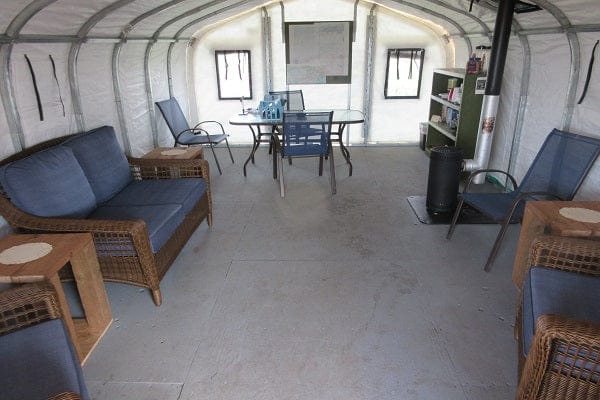
Steelhead Creek Camp is a minimalist Bering Sea outpost built for only two guests. Anglers share a double-occupancy WeatherPort tent set on a raised platform and furnished with comfortable beds, linens, a drip-oil heater, electrical outlets, and ample gear storage. A separate heated bathhouse provides hot and cold running water with an on-demand shower, while restroom facilities consist of a clean outhouse. Meals and downtime take place in a warm dining tent. The camp is comfortable and functional, but best suited to anglers who value immediate fishing access and solitude over traditional lodge amenities.
Food
Meals are simple, hearty, and structured around full fishing days. The camp’s guide and host prepares breakfast each morning, packs lunch to enjoy on the water, and serves dinner in the heated dining tent. Guests should expect satisfying home-style meals rather than a formal lodge dining program. Dietary restrictions should be communicated well in advance because ingredients and last-minute alternatives are limited at this extremely remote camp. Non-alcoholic beverages are included, while alcoholic beverages are not provided.
Connectivity
Starlink Wi-Fi is broadcast throughout camp and is generally sufficient for messages, email, and basic internet use. Cellular service is not available. Generator power with battery backup supplies reliable electricity, and standard 110-volt outlets in the guest tent allow anglers to charge phones, cameras, and other personal electronics. As with any remote Alaska camp, guests should not depend on uninterrupted connectivity for time-sensitive work.
Target Species

Steelhead

Silver Salmon

Dolly Varden
10-Day Itinerary
Each day is carefully planned to maximize your fishing success while experiencing the best of what this destination has to offer. Itineraries are flexible based on conditions and guest preferences.
A standard package at Steelhead Creek Camp includes seven nights and six full days of guided fishing. Guests should fly to Ted Stevens Anchorage International Airport (ANC) at least one day before the scheduled charter to the Alaska Peninsula. Upon arrival, you will take a hotel shuttle, taxi, or rideshare to your pre-arranged Anchorage hotel and spend one night.
After checking out of your hotel, you will take a taxi or rideshare to Merrill Field (MRI) and board the lodge-coordinated charter flight to Nelson Lagoon Airport (NLG). The scenic flight takes approximately 2.5 hours. Upon arrival, your guide will meet you for the roughly 60- to 90-minute trip along the Bering Sea beach in a 4X4 vehicle. Because beach access is tide- and weather-dependent, transfer timing can vary, and guests may wait at the operator’s bunkhouse in Nelson Lagoon until passage is safe. After reaching camp, you can settle into the guest tent, prepare your equipment, and enjoy dinner. Guided fishing is not scheduled on arrival day, although guests may explore nearby water independently when time and conditions permit.
Each fishing day begins with breakfast before heading out with your guide. Most fishing is reached on foot from camp, with productive water located within sight of the tents. Anglers may hike farther upstream or travel by 4X4 to a second coastal stream when tides, weather, and river conditions permit. Your guide will adjust the daily plan around fish movement and water conditions, and a packed lunch allows you to remain on the water throughout the day. After fishing, you will return to camp for a hot shower and dinner in the heated dining tent. Evenings can be spent relaxing, preparing tackle, or tying flies for the following day.
After breakfast, you will pack your belongings and travel by 4X4 along the beach to Nelson Lagoon Airport. Weather permitting, the return charter generally departs between 1:00 and 2:00 PM and reaches Anchorage between 4:00 and 5:00 PM. After landing, you will take a taxi or rideshare to your pre-arranged hotel. Because weather can delay travel from the Alaska Peninsula, guests should plan to spend another night in Anchorage rather than schedule a same-day commercial flight home.
After checking out of your hotel, you will take a hotel shuttle, taxi, or rideshare to Ted Stevens Anchorage International Airport (ANC) and board your flight home.
Frequently Asked Questions
GET IN TOUCHSteelhead Creek Camp is an intimate, wade-only program built for two anglers and one dedicated guide. Instead of traveling by jet boat or aircraft each morning, guests step directly from camp onto a small, clear Bering Sea tributary characterized by soft seams, deep slots, and undercut banks. The fishing frequently involves locating individual ocean-bright steelhead and presenting swung flies without disturbing them. The same guide manages the camp, prepares meals, and directs the fishing program throughout the week. This highly personal format emphasizes solitude, technical angling, and careful coverage of lightly pressured water rather than lodge amenities or high-volume fishing.
Previous steelhead fly-fishing experience is strongly recommended. Guests should be comfortable casting and managing a swung fly, adjusting presentation depth, reading subtle holding water, and responding quickly when a fish takes. The creek’s small size can make casting distances manageable, but its clear water and limited number of daily opportunities reward accurate presentations, efficient line control, and quiet movement. Anglers do not need to be expert Spey casters, although practicing with the rods, heads, and sink tips they plan to bring will substantially improve their chances. This program is best suited to patient anglers who value technical encounters more than numbers.
The season generally extends from mid-September through October and lasts only about four weeks. Earlier trips may combine fresh steelhead with late Silver Salmon and Dolly Varden, while later weeks become increasingly focused on steelhead alone. Late-season anglers should be prepared for colder temperatures, shorter days, stronger winds, and a greater possibility of coastal storms. There is no single week that consistently produces the best fishing because steelhead movement is influenced by tides, rainfall, water temperature, and river levels. With only two available rods each week, anglers should select dates according to their preferred conditions and reserve well in advance.
Both systems can be effective, but a compact two-handed rod is the most versatile primary tool. The operator recommends 7- or 8-weight Spey or switch rods measuring approximately 11 to 13 feet. These rods provide efficient line control, controlled swings, and useful leverage when wind affects the exposed coastal valley. A single-hand rod can be advantageous in the creek’s tighter reaches or when making short, precise presentations around undercut banks and defined slots. Anglers comfortable with both styles may want to bring one of each. Regardless of preference, a fully rigged backup rod is strongly recommended because replacement equipment is difficult to obtain in this remote location.
Recommended two-handed systems include compact Skagit heads in floating and intermediate densities, matched carefully to the rod. The operator suggests approximately 40-pound monofilament running line and a selection of tips that includes a 10-foot T-11, 2.5-foot floating and 7.5-foot T-11 combination, 5-foot floating and 5-foot T-11 combination, and 10-foot T-14. Leaders are commonly built from approximately 20-pound monofilament. Carrying several tip configurations is important because productive water ranges from shallow seams to deeper slots, and conditions can change with rainfall and tides. The guide will help select the appropriate density, length, and presentation angle for each piece of water.
Steelhead Creek Camp focuses on swinging traditional and tube-style flies rather than fishing nymphs or egg patterns. Recommended flies are generally two to three inches long, weighted or unweighted, and rigged with size 2 to 4 octopus-style stinger hooks. Productive color combinations may include black and blue, purple and black, olive, and pink or orange. Because the creek is small and clear, presentation usually matters more than constant fly changes. Anglers should expect to control swing speed, adjust depth with tip selection, and cover soft seams, slots, and undercut banks methodically. When fish can be spotted, the guide may structure the approach around a specific steelhead and a limited number of carefully planned casts.
When conditions align, the operator considers one to four quality steelhead opportunities per day a realistic expectation. An opportunity should not be interpreted as a guaranteed landed fish. It may involve sighting a steelhead, receiving a follow or take, briefly hooking a fish, or bringing one to hand. Tide stage, river level, weather, fish movement, and angler execution all influence results. With only two anglers sharing the water with one guide, the program can rest productive lies and approach individual fish carefully. Steelhead Creek is therefore best evaluated by the quality and intimacy of its encounters, not by catch totals associated with higher-volume salmon fisheries.
Steelhead Creek flows directly toward the Bering Sea, so tides can influence fish movement, access, and daily fishing strategy. Rainfall may change river height and clarity quickly, while wind and coastal storms can complicate casting or make exposed sections uncomfortable. The primary creek is reached on foot from camp, but access to a second coastal stream requires a 4X4 trip along the beach and is only possible when tides, weather, and travel conditions permit. There are no boats or fly-out fisheries serving as guaranteed alternatives. Guests should arrive prepared for flexible schedules, periods of downtime, and fishing decisions based on conditions rather than a fixed daily itinerary.
Wading is generally considered easy to moderately challenging, but anglers should be prepared to walk approximately two to four miles per day across gravel, uneven tundra, soft ground, and irregular streambanks. Guests in better condition can reach more distant upstream water and fish a broader portion of the system. Cold water, wind, and wet weather can also make otherwise straightforward terrain more tiring. A wading staff can provide valuable stability, particularly late in the week. Felt-soled boots are prohibited in Alaska freshwater, so guests should bring clean rubber-soled wading boots with suitable traction and thoroughly clean, drain, and dry all wading equipment before traveling.
Guests are expected to bring their own rods, reels, waders, boots, primary lines, sink tips, and preferred flies. The guide carries flies, leaders, tips, and terminal tackle to supplement an angler’s selection, and limited loaner rod-and-reel setups may be available, but guests should not depend on camp equipment as their primary system. A backup rod, spare reel or running line, additional heads, repair materials, polarized glasses, and reliable waterproof clothing are strongly recommended. Packing should remain compact because charter baggage is generally limited to approximately 50 pounds per person. Guests should confirm the current allowance before departure and avoid bringing unnecessarily large rod cases or duplicate nonessential equipment.
Steelhead fishing at Steelhead Creek Camp is conducted on a catch-and-release basis. Anglers should use tackle and leaders strong enough to land fish efficiently rather than prolonging the fight with unnecessarily light equipment. Once a steelhead is controlled, it should remain in the water whenever possible and be handled with clean, wet hands while its body is supported horizontally. Photography should be organized before lifting the fish, with air exposure kept to an absolute minimum. The guide will direct landing, handling, and release procedures based on current conditions. Guests must also follow all current Alaska fishing regulations and any additional conservation practices established by the operator.
Medical emergencies and evacuations can happen in remote destinations, which is why we strongly recommend enrolling with Global Rescue before your trip. Global Rescue provides industry-leading medical and security evacuation services, and they also offer comprehensive travel insurance plans serviced through IMG. This all-in-one solution allows anglers to secure both emergency evacuation coverage and travel insurance through a single provider, helping ensure you’re protected if something unexpected occurs before or during your trip.


