



Alaska
Aleutian Adventures - Sapsuk Camp
Request a Reservation
Thanks for your interest in Aleutian Adventures - Sapsuk Camp. Fill out the form below and our team will contact you shortly to discuss availability and details.
Email the travel team
How do you want to send it?
We've written the email for you. Add your dates and it's ready to send.
Trip Summary
Aleutian Adventures’ Sapsuk River Camp is a remote Alaska Peninsula fly fishing camp built for anglers who want to wade clear, swing-friendly water for wild King Salmon, Silver Salmon, and Steelhead. Short jet-boat runs provide access to productive beats throughout the Sapsuk, also known as the Hoodoo River, while excellent home water sits within walking distance of camp. Hosting no more than six anglers during salmon season and four during steelhead season, Sapsuk combines light fishing pressure and a focused 2:1 guiding program with heated Weatherport tents, hearty meals, and practical wilderness comfort.
Who's It For?
Immediate Access to the Sapsuk River
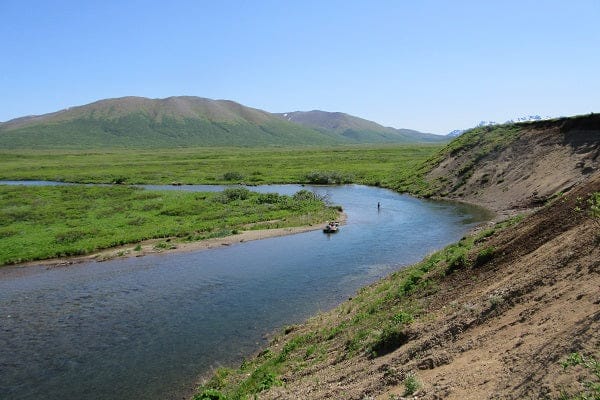
Sapsuk River Camp sits on a high bluff above productive home water, allowing anglers to begin fishing within minutes of leaving their tents. Jet boats reach most guided beats in roughly 5 to 30 minutes, so the program spends little time in transit and does not depend on daily aircraft or fly-outs.
Intimate Small-Group Fishing Program
Camp hosts no more than six anglers during King and Silver Salmon seasons and only four during Steelhead weeks. With two anglers per guide and a rotating beat system, guests receive personal instruction, flexible daily planning, and access to lightly pressured water.
Immersive Wade-and-Swing Fishing
Boats are used to move between beats, but the fishing itself is done while wading from gravel bars and riverbanks. The Sapsuk’s clear, moderate-sized channel, soft edges, and long tailouts are well suited to swung flies with Spey rods, while single-hand tackle remains effective for Silver Salmon, Rainbow Trout, and Dolly Varden.
Wild Bering Sea Salmon and Steelhead
The Sapsuk receives seasonal runs of wild, ocean-bright King Salmon, Silver Salmon, and Steelhead directly from the Bering Sea. Each portion of the season offers a distinct experience, from heavy two-handed tackle for Kings to surface-oriented Silver fishing and methodical fall swings for Steelhead.
CHOOSE YOUR ADVENTURE
WHY BOOK WITH TRIDENT
- No Credit Card Fees
- Same Price as Booking Direct
- Earn Trident Rewards
Trident Travel's expert planning service is free of charge.
The rates below are the same as you would pay by booking directly with the operator.
All rates are priced per person based on double occupancy and a 2:1 guest-to-guide ratio. Rates and inclusions are subject to change at any time. Contact us for the most current pricing.
King Salmon Season (Mid-June – July)
7 Nights / 6 Days = $9,275
Silver Salmon Season (Late August – September)
7 Nights / 6 Days = $8,750
Steelhead Season (Mid-September – October)
7 Nights / 6 Days = $9,500
Single-Occupancy Tent Supplement
Add $700 per person
What's Included:
- Six full days of guided fishing on the Sapsuk River
- 2:1 guest-to-guide ratio and daily jet-boat transportation
- Seven nights of double-occupancy lodging at Sapsuk River Camp
- Round-trip charter flight between Anchorage and Nelson Lagoon
- Round-trip jet-boat transfers between Nelson Lagoon and camp
- All meals and non-alcoholic beverages at camp
- Starlink Wi-Fi
- Limited backup rods and reels in case of equipment failure
- Fish care and an airline-approved waxed box for legally retained Silver Salmon
What's Not Included:
- Alaska fishing license and King Salmon stamp, when required
- Commercial airfare to and from Anchorage
- Hotels, meals, and ground transportation in Anchorage
- Additional expenses resulting from weather or travel delays
- Alcoholic beverages
- Personal fishing equipment and flies
- Gratuities for guides and camp staff
- Travel insurance and emergency evacuation coverage
Gallery



Seasonal Fishing
Calendar
King season begins as ocean-bright Chinook enter the Sapsuk directly from the Bering Sea. Anglers primarily swing large flies with 12- to 13-foot 9-weight Spey rods, covering deep slots, soft edges, and long tailouts from gravel bars. Much of the best King water lies close to camp, keeping boat runs short and maximizing fishing time. King fishing emphasizes quality over volume, with each hookup offering a serious test of both angler and tackle. Resident Rainbow Trout and Dolly Varden provide lighter-tackle alternatives, while other Pacific salmon may also be encountered as summer progresses.
Silver Salmon begin entering the Sapsuk during August, with the strongest numbers generally developing from late August into September. This is typically the season’s highest-volume fishing, as aggressive Coho gather along inside bends, softer channels, and deep holding water. Anglers can swing flies with two-handed rods or use 8-weight single-hand setups to strip streamers, jig leeches, and fish surface poppers or wogs. Resident Rainbow Trout and Dolly Varden remain available as secondary targets. Late summer generally brings the mildest temperatures of the season, although rain, wind, and rapidly changing weather remain possible.
Beginning in mid-September, fresh Steelhead enter the Sapsuk and the camp reduces capacity to just four anglers. Guides rotate anglers through rested upper-river beats, where 11- to 12-foot 7- and 8-weight Spey rods are used to methodically cover classic holding water. Some Silver Salmon remain available early in this period, but Steelhead become the clear focus as the season progresses. Wading can be more technical than during the salmon season, with larger rocks, stronger current, and colder conditions. This quality-over-quantity season is best suited to committed swing anglers who value solitude, wild fish, and the challenge of remote fall Steelhead fishing.
Lodging & Accommodations

Accommodations
Sapsuk River Camp is a fixed tent camp set on a high bluff overlooking the river, open tundra, and distant volcanoes. The camp accommodates up to six guests during King and Silver Salmon weeks and four during Steelhead season. Guests stay two per heated Weatherport tent on raised wooden platforms. Each tent includes comfortable beds and linens, gear storage, a drip-oil heater, and electrical outlets. A heated shared bathhouse provides on-demand hot water and showers, while two clean outhouses serve as the camp’s restroom facilities. Meals are served in a separate kitchen and dining tent, and the Volcano Lounge offers a sheltered gathering space for appetizers, drinks, and conversation after fishing. Sapsuk is a comfortable, well-maintained wilderness camp, but guests should expect a practical tent-camp experience rather than private cabins or luxury lodge amenities.
Food
Meals at Sapsuk River Camp are hearty, home-style, and planned around long days on the water. A hot breakfast and coffee are served in the dining tent before fishing, while guides pack simple riverside lunches that may include soup and sandwiches. Guests return to camp for appetizers followed by a family-style dinner featuring dishes such as local seafood, pasta, grilled meats, and dessert. Nonalcoholic beverages are included. Alcohol is not provided by the camp and must be brought or arranged in advance, subject to the charter flight’s baggage allowance. Guests should communicate food allergies or dietary requirements well before their trip so the remote kitchen can plan accordingly.
Connectivity
Starlink Wi-Fi is broadcast throughout Sapsuk River Camp, although speed and availability may vary with weather and other remote conditions. Cellular service is not available, and the camp’s satellite phone is reserved for emergencies. Generator power with battery backup supplies standard 110-volt electrical outlets in the guest tents, allowing anglers to charge phones, cameras, and other personal electronics.
Target Species

King Salmon

Silver Salmon

Steelhead

Rainbow Trout

Dolly Varden
10-Day Itinerary
Each day is carefully planned to maximize your fishing success while experiencing the best of what this destination has to offer. Itineraries are flexible based on conditions and guest preferences.
A typical trip to Sapsuk River Camp includes seven nights at camp and six full days of guided fishing. Travelers should fly to Ted Stevens Anchorage International Airport (ANC) at least one day before the lodge-coordinated charter. After arriving, transfer independently by taxi or rideshare to a prearranged Anchorage hotel. Anchorage lodging, meals, and ground transportation are not included in the fishing package.
The following morning, transfer to Merrill Field Airport (MRI) and board an approximately 2.5-hour charter flight to Nelson Lagoon. Baggage is generally limited to around 50 pounds per person. Upon arrival, the camp team will meet the flight and transfer guests approximately 60 to 90 minutes upriver by jet boat. Because the lower river is tide-dependent, departure timing can vary. After reaching camp, settle into your Weatherport tent, prepare equipment, and enjoy dinner. There is no guided fishing on arrival day, although guests may explore the nearby home water when time and conditions allow.
Each fishing day begins with a hot breakfast before heading out with your guide. Anglers fish two per guide and rotate through productive beats selected according to the target species, tides, weather, and river conditions. Jet boats provide transportation to the day’s water, with most runs taking approximately 5 to 30 minutes, while the fishing itself is done by wading from gravel bars and riverbanks. Lunch is served along the river before the afternoon session. After returning to camp, guests can enjoy a hot shower, appetizers, and a hearty dinner. Long daylight hours may also provide opportunities to fish the home water independently before or after the guided day.
After breakfast, pack your equipment and travel downriver by jet boat to Nelson Lagoon. Transfer timing remains dependent on tides and weather. The return charter typically departs during the early afternoon and reaches Anchorage in the late afternoon, although delays are always possible in this remote region. Transfer independently to a prearranged Anchorage hotel for the night. A final Anchorage overnight is strongly recommended before continuing home.
Transfer by taxi or rideshare to Ted Stevens Anchorage International Airport for your flight home. Because charter schedules and Alaska weather can be unpredictable, travelers should maintain flexibility and avoid scheduling tightly timed onward connections.
Frequently Asked Questions
GET IN TOUCHSapsuk River Camp is best suited for serious, fishing-focused anglers who prioritize wild salmon and Steelhead, light fishing pressure, and long days of wade fishing over luxury accommodations or non-angling activities. The program is particularly strong for experienced Spey anglers who enjoy systematically stepping through runs and adjusting swing speed, depth, and presentation. Less-experienced anglers can succeed with guide instruction, but practicing two-handed casting before the trip will substantially improve the experience.
King Salmon enter the Sapsuk from mid-June through July, creating the season’s heaviest two-handed fishing and the opportunity to swing flies for ocean-bright Chinook. Silver Salmon arrive from late August through September and generally provide the most consistent action, including opportunities to strip leeches or fish surface patterns. Steelhead season runs from mid-September through October and offers the program’s most technical fishing, lightest pressure, and smallest camp size. The best week depends on whether an angler prioritizes the power of Kings, the aggressive nature of Silvers, or the methodical challenge of fall Steelhead.
Expert-level casting is not required, and the guides can help anglers refine their technique throughout the week. However, guests will benefit greatly from arriving comfortable with basic sustained-anchor casts, managing running line, changing casting angles, and fishing from both riverbanks. Wind, heavy sink tips, large flies, and long fishing days can expose weaknesses that are less noticeable during occasional practice sessions. Sapsuk is a guided fishing program rather than a dedicated casting school, so practicing before the trip allows anglers to spend more time fishing effectively.
King Salmon anglers should bring a 12- to 13-foot 9-weight Spey rod, with some anglers preferring a 10-weight, paired with compact floating and intermediate Skagit heads, 40-pound running line, and a selection of T-14 and T-17 tips. Silver Salmon can be targeted with an 11- to 12-foot 7- or 8-weight Spey rod or a 9-foot 8-weight single-hand rod with floating and Type III sinking lines. Steelhead anglers should bring an 11- to 12-foot 7- or 8-weight Spey rod with compact Skagit heads and T-11 or T-14 tips. Guests should bring complete primary outfits and preferably backups, as the camp’s limited loaner equipment is intended for unexpected breakage or equipment failure.
King Salmon are typically targeted with moderately dressed 3- to 4-inch Intruder-style or tube flies in combinations such as black and blue, chartreuse and blue, pink and orange, or purple and black. Silver Salmon respond well to weighted bunny leeches, jigging-style streamers, and foam surface patterns in pink, chartreuse, purple, and contrasting color combinations. Steelhead flies are generally smaller, with 2- to 3-inch traditional patterns, tubes, and sparse Intruder-style flies in black and blue, purple and black, olive, or pink and orange. Anglers should carry both weighted and unweighted options so guides can adjust presentation to water depth, speed, and clarity.
Anglers fish two per guide and rotate through established beats along the Sapsuk, also known as the Hoodoo River. Productive water may be reached on foot or by jet boat, with most boat runs taking approximately 5 to 30 minutes. Fishing is conducted entirely while wading from gravel bars and riverbanks rather than from the boat. Guides select water according to target species, fish movement, river conditions, and tides, while the rotating beat system helps distribute pressure and provide each pair with access to different types of holding water.
Most King and Silver Salmon water offers easy to moderate wading across relatively stable gravel bars, although anglers should still be comfortable standing and casting in current for extended periods. Steelhead fishing commonly takes place farther upriver, where larger rocks, stronger current, and more technical footing can make wading noticeably more demanding. A wading staff and rubber-soled boots with appropriate studs are strongly recommended, particularly during the fall. Felt-soled wading footwear is prohibited in Alaska’s freshwater fisheries, and all boots, waders, and fishing equipment should be thoroughly cleaned and dried before the trip.
King Salmon and Steelhead weeks should be viewed as quality-oriented swing-fishing programs rather than high-volume trips. A few strong opportunities or hookups in a day can represent excellent fishing, and landing percentages vary with fish size, current, tackle, and angler execution. Silver Salmon season generally produces more consistent action and can provide periods of high-volume fishing when fresh fish are concentrated in the system. Overall pressure is light, although guests may occasionally encounter a small number of other anglers during King and Silver seasons. Steelhead weeks are especially intimate, with camp capacity reduced to four anglers.
Resident Rainbow Trout and Dolly Varden are present throughout the Sapsuk River and can provide additional opportunities when conditions and the daily salmon program allow. Depending on the season, anglers may fish streamers, mouse patterns, flesh flies, or egg imitations around soft seams, spawning areas, and logjams. These species are legitimate secondary targets, but the program is structured primarily around King Salmon, Silver Salmon, or Steelhead during their respective migrations. Anglers specifically seeking a trout-focused Alaska trip should consider a program built around resident fisheries instead.
Sapsuk River Camp operates exclusively on its home river and does not use aircraft or transfer anglers to alternate fisheries when conditions deteriorate. If high water or other conditions temporarily prevent safe and effective fishing, guests wait for the river to improve. The Sapsuk is relatively protected and rarely remains unfishable for an extended period, but weather and water conditions can never be guaranteed. Anglers should understand that this is a specialized single-river program and purchase travel insurance that protects against weather-related interruptions and delays.
Guests must carry a valid Alaska sport fishing license and a King Salmon stamp when required for their season. The program should be approached primarily as a catch-and-release fishery, particularly for King Salmon and Steelhead, while limited Silver Salmon retention may be available under current regulations and camp policy. Fish care and an airline-approved waxed box are provided for legally retained Silvers. Alaska regulations and emergency orders can change from year to year and may alter retention limits, tackle restrictions, or handling requirements, so anglers should review the current rules supplied before their trip.
Medical emergencies and evacuations can happen in remote destinations, which is why we strongly recommend enrolling with Global Rescue before your trip. Global Rescue provides industry-leading medical and security evacuation services, and they also offer comprehensive travel insurance plans serviced through IMG. This all-in-one solution allows anglers to secure both emergency evacuation coverage and travel insurance through a single provider, helping ensure you’re protected if something unexpected occurs before or during your trip.


