



























Learn how to tie Egan's Frenchie Nymph including step-by-step instructions, a video tutorial, pictures, and much more. Improve your fly tying skills here.
Trident Fly Fishing is a full-service fly shop. We spend a lot of time testing gear and writing reviews to give you all of the tools to make your next trip a success. We are not a blog or a review site. 100% of our funding comes from your gear purchases, so if this blog post helps you on your next fly fishing adventure, please support us by buying your gear from us.
Trout flies can be difficult to tie. Small nymphs and small dry flies require patience and fine tying skills. This nymph, however, is relatively simple and a great pattern for novice-intermediate tyers. This is a great nymph for Euro or Tight Line nymphing and also can be fished under an indicator. Use this fly across the US on popular trout streams or take it into the backcountry when chasing fish in New Zealand and beyond. Tune in as Jared ties Egan's Frenchie with step-by-step instructions.
Materials:
- Umpqua Competition C450BL Jig Fly Hook - Size 14
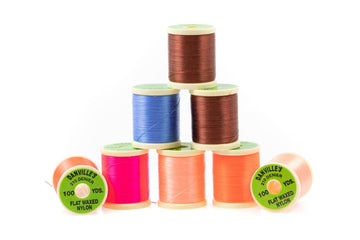
- Danville Flymaster 6/0 Thread - Dark Brown
- Hareline Mottled Tactical Slotted Tungsten Beads - 1/8", Brown
- Hareline Spooled Lead Wire
- Hareline Coq De Leon
- UTC Brassie Ultra Wire - Copper
- Hareline Ringneck Pheasant Tail Feathers
- Hareline Ice Dub - Orange
- Loon Water-Based Head Cement - Thin
Step One:

Start by placing the Tactical Tungsten Bead on the hook and seating it just back from the hook eye. Keep the slot on the bead facing down to seat the bead on the jig hook.
Step Two:

Take 5-6 wraps with the Lead Wire and push it forward to seat the bead. This keeps the bead in place at the front of the hook and adds weight to the fly for improved sinking capabilities.
Step Three:

Start your thread and tie in the Coq De Leon. Select 4-5 fibers of the Coq De Leon and measure them so that extend the length of the hook shank. Trim the feathers and tie them in slightly behind the Lead Wire. Wrap backward to secure the tail in place then return your thread to just behind the Lead Wire.
Step Four:

Next, tie in the UTC Brassie Wire. Position the tip of the wire inside the slot in the bead and wrap your thread backward to secure the wire in place. Keep the wire on your side of the hook when you're tying it down. Again, return your thread to just behind the Lead Wire.
Step Five:

Tie in the Pheasant Tail body material and wrap it forward to create the body of the fly. Select a few strands of Pheasant Tail, trim the tips, and tie them in on your side of the hook shank just behind the bead. Wrap your thread backward to secure the Pheasant Tail then return your thread to just behind the bead. Wrap the Pheasant Tail up to the bead taking touching turns to create the body of the fly. Tie off the Pheasant Tail feathers and clip the butts.
Step Six:

Use the UTC Brassie Wire to rib the fly. Wrap the wire forward taking open turns to add durability and ribbing to the fly. Tie off the wire just behind the bead, bring your bobbin up to stabilize the hook shank, and helicopter the excess wire off.
Step Seven:

Use the Ice Dub to tie in your hot spot. Grab a tiny bit of Ice Dub and work it onto your thread. Try to minimize the amount of Ice Dub used to keep the profile of the fly small and tapered. Keep the dubbing noodle tight and wrap the dubbing to create the hot spot just behind the bead. After you're satisfied with how your hot spot looks, whip finish and clip your thread.
Step Eight:

Add some Water-Based Head Cement and you're done! That's Egan's Frenchie, a great fly for exploring your home waters or tackling a deep river when it's important to get your flies into a fish's feeding zone quickly.
Questions?
Give us a call here at the shop at (888) 413-5211 or email us anytime at [email protected].
Comments
(0)No comments yet. Be the first!