
























Trident Travel is your complete fly fishing travel service. We offer incredible fly fishing destinations around the globe, with new locations being added frequently. With Trident, you'll get our low-price guarantee, and you'll never pay any credit card or booking fees. For a limited time, you'll even earn reward points on every trip you book! If you find this review informative, please consider booking your next fly fishing trip through Trident Travel to support our reviews.
After returning home from two unforgettable weeks at Skeena River Lodge in northern British Columbia, I've found myself replaying countless moments from the trip in my head: long swings through turquoise runs, chrome Steelhead appearing from glacial water, late-night conversations around the lodge, and the incredible scenery that makes the Skeena watershed feel almost mythical. The 2026 spring season challenged us with difficult water conditions and rapidly changing rivers, but it also rewarded persistence, adaptability, and optimism in true Steelhead fashion. Along the way, our group landed some spectacular fish, improved as anglers, and experienced firsthand what makes spring Steelheading on the Skeena system so uniquely addictive.
Why Spring Steelheading in B.C. Is So Special

Spring Steelheading is big game hunting. The early season on the Skeena system is not about huge numbers or constant action. Instead, it's a hunt for some of the largest and brightest Steelhead of the entire year, fresh from the Pacific and willing to eat a properly presented swung fly.
Conditions during the spring season can be wildly unpredictable. One week may bring snowstorms and freezing temperatures, while the next sees warm sunshine and rapidly rising water. Success often depends on staying flexible, trusting your guides, and maintaining confidence through long stretches without a grab. You can go days without touching a fish during the spring, but your next swing could connect with a 20-pound bar of silver freshly minted from the Pacific.
Our 2026 hosted trip dealt with some particularly challenging conditions. Unseasonably warm temperatures pushed the mainstem Skeena and Copper Rivers into runoff early, leaving both systems turbid and mostly unfishable for much of our stay. Fortunately, the experienced guide team at Skeena River Lodge adapted quickly, shifting us onto smaller tributaries that continued to produce fish throughout the trip.
Ironically, the tough conditions ended up giving us access to some of the most spectacular water any of us had ever seen. Many of these tributaries will remain unnamed here to help protect these special places, but the scenery felt almost surreal at times. Towering granite canyons lined with waterfalls, Moose swimming across the river, bald eagles feeding alongside us, and endless snow-covered peaks made every day memorable regardless of fishing conditions. Calling northern British Columbia "scenic" feels like a massive understatement.
Week 1: Adapting to Tough Conditions
The first week of our hosted trip, running April 19-26, started with a brief window of fishable conditions on the lower Skeena River. A pair of anglers connected with beautiful fish on opening day, which would ironically turn out to be one of the final opportunities on the big river before runoff fully took hold.
I spent my first day fishing a higher section of the Skeena with guide Jack Yoo and another angler from Maine. Like many anglers arriving on a Steelhead trip, I spent much of the day simply trying to knock the rust off my Spey casting and settle into a rhythm. With Jack's guidance, my casting became noticeably more relaxed and efficient by the afternoon, and even though I didn't touch a fish that first day, I felt far better prepared for the two weeks ahead.
That first day also served as an important reminder about pacing yourself on a long Steelhead trip. Staying mechanically sound with your casting is critical if you want to avoid fatigue and continue fishing effectively throughout the week. I'm a big believer in listening to your body, taking short breaks when needed, and remembering to occasionally stop and appreciate where you are. At the same time, Steelhead fishing rewards persistence, and you certainly can't hook one while standing on the bank drinking coffee. Finding the balance between fishing hard and enjoying the experience is part of the process.
As river conditions continued to deteriorate, head guide Brandon Eddy and the SRL guide team quickly adjusted plans for the remainder of the week. Guides originally assigned to the Skeena shifted onto smaller tributaries, a move that ultimately paid off in a big way.
The next several days centered around the Kitsumkalum River, a stunning turquoise tributary that joins the Skeena right in Terrace. Fish were landed throughout multiple sections of the Kalum, and the atmosphere around the lodge noticeably shifted as confidence grew.
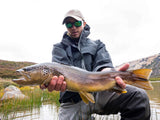
One particularly memorable day came while fishing the upper Kalum with guide Kevin Raye and a very experienced angler from Texas, who generously offered me first crack at several prime runs throughout the day. Late that afternoon, I connected with a beautiful buck Steelhead in a soft tailout, and after a blistering downstream run, Kevin slid the net underneath the fish. Teamwork makes the dream work.

The second half of the week brought bright sunshine and even warmer temperatures. While those conditions made for comfortable fishing weather, they also created more challenging Steelhead conditions. Like Trout and Salmon, Steelhead lack eyelids, making bright sunlight and reduced water clarity difficult conditions for them to comfortably move and track flies. Under these circumstances, I found myself slowing down considerably and fishing runs much more methodically, knowing that even a small mistake in presentation could mean swinging past a fish that never saw the fly.
Despite the difficult conditions, fish continued to be landed throughout the week, and the camaraderie around the lodge became one of the defining themes of the trip. Steelheading has always felt like a team sport to me. Everyone celebrated each landed fish as a shared victory, and anglers consistently encouraged one another by offering up first shots through productive water to whoever needed a confidence boost. That collaborative spirit is a huge part of what makes these trips so special.
Before long, the first week disappeared in a blur of long swings, turquoise water, and late-night conversations around the lodge. As the first group departed, I found myself watching the forecast closely and growing increasingly optimistic about the cloudy weather moving into northern BC for week two.
Week 2: Fresh Fish and Momentum
Historically, the week of April 26 - May 3 sits right on the edge of freshet in the Skeena system. In 2026, however, spring runoff had arrived unusually early, and by the beginning of week two, I suspected the fish had already started adjusting to the changing conditions. Combined with several overcast days and a strong king tide cycle pushing fresh fish into the system, it felt like the ingredients were finally lining up.
That optimism proved well-founded.
Throughout the second week, nearly every river in the rotation seemed to have its standout day. Some tributaries produced fish on consecutive days, and chrome-bright Steelhead began showing up consistently enough that anglers approached each run with renewed confidence.
There were plenty of memorable moments throughout the week. One father-and-son duo from the East Coast each landed beautiful silver bucks on the same day, then spent the evening at the lodge comparing photos to determine whose fish was larger. Another angler from Idaho landed a stunning bright hen on one of the remote tributaries, creating one of the best fish photos of the entire trip.

One of my favorite moments of the week, though, happened off the water.
One angler had brought along his fly tying vise and decided to tie flies one evening after dinner. He had a gut feeling that something white with Jungle Cock eyes might move a fish in the slightly off-color water conditions. Under the guidance of Mike Van Wormer, SRL's booking manager and resident fly tying expert, he tied up a simple tube fly using white marabou, Krystal Flash, Jungle Cock eyes, and a brass conehead. The very next day, he hooked and landed a gorgeous chrome hen on that exact fly.
Moments like that are part of what makes Steelheading so addictive. Confidence, creativity, optimism, and just a little superstition all seem to play a role at times.
Although I would still describe the fishing overall as quality over quantity, week two felt far more consistent than the previous week. Most anglers were finding at least a grab or legitimate opportunity each day, which is exactly what you hope for during a spring Steelhead trip.
By the final evening, everyone looked exhausted but deeply content around the dinner table. Our time in northern British Columbia was coming to an end, but conversations had already shifted toward future trips, future rivers, and eventually returning to the Skeena system once again.

Looking back, I'm incredibly proud of how our group handled the difficult conditions throughout both weeks. Fantastic fish were landed, but more importantly, everyone became better anglers by learning how to adapt to rapidly changing water conditions across several completely different river systems. Each day required adjustments in presentation, fly choice, sink tips, and swing speed. The guides at SRL possess an incredible amount of accumulated knowledge about these rivers, and their experience becomes immediately obvious when you suddenly feel a grab in a spot you never would have expected to hold a fish.
Lessons Learned from Two Weeks on the Water

Two weeks on the Skeena system reinforced something I've always believed about Steelheading: success rarely comes from stubbornness. The anglers who consistently find fish are the ones willing to adapt, stay positive, and embrace the process even when conditions become difficult.
This season demanded exactly that mindset.
Between rising water, fluctuating visibility, changing weather patterns, and rotating through several completely different river systems, every day required adjustments. Some days called for slower swings and heavier tips. Other days rewarded short-line presentations and smaller flies. Certain runs fished best under cloud cover, while others suddenly came alive during brief windows of favorable light or tide movement.
Watching the SRL guide team work through those variables in real time was incredibly impressive. Their ability to pivot based on conditions, distribute pressure across different rivers, and keep anglers around fish despite difficult water levels was a major reason our group found success throughout the trip.
The experience also reinforced how important attitude becomes during a Steelhead trip. It's easy to spiral mentally after a slow day or two, especially on large rivers where fish can feel impossibly spread out. But the best anglers in camp consistently stayed optimistic, trusted the process, and approached each run believing their next swing might be the one.
More often than not, that mindset seemed to get rewarded.
Why Skeena River Lodge Stands Apart
The Skeena watershed is home to several well-known Steelhead lodges and guide operations, but after spending significant time there, I genuinely believe Skeena River Lodge offers one of the strongest overall programs in northern British Columbia.
First and foremost, SRL is unapologetically fishing-focused. Everything about the operation is designed around maximizing your opportunity on the water. Breakfast starts before sunrise, anglers are geared up and ready early, and guides work incredibly hard to ensure guests are the first boats into productive water whenever possible. Those early alarms can feel brutal for the first couple mornings, but they make perfect sense once you find yourself stepping into untouched runs at first light.
One of SRL's greatest advantages is its extensive access throughout the region. That flexibility became critically important during our trip, when rising water knocked several major systems out of shape. Because the lodge has access to such a wide variety of rivers and tributaries, the guide team was able to continuously adapt and keep anglers fishing productive water throughout both weeks.
The guide staff itself is exceptional. Having guided professionally myself and managed guide teams in Colorado for years, I have a deep appreciation for operations that prioritize professionalism, communication, and teamwork. The SRL guides are not only highly skilled boatmen and fish finders, but also excellent teachers who genuinely want anglers to improve throughout the week. Whether it was casting instruction, presentation adjustments, rigging advice, or simply keeping morale high during difficult conditions, the guide team consistently delivered.
The lodge experience off the water is equally impressive.
Despite being an intensely fishing-focused operation, SRL remains incredibly comfortable and welcoming. The rooms are spacious, private, and well-appointed, the food is consistently excellent, and the staff does a fantastic job creating an atmosphere that feels relaxed and personal after long days on the river.
One of my favorite routines each evening involved warming up in the steam sauna after hours of wading cold water, then gathering in the lodge for dinner and storytelling while playoff hockey played in the background. Those shared evenings around the lodge became just as memorable as many of the moments on the water.
Steelhead trips can be physically and mentally demanding, especially during the spring season, and SRL does an outstanding job balancing hardcore fishing with the kind of comfort and hospitality that helps anglers recharge for the next day.
Planning Your British Columbia Steelhead Trip

For anglers considering a Steelhead trip to British Columbia, there are several important factors worth thinking through before choosing your dates and preparing for the trip.
Know Your Goals
The first step is deciding what kind of experience you're looking for.
Spring is ideal for anglers chasing large, chrome-bright Steelhead fresh from the ocean, but it can absolutely be a grind at times. Fishing conditions are often volatile, weather can change quickly, and success usually comes in the form of a few high-quality opportunities rather than nonstop action. For experienced anglers who enjoy the challenge and anticipation of hunting giant fish, it's an incredibly rewarding season.
Other times of year offer very different experiences. Summer and early fall can provide more consistent action, opportunities at multiple species, warmer weather, and generally more forgiving conditions for newer Spey anglers. Neither approach is better or worse, but aligning your expectations with the season is extremely important when planning a trip.
Practice Your Spey Casting Before You Arrive
One of the most common questions I hear from anglers planning a BC Steelhead trip is: "How far do I need to cast?"
My answer is always the same: as far as you can cast comfortably.
Distance certainly matters at times on larger rivers, but comfort and efficiency matter far more than hero casts. An angler who can consistently and comfortably deliver a clean 60-foot cast all day long will usually fish far more effectively than someone trying to force 90-foot casts with poor anchor placement and excessive effort.
Before your trip, I strongly recommend becoming comfortable with basic casts like the Double Spey and Snap-T, along with practicing with different sink tip setups. Arriving with even a modest foundation allows you to spend the week improving your fishing rather than simply trying to survive your casting mechanics.
The guides at SRL are excellent instructors, but you'll get substantially more from the experience if you arrive ready to build upon the basics rather than learning entirely from scratch.
Prepare for Every Type of Weather
Coastal British Columbia can deliver almost any weather imaginable during a single week.
Rain, snow, sunshine, freezing mornings, and surprisingly warm afternoons are all possible regardless of season. Layering properly is one of the biggest keys to staying comfortable and fishing hard throughout the trip.
Quality rain gear is essential, and I always recommend checking your waders carefully for leaks before traveling. Warm base layers, insulating midlayers, gloves, hats, buffs, and handwarmers all make a huge difference during long days in cold water.
Simply put, comfortable anglers fish harder and enjoy the experience more.
Believe in the Process
More than anything else, Steelheading requires belief.
After several slow days, it's completely natural to start questioning everything: your fly choice, swing speed, depth, casting angle, or whether fish are even present at all. Every Steelheader goes through those mental battles at some point.
The important thing is continuing to fish each swing with confidence and intention.
By the time you arrive in British Columbia, you've already invested countless hours preparing for the trip through research, fly tying, gear selection, and casting practice. At that point, your job becomes trusting the process, listening to your guides, and remaining mentally engaged throughout the day.
The most successful Steelheaders I know all share one common trait: they genuinely believe the next swing could produce the fish of a lifetime.
Why The Skeena Stays With You

Every Steelhead trip seems to leave anglers with unfinished business, and our 2026 hosted trip to Skeena River Lodge was no exception. Despite difficult water conditions throughout much of the trip, our group adapted, stayed positive, and was rewarded with some truly memorable fish and experiences along the way. More importantly, everyone left northern British Columbia as a better angler, with a deeper understanding of presentation, river conditions, and the mindset required to chase wild Steelhead on swung flies.
What I'll remember most, though, extends far beyond the fish themselves. The scenery, the guides, the late-night conversations around the lodge, the shared optimism after difficult days, and the excitement of watching someone connect with a bright Steelhead on a fly they tied the night before are the moments that truly define a trip like this. The Skeena system has a way of getting under your skin, and before long, you find yourself thinking about the next season, the next swing, and the next chrome fish moving upriver from the Pacific. Explore our British Columbia fly fishing lodges to start planning your own trip.
If you'd like to learn more about Skeena River Lodge, give us a call at 888-413-5211 or drop us a line at [email protected].
Comments
(0)No comments yet. Be the first!