


























Trident Travel is your complete fly fishing travel service. We offer incredible fly fishing destinations around the globe, with new locations being added frequently. With Trident, you'll get our low-price guarantee, and you'll never pay any credit card or booking fees. For a limited time, you'll even earn reward points on every trip you book! If you find this content informative, please consider booking your next fly fishing trip through Trident Travel to support our reviews and reports.
The Gaspé Peninsula has long been one of the most revered Atlantic Salmon destinations in North America. Anglers from around the world travel to this corner of Québec to swing flies through the clear cobble-bottomed pools of rivers like the Bonaventure, Grand Cascapédia, and Petite Cascapédia. In the right conditions, it's one of the few places on earth where spotting a fresh salmon in the pool before presenting a dry fly is not just possible, but common.
In recent years, the region has also developed another exciting dimension: a growing saltwater fishery for Striped Bass along the peninsula's shallow coastal flats. Sight-fishing to cruising bass in skinny water has quickly become a favorite change of pace between salmon sessions, giving anglers the rare opportunity to target two iconic gamefish in the same week.
As we head into the upcoming season, several factors are shaping the outlook for fly fishing on the Gaspé. Salmon returns across the Gulf of St. Lawrence showed encouraging signs last year, winter snowpack has returned to near-normal levels, and the striped bass population continues to trend upward. To get a clearer picture of how the season is shaping up, we checked in with Andrew and Sarah Murphy of Gaspé Coastal, who host anglers throughout the summer and stay closely connected to conditions on the region's rivers and coastal flats through their guide team and daily time on the water.
Atlantic Salmon Returns and the Grilse Rebound

Across Atlantic Canada, wild Atlantic salmon populations remain well below historic levels, and conservation-minded management has become the norm on many rivers. Québec has maintained mandatory catch-and-release regulations in recent years, a precautionary measure designed to protect spawning fish while scientists continue to monitor marine survival and long-term population trends.
Within that broader context, the 2025 season showed some encouraging signs compared to the unusually weak returns observed in 2024. According to Andrew and Sarah Murphy of Gaspé Coastal, many rivers flowing into the Gulf of St. Lawrence saw improved numbers of grilse, or salmon returning to freshwater after spending a single winter at sea. These smaller fish often make up a large portion of annual returns, and their abundance can offer an early signal of future year classes.
While grilse numbers rebounded toward more typical levels in 2025, the run still lacked a strong component of larger two-sea-winter salmon. That pattern was largely expected, as those larger fish originate from the weaker grilse class that returned the year before. In other words, the run reflected the biological ripple effects of the previous season.
For anglers looking ahead, the healthier grilse return in 2025 provides cautious optimism. If marine survival holds steady, that stronger cohort of one-sea-winter fish should translate into more multi-sea-winter salmon returning to the region's rivers in the coming seasons.
Local River Conditions in 2025
While salmon returns across the broader Gulf of St. Lawrence region showed improvement, local river conditions on the Gaspé Peninsula presented a few challenges during the 2025 season. An early spring runoff pushed water through the systems quickly, leaving many rivers running lower than usual for much of the summer. To compound things further, the fall rains that often refresh the rivers late in the season never fully materialized.
Those conditions made for more technical fishing at times. Lower water typically means clearer pools, more cautious fish, and a greater emphasis on stealth. According to Andrew and Sarah, anglers who adjusted their approach by fishing early in the day and presenting smaller flies were still able to find success throughout the season.
One silver lining of the lower water was lighter angling pressure on some rivers compared to previous years. With fewer anglers rotating through popular pools, guides were often able to slow things down and work water more deliberately. For anglers willing to adapt their tactics, the season still produced memorable moments on some of the Gaspé Peninsula's most iconic salmon rivers.
Snowpack and Water Outlook

Looking ahead to the upcoming season, winter conditions across the region offer some encouraging signs. According to Andrew and Sarah, snowpack has returned to near normal levels after two winters that came in below average, particularly in the interior park regions that feed many of the peninsula's salmon rivers.
Just as important as the amount of snow is the condition it's in. This winter stayed consistently cold, with very few midwinter melt or rain events. That has allowed the snowpack to hold together well, which often leads to a more gradual spring runoff rather than a quick flush of water through the system.
For salmon anglers, that kind of steady melt is usually a good thing. A healthy runoff helps recharge rivers heading into the season, keeps water temperatures cooler, and allows fresh fish to move upriver as the early weeks of June unfold. Based on current conditions, Andrew and Sarah expect more typical river flows at the start of the season, with runoff likely continuing through at least part of June.
River levels across Québec are monitored through a network of hydrometric stations operated by the provincial government. These gauges track river discharge in cubic meters per second and offer anglers a useful way to follow conditions as spring melt begins. For those who like to keep an eye on flows before a trip, the data is publicly available and updated regularly as the season approaches.
Striped Bass Fishing Continues to Gain Momentum

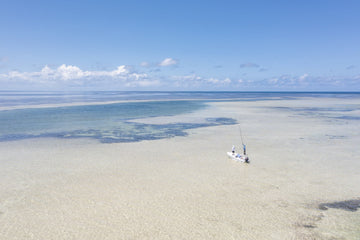
While Atlantic Salmon remain the centerpiece of the Gaspé Peninsula's angling heritage, the region's striped bass fishery has quietly become one of the most exciting parts of the program in recent years. Along the southern shoreline of the peninsula, seasonal schools of bass push into shallow coastal water where anglers can sight fish to cruising fish on the flats.
According to Andrew and Sarah, the 2025 striped bass season was excellent overall. Favorable weather patterns and cooperative fish led to very consistent fishing throughout much of the summer. While there were the occasional slower windows that come with any coastal fishery, the guide team found steady action across a wide range of tides and locations.
Population trends are also moving in the right direction. Regional estimates indicate that the spawning stock increased from approximately 340,300 fish in 2024 to about 547,300 fish in 2025. That kind of growth is a positive signal for the health of the fishery and reinforces what guides on the water have been seeing over the past several seasons.
The program itself has also continued to expand. Over the past year the guide team has explored new flats and improved access with additional launch points along the coast. For anglers, that means more water to fish and more opportunities to intercept cruising bass in shallow water. Sight fishing remains the primary focus, but the fishery can also produce exciting moments when summer blitzes push bait to the surface along the shoreline.
Program Updates at Gaspe Coastal
Alongside the evolving fisheries, a few updates at Gaspe Coastal will expand the program heading into the season. A fully overhauled Mako 171 CC will be joining the fleet this year, outfitted with an electric trolling motor and modern electronics. The boat opens up new opportunities along the peninsula's rocky coastline where larger striped bass often hold on structure, while also allowing guides to chase summer bait blitzes when conditions line up.
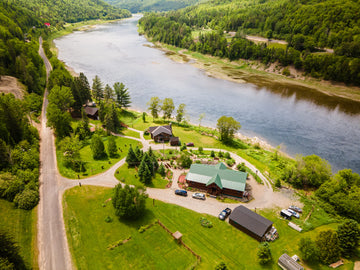
Back at the lodge, Andrew and Sarah are welcoming two new team members from Victoria, British Columbia who will be taking over kitchen operations while also assisting with lodge management. Several offseason improvements have also been made around the property, including an expanded wine cellar and updates that further enhance the comfort and atmosphere of the historic Nadeau House.
While the fishing remains the centerpiece of any week at Gaspe Coastal, these additions continue to refine the overall experience for anglers spending long days on the water and relaxed evenings back at the lodge.
Season Outlook

Taken together, the signals heading into the season point toward a promising year on the Gaspé Peninsula. Salmon returns across the Gulf of St. Lawrence showed improvement in 2025 thanks largely to a stronger grilse class, and that cohort could translate into a healthier presence of larger two sea winter fish in the seasons ahead. Combined with a return to more typical winter snowpack and the expectation of steadier river flows early in the season, conditions appear well-positioned as the rivers approach the opening weeks of June.
At the same time, the peninsula's striped bass fishery continues to gain momentum, offering anglers another exciting option between salmon sessions. The combination of world-class Atlantic Salmon rivers, a growing saltwater flats program, and the relaxed rhythm of life in the Gaspé makes this one of the most unique fly fishing destinations in eastern Canada.
For anglers considering a trip this season, staying flexible and working with experienced local guides remains the key to making the most of the conditions. If you'd like to learn more about fishing Gaspé Coastal, get current conditions, or start planning a trip, the team at Trident Travel is always happy to help. Feel free to reach out anytime to talk through timing, gear, or what to expect on the water.
Questions?
If you'd like to learn more about fishing in Quebec, give us a call at 888-413-5211 or drop us a line at [email protected].
Comments
(0)No comments yet. Be the first!