



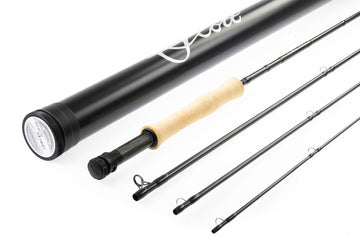
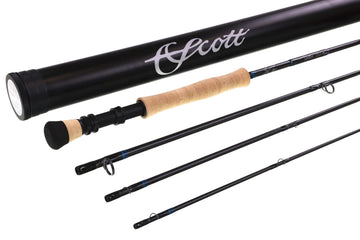
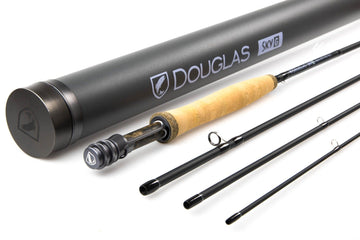




































One question that we get asked all the time is whether or not X reel is a good choice for Y rod. In single-handed rods, this is generally a pretty easy – you find a 5-weight reel to match your 5-weight rod. Unfortunately, this doesn't work so well in Spey land. Rods are much longer, have two handles, and lines are much heavier. Luckily for you, we've put together a couple of quick guidelines that will make this process totally pain-free.
Tip #1: The Rule of Three
Omne trium perfectum
The first step when choosing a reel for your switch or Spey rod is to remember the "Rule of Three", which in Spey casting terms means that you'll want to go UP 3 line sizes, or one full reel size (in other words, go from a Hatch 7 Plus to a 9 Plus). That means if you have a 7-weight switch rod, you'll need a reel that's designed for at least a 10-weight single-handed line. For example, I use a Hatch 9 Plus (10-12 weight reel) on my Sage Method 7126-4 (7-weight Spey), and it's a perfect fit.
Now let's say you had a 12' 6-weight.... do you go with a 9wt rated reel or a 10wt rated reel? The answer is that both will work, and you may have to use some fancy backing (we like PowerPro) to squeeze it on the smaller reel or deal with a heavier reel. See Tip #2.
Tip #2: Go Heavy

Disclaimer: Reel balance is a very personal choice, and will vary from person-to-person. That said, two-handed rods are much longer than single-handed rods. They also have a lot more cork and hardware on the rod. That all translates to extra weight that some people want to balance out. The good news is that heavy reels are often cheaper than their lightweight counterparts. Using the example above, the 10.6 oz Hatch 9-Plus balances out the 6.5 oz Method Spey very well. There's no hard rule here but stay away from the ultra-lightweight reels.
We've written a separate article on balancing rods and reels that also applies to Spey rods that's worth a read if you're confused by this.
Tip #3: Full Cage?

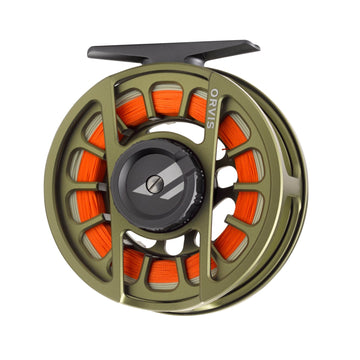
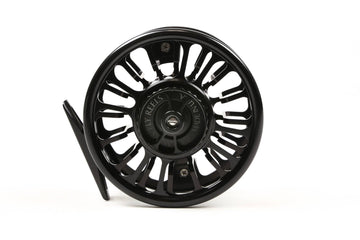
Last but not least, you should consider a full cage reel. A full cage reel is one where the line passes through a fully enclosed space (see photo). This is ideal for Spey rods because we're often dealing with ultra-thin running lines that can pass through the space between the frame and spool of your reel. If you're using a thin mono running line like OPST Pure Skagit Lazar, full cage reels are more-or-less mandatory. If you're fishing a coated running line like Rio ConnectCore, a full cage is more of a nice-to-have than an absolute necessity.
Once you've nailed the size, browse our selection of fly reels for the full-cage, sealed-drag models that suit a two-hander. And if you're still piecing the setup together, our guide on how to choose a fly rod for Steelhead covers matching the rod to the water.
That's it! Go out and start swinging!
Questions?
We're here to help. Drop us an email at [email protected] or call us at (888) 413-5211.

Comments
(0)No comments yet. Be the first!