





















Words and photos by Rowan Lytle
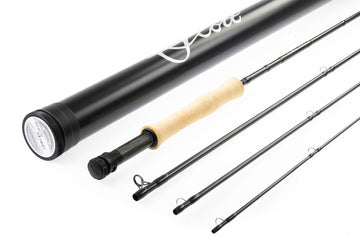
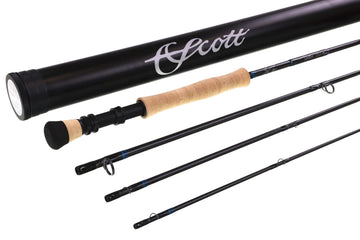
"Are you ready to switch up?" I asked John Kelly a few hours into a world record attempt, one of dozens we'd made together over the course of three seasons. "We may as well land some fish." When chasing world record fish, it can be a slog. It should be too... if a record fish comes without a lot of effort, skunk days, and lost fish, then it probably wasn't all that impressive a record. Of course, some just come by extraordinary luck, and that makes them no less impressive. The effort and demand is real, though, enough to get exhausting, and I've set limits to keep it from feeling like a chore. I like seeing fish in the net, and we often do on our record missions, both records and plenty of other fish in between. This particular mission was very light on the catching, though. We just weren't seeing what we needed to see. John was all for putting a fish in the net, so that took no coaxing at all. I took the six-weight Atlas Signature from him and changed leaders, figuring we were probably done for the day with records. We changed gears, changed flies, and changed location just a little. Some days the river just likes to throw you a curveball: a world record was imminent, even though we thought we were likely putting our prospects at getting one in the rear-view for the time being.

Carp are my warm-season mainstay, and probably what I'm known most for as an angler and guide. Many species have danced at the end of my line; a couple hundred over the years, in fact. I couldn't pick a favorite with any real degree of honesty, but carp do have me smitten. That happened early in my career. I can still vividly remember the first carp I'd fed a fly half a life ago, sucking in a Tellico nymph that sank unceremoniously in front of its face. That one broke me off, but it set a path to learn everything possible about catching carp with a fly rod. Big and bullish, the introduced carp is one of the most abundant large freshwater fish in many waterways across the US. They have massive brains compared to most other freshwater fish, are covered in finely tuned sensory organs and taste receptors, and are capable of recognizing patterns in their environment and even angler behavior. That means they aren't pushovers and don't come to the fly easily. Some people equate carp to bonefish, permit, or redfish. There are some similarities, but also vast differences. Carp need a fly presented closer, often exist in murky water, and have broader diets than those species.
In most places, carp aren't active predators at all. In Connecticut, where I guide and fish, the carp will rarely move more than a foot for food. They browse and feed on insects, detritus, shellfish, and sometimes fruit or algae. In many cases that demands sight fishing, which is very exciting and probably where the equivalency to tailing saltwater species came from. That isn't always the way, though. Over the years, I've come up with what I call "pseudo sight fishing", where there's evidence of a fish but not direct visual. I'd also figured out how to blind fish for both common carp and channel catfish in tandem. That's what John and I looked to for our sure bet at a fish in the net that summer morning. With the canoe positioned at the top end of a deep trough on anchor, John set about casting and drifting. This was repetitive fishing, like nymphing for trout, but in much slower water and with a lot less moving around. It sounds incredibly dull, and sometimes it can be. There's little external sign of fish most of the time, and the structure we're targeting isn't especially perceptible either. It took years to find the spots that were productive. Some hold more catfish than carp, others vice versa. Most also have a mix of other species as well. The spot John and I were fishing had produced a smallmouth bass over twenty inches and a few whopper bowfin for other clients already that season. It had also given up a record. Earlier in the summer, while taking a break after putting a few fish in the boat, John handed me the rod. I made one cast and hooked a good-sized carp. When we put it on the board, we realized it was a record, and John insisted I submit it. I knew there were bigger fish here and had caught a few alone, so perhaps I should have seen this coming. After we'd settled in, John made maybe three or four casts before we watched the line straighten, and he set into something obviously heavy and angry. Less than five minutes after I'd set the anchor down, we were pulling it back up.

Carp are bullish critters. They play the long game, especially if you let them. With the trusty Maxima Ultragreen at the end of the leader, John could put a significant amount of heat on the fish, even though it was clear it could be well over 20 pounds. He corked that rod as the carp ran, putting maximum side pressure on. I maneuvered the canoe to the sand bar so we could work from a static fighting position, all the while watching to make sure the carp wasn't headed toward any structure. It dogged hard, trying to strain against the pressure. It wasn't in complete control, though. There is so much to be said in knowing the limits of your terminal tackle and pushing it just to the edge of what it can handle. The right tool in the right hands can beat fish fast, and that's inarguably better for both angler and fish.
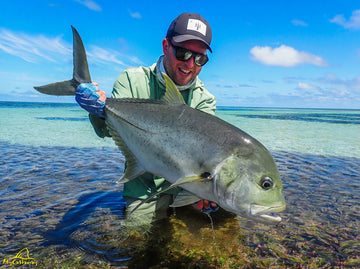
World records don't come easy, even beyond the angling capacity. The tackle, landing, and documentation are all part of the process. We were already rigged IGFA legal, I wasn't at all worried about that. But the moment I saw color, saw the scale spread on this fish, I felt sure it would trounce my length record. So it was time to get serious. I pulled out the measuring device and found a flat spot to lay it, then went and retrieved the net. I'd need to make sure I stayed close to John and have him bring the fish to me; I must be within a rod-length of him when I net the fish. Once that was all settled, though, and focus shifted back to John and how the fight was going, I must confess that I wasn't panicked, concerned, or even having any particularly crazy adrenaline rush. JK is more than competent, and I'd watched him land tons of big carp before. This was just a bigger one, that's all, and nothing crazy was going to happen. The record was as good as ours. The fish made a few defiant circles, then she slid nicely and politely right into the net. That's when I got a little bit excited. I turned to John. "Whoa ho hooooah, that is a BIG girl!" John replied with something like "that definitely beats yours, you complete idiot," or something like that... I don't remember exactly, but I cackled at whatever it was. One of our mutual friends and I have a "JK quote of the day" message thread... he's a firecracker, and there's nobody I'd rather beat my record.

We laid the fish down on the measuring device, confirming she was well over my record at 89 centimeters to the fork. She was a beastly fish, and we got the required photographs in the beautiful morning light before letting her slip calmly back into the river. Both pleased, we headed to get breakfast. The satisfaction of keeping that record between us and keeping it in Connecticut was high, especially considering the All-tackle length record had also not long prior been set in Connecticut by Norbert Samok. One line class record, a junior record, and a small fry record also came from Connecticut. I feel very strongly that Connecticut deserves a high ranking in terms of locations in carp fishing history. The state has such incredible wild carp fishing, producing both numbers and incredible size, without the sort of management that occurs on many European fisheries that produce large record-breaking fish. It's harder to know what to expect here; there are a lot of wild cards, and things always change. The chance is there, always, to get a properly gigantic fish. Sometimes it will come as at least a partial surprise, like JK's. We didn't know she was in there that day. When the line tightened, it could have been just another 18-pounder. Next time, who knows... that fish could be 50 pounds. There's nothing quite as tantalizing as that possibility, that ever-hovering question mark of what's possible. That's the magic of the waters I guide and fish in the Connecticut River watershed. The chance exists every single day to hook something completely preposterous.

Rowan Lytle is a full-time professional guide in the varied waters of Connecticut. You can find him on Instagram @ct.fly.angler or online here.

Comments
(2)What fly, leader length and strength did you use to catch that carp? Will you give me a few examples of flies you use for carp?
Thanks!
That excites me! What fly was the fish caught on and what length and pound test was the leader? Will you give me some examples of flies you generally use for carp fishing?
Thanks!