





Description
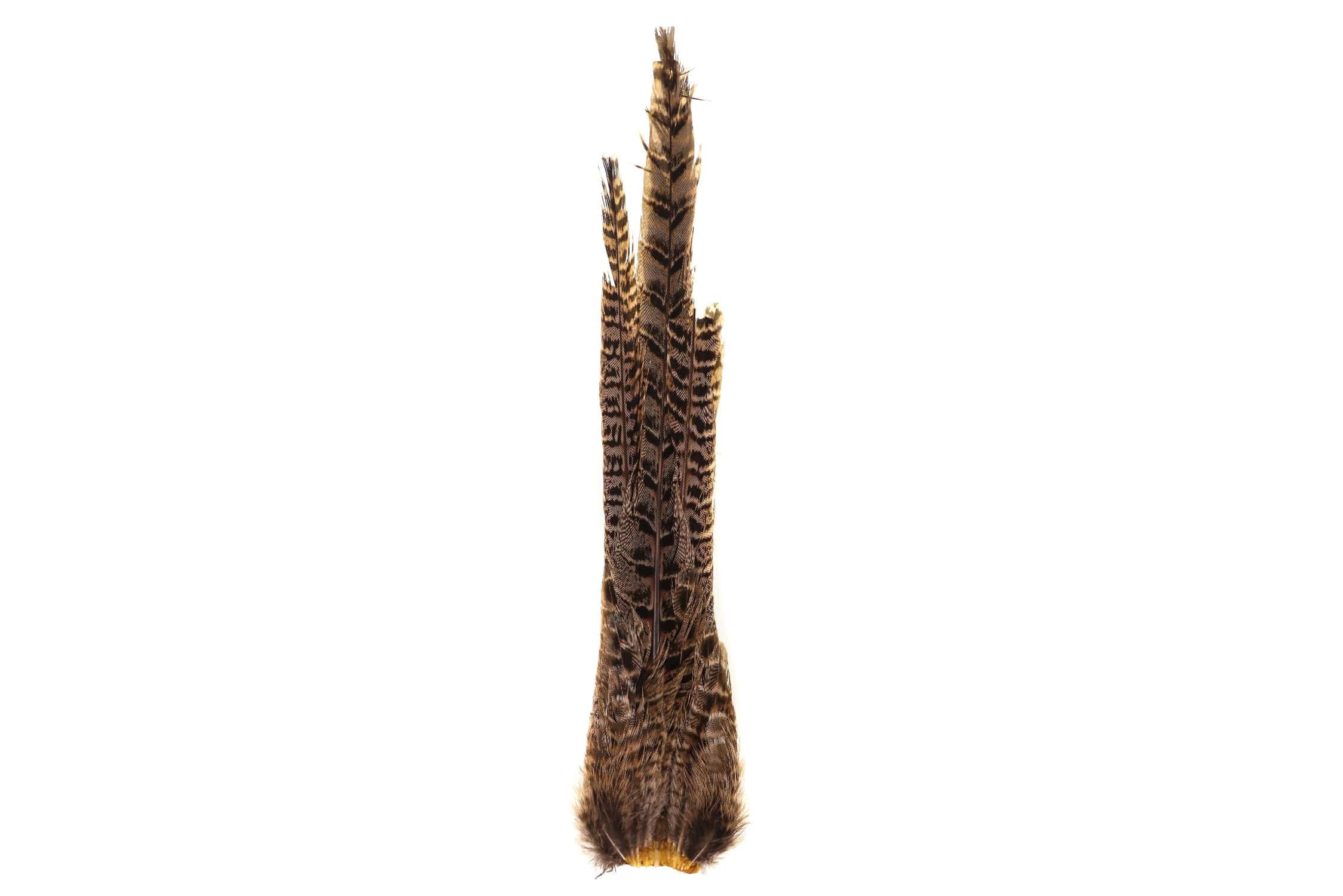
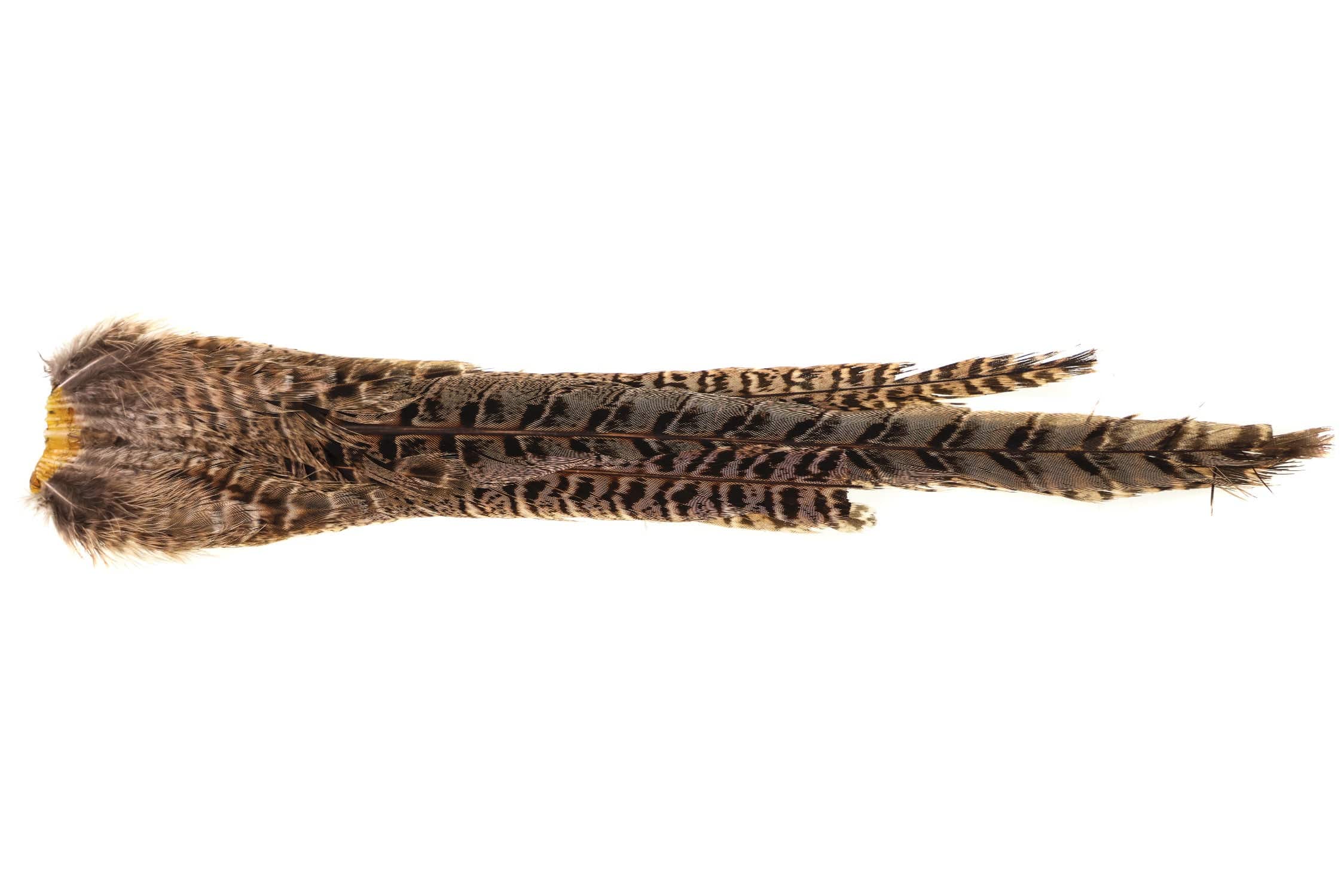
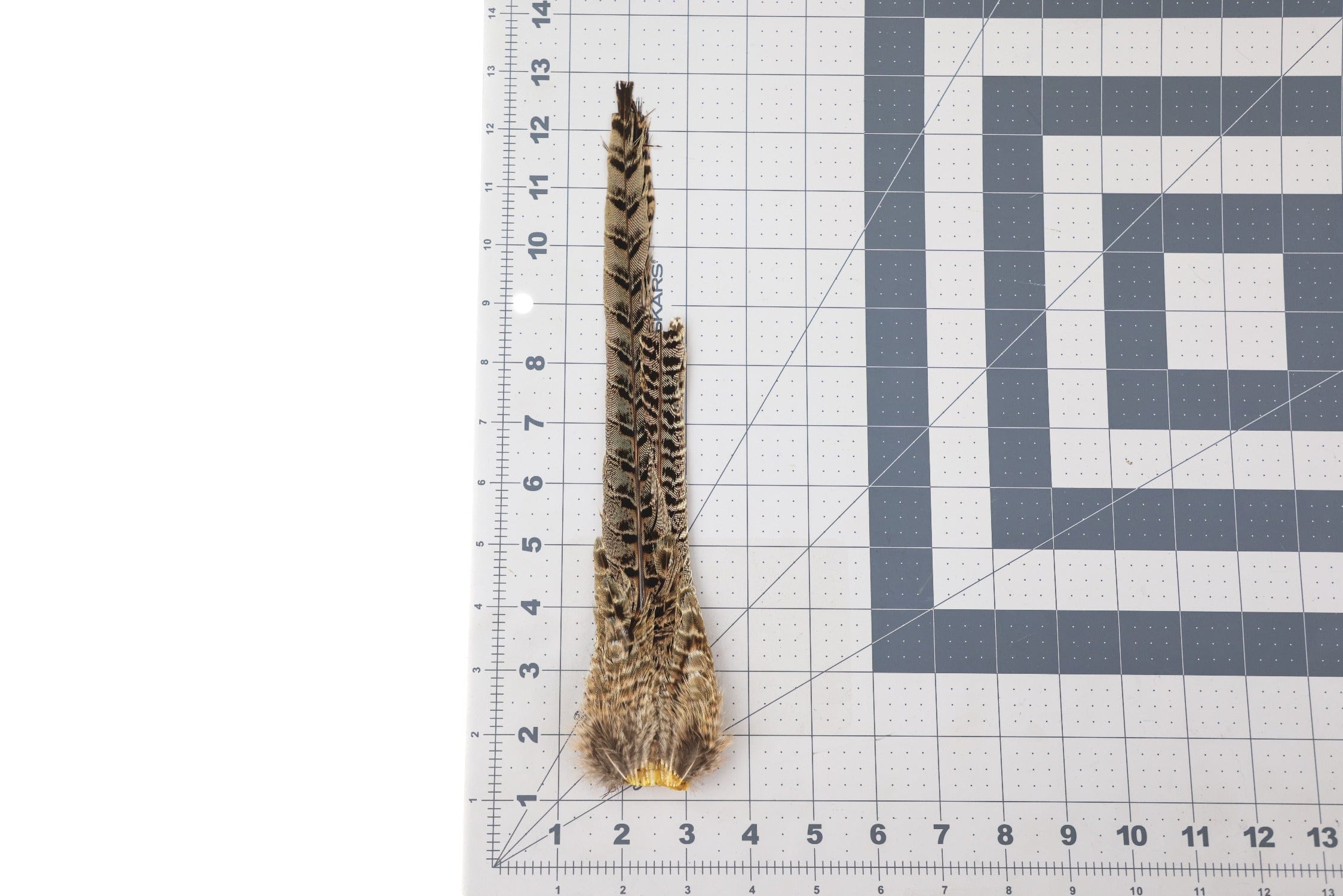
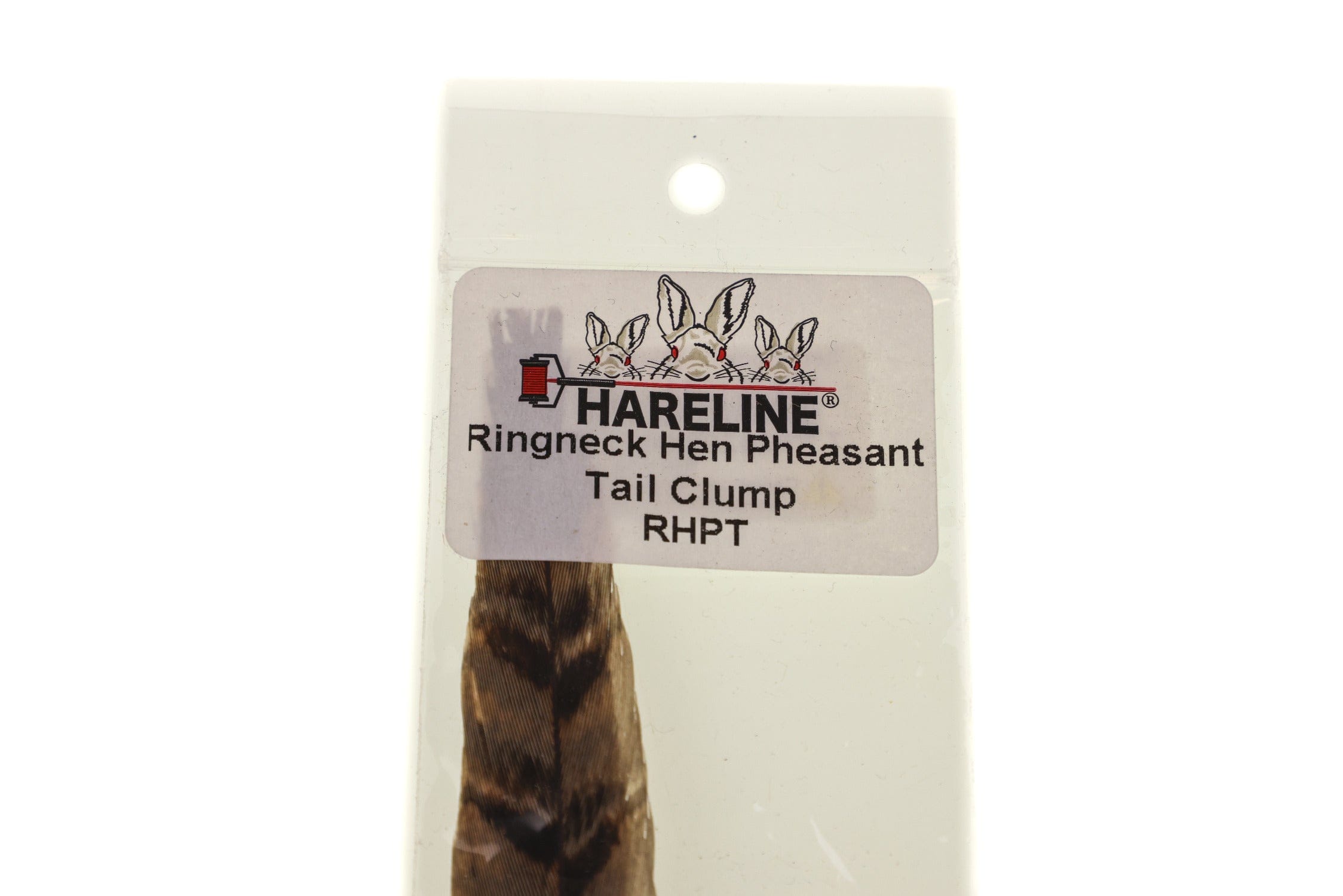
The Hareline Ringneck Pheasant Complete Tail Clump in Natural is exactly what it sounds like: every tail feather from a single rooster ringneck pheasant, bundled together and sold as one clump. The natural colorway is hand graded for quality, so what you get is a full spread of center and side feathers with the classic brown, copper, and black chevron barring that has been a tying bench staple for decades. Sold as an entire whole tail clump complete with centers and sides, you can use these feathers to wrap bodies on nymphs and wet flies, for making tails and wing casings, for tying knotted hopper legs, and more.
Why buy the whole clump instead of a pair of loose feathers? Simple: variety. Not only does the background colour and shading on each tail differ immensely but the black chevrons vary from light to dark and thin to thick. The center tail feathers have the longest fibers and typically excellent chevron barred markings. A complete clump gives you access to those prized center feathers alongside the shorter side feathers, so you can match fiber length and marking to whatever pattern you are tying, from a size 20 Baetis nymph to a size 10 hopper leg. If you tie trout nymphs, soft hackles, emergers, or wet flies with any regularity, this one package covers you for a long time.
How to Use It
The feather fibers on ringneck pheasant tail feathers are a standard for many fishing flies, particularly for tails, bodies, wing cases, and throats of nymphs, and also for wings on wet flies tied for trout and steelhead. To use them, strip individual fibers from the stem by pulling them at a right angle, then tie them in at the hook bend for tails, or wrap them around the shank to build segmented abdomen sections. It is important to keep the pheasant tail fibers from crossing each other while you wrap the body, so they stay flat. For wing cases, lay a bundle of fibers over the top of the thorax and tie down at the eye. Pheasant tail fibers are also widely used to make legs for terrestrials such as hoppers and in particular crane flies or daddy longlegs, typically by knotting individual fibers to form the joints.
Why We Like It
Buying a complete tail clump instead of a pair of feathers means you are set for months. These are extra select ringneck tail feather clumps, meaning they contain all of the tail feathers, so some are more symmetrical and longer than others. That range is actually the point. The long center feathers give you stiff, well-barred fibers ideal for wrapping tight nymph bodies and building durable wing cases. The shorter side feathers, with their slightly softer fibers, are better suited for tails and legs where you want a touch more movement in the water. One clump, multiple applications.
The olive and brown iridescence of the tail fibers creates extremely lifelike nymph bodies with a translucent effect when wet, especially when backed by copper wire ribbing. The individual fibers are very durable, long, and tapered, which means they hold up to wrapping without splitting and maintain their profile after multiple fish. For anyone targeting trout, grayling, steelhead, or panfish on subsurface patterns, this is the single most useful natural feather you can stock on your bench.
Example Flies
Sawyer's Pheasant Tail Nymph (PTN): Originally conceived and tied by Frank Sawyer in 1958, this is the original pheasant tail fly. The original was tied with just two materials, pheasant tail fibers and copper wire. Cock pheasant center tail fibers form the tail, abdomen, thorax, and wing case of this pattern. When wet, this pattern has a translucent effect and one can see the red of the wire showing through the pheasant tail fibers. The Natural colorway from this clump is exactly what the recipe calls for.
Frenchie Nymph: The Frenchie is a favorite pattern of competitive fly fishermen and Euro nymphers. It's really nothing more than a heavily weighted pheasant tail with a hot spot. Natural-colored pheasant tail fibers are wrapped forward to create the abdomen, ribbed with gold wire, and topped with a UV Ice Dub collar and tungsten bead. This clump's natural fibers are the specified material for the abdomen, and the stiff center tail fibers wrap cleanly to create that segmented body profile that Euro nymph anglers rely on when drifting tight to the bottom for trout.
Flashback Pheasant Tail: A modern variation of Sawyer's original, Andre Puyans is credited with adding flashabou strands over the thorax to create the flashback version. Pheasant tail fibers still form the tail, body, and wing case, making natural ringneck fibers from this clump the correct recipe material. Puyans believed the flashback provided sparkle seen in the natural from gases building up in the thorax, and the mottled brown and copper tones of the pheasant tail body sell the mayfly nymph silhouette underneath.
Invicta: This classic British wet fly traditionally calls for hen pheasant wing as the wing material. However, a wing of hen pheasant tail is overlaid with strands of pearl flash in several popular variants. Because a complete rooster tail clump contains shorter side feathers with slightly softer fibers, some tyers use these as a substitute for hen pheasant wing slips when tying Invicta variants, especially in larger sizes where the mottled marking on the side feathers provides a similar tent-wing profile. It is not the traditional material, but the natural barring and coloration make it a workable stand-in if hen pheasant is not on hand.
Comparisons
Hareline Ringneck Pheasant Complete Tail Clump - Natural vs Hareline Ringneck Pheasant Tail Feathers (Individual Pair):
A couple of male tail feathers might cost about $5 while full tail clumps might run as high as $15. So the price-per-feather math favors the clump in a big way. An individual pair typically gives you two center feathers with fibers roughly 1-2 inches long, which is plenty if you only tie a handful of Pheasant Tail Nymphs at a time. The complete clump, on the other hand, gives you every feather from the tail, including the coveted long center feathers and the shorter side feathers with different marking densities. If you tie in volume, batch nymphs for a season, or want the flexibility to match fiber length and shading to specific hook sizes and patterns, the complete clump is the better investment. The individual pair makes sense if you tie infrequently or just need a quick restock of center fibers.
Hareline Ringneck Pheasant Complete Tail Clump - Natural vs Turkey Tail Feathers:
Turkey tail feathers have beautiful markings, but they tend to be a bit webbier and don't produce the same appearance when used for tails, legs, and wrapped bodies. Turkey fibers are longer and wider, which makes them a solid pick for wing cases on larger stonefly nymphs and streamer applications where you want more surface area. But for wrapping segmented bodies on sizes 14-20 nymphs, pheasant tail fibers are stiffer, thinner, and create a tighter, more defined segmentation. The Ringneck Pheasant Tail has fibers that are slightly shorter and significantly stiffer than alternatives, and as such, the Pheasant Tail Fibers are more durable when tied into small nymphs. If you are tying classic trout nymphs, soft hackles, and Euro jig nymphs, pheasant tail is the right call. If you need broad, mottled slips for larger subsurface patterns or caddis pupa wing cases, turkey is worth a look.