

























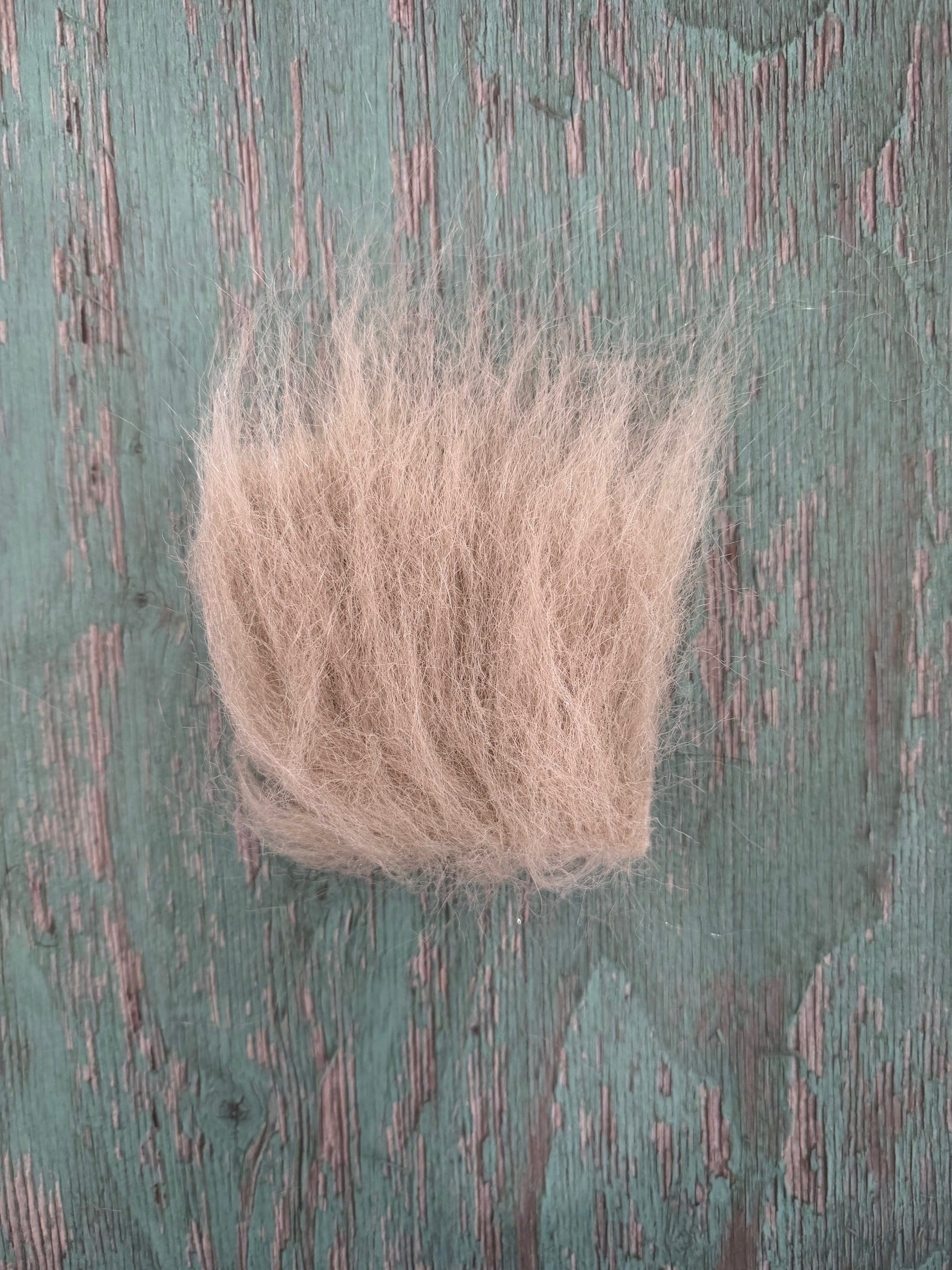
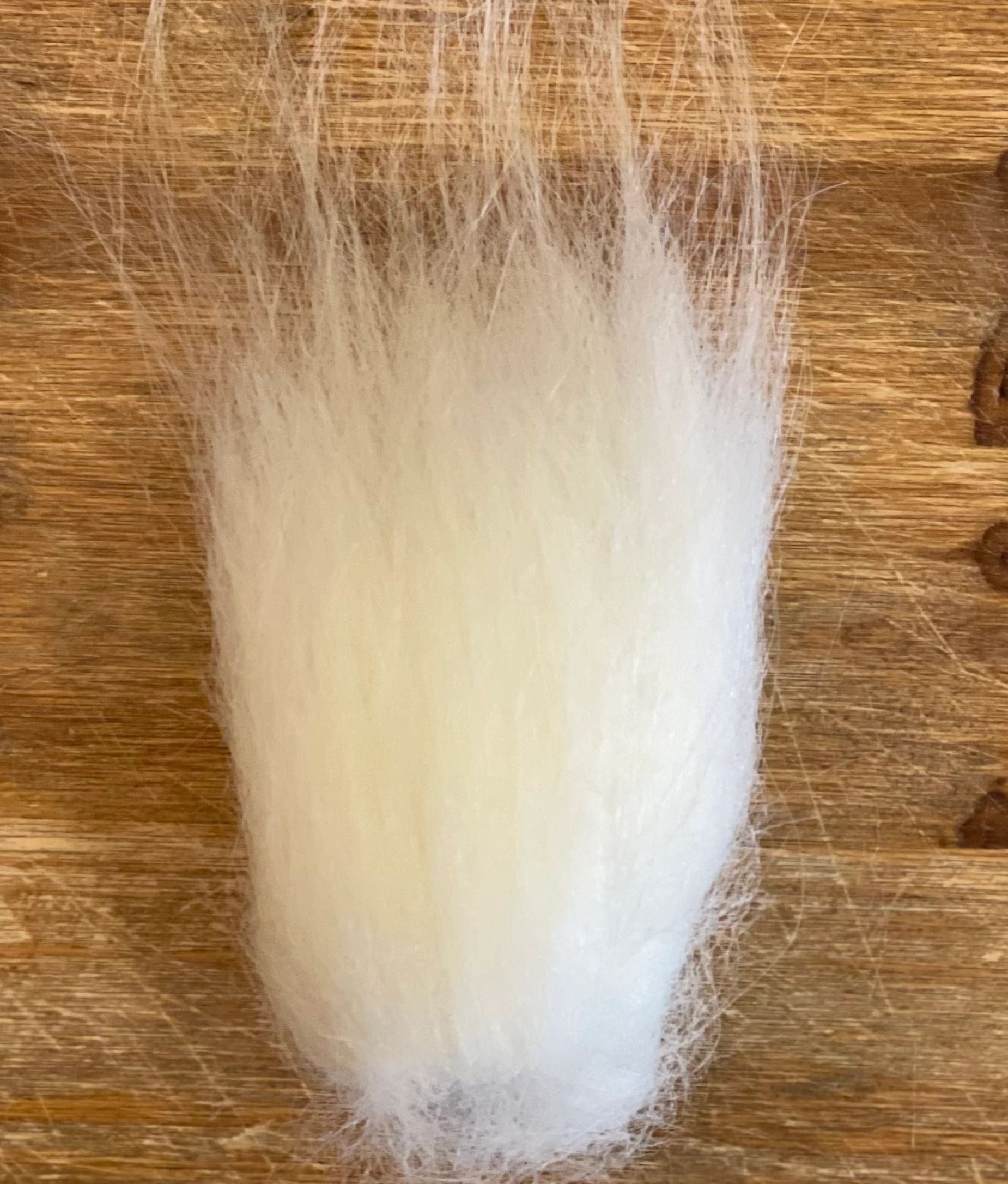
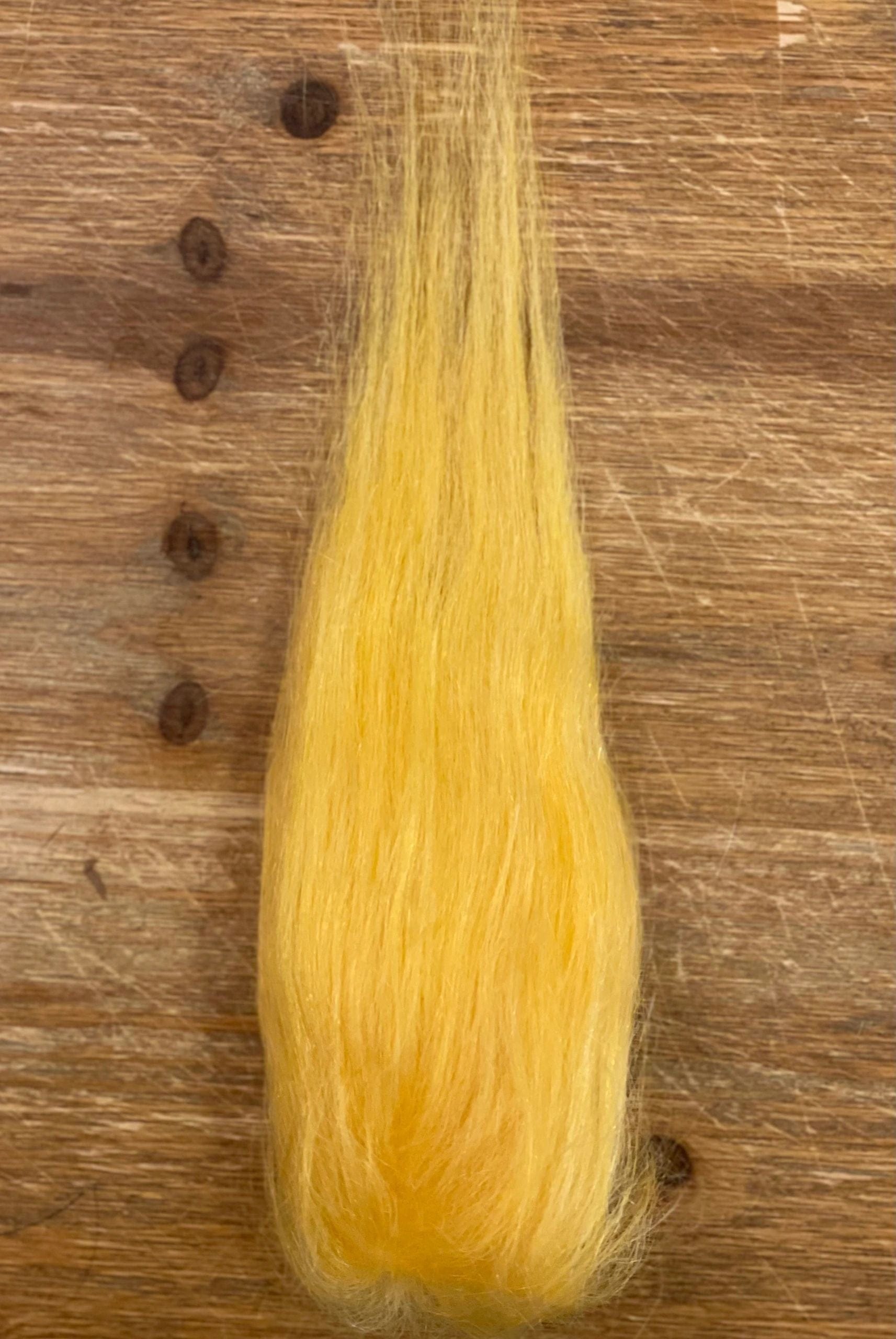


Description
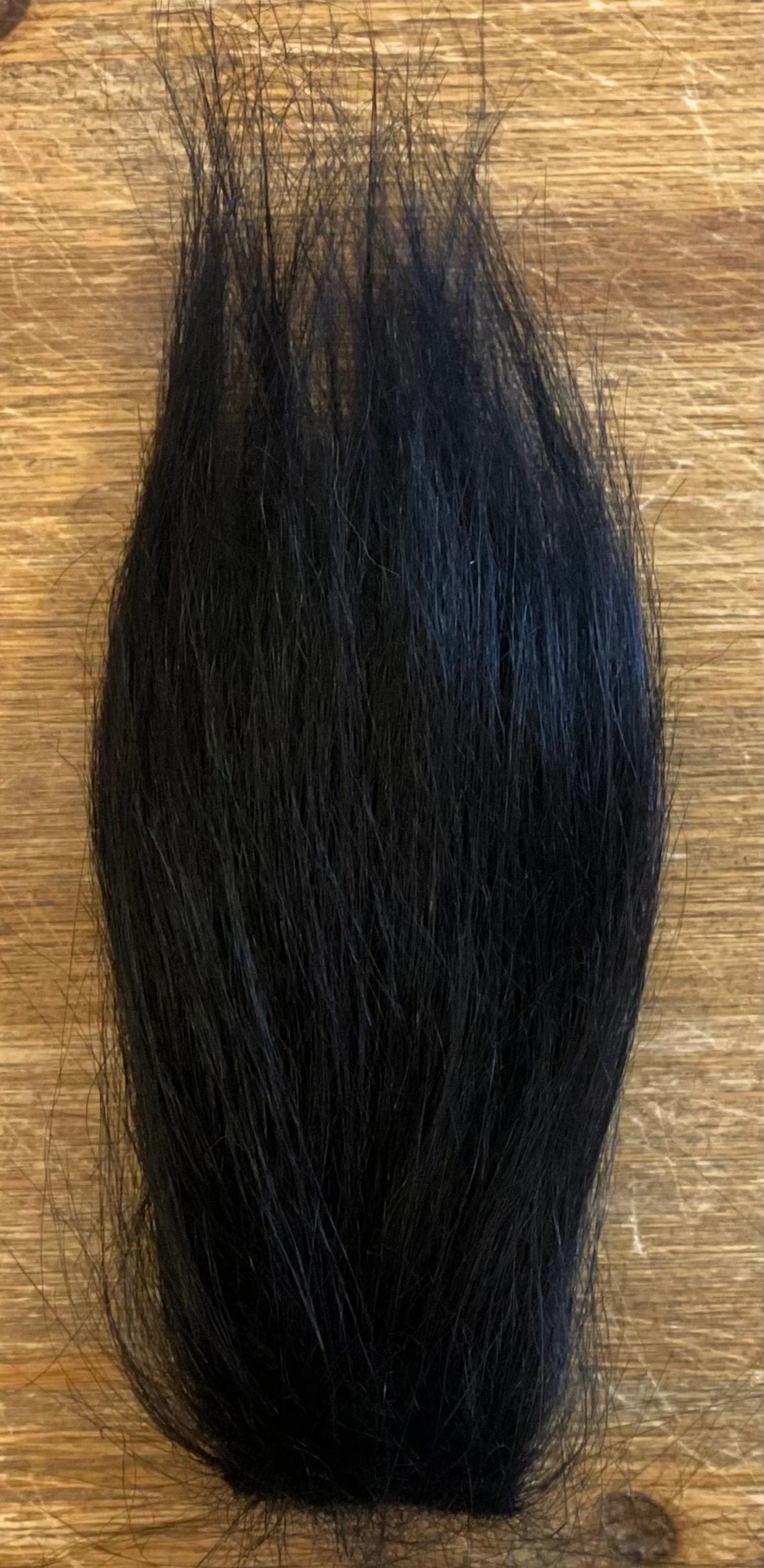
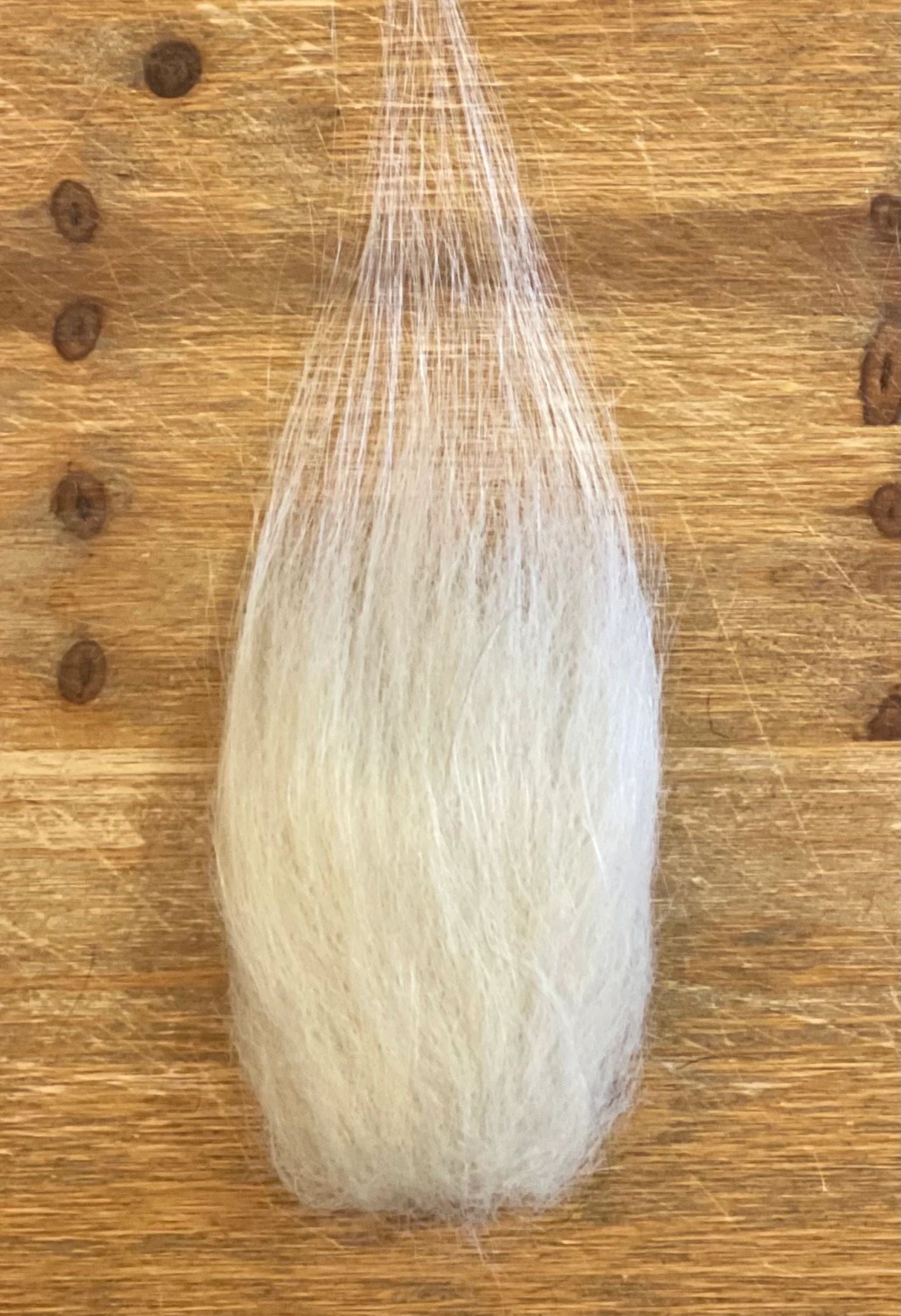
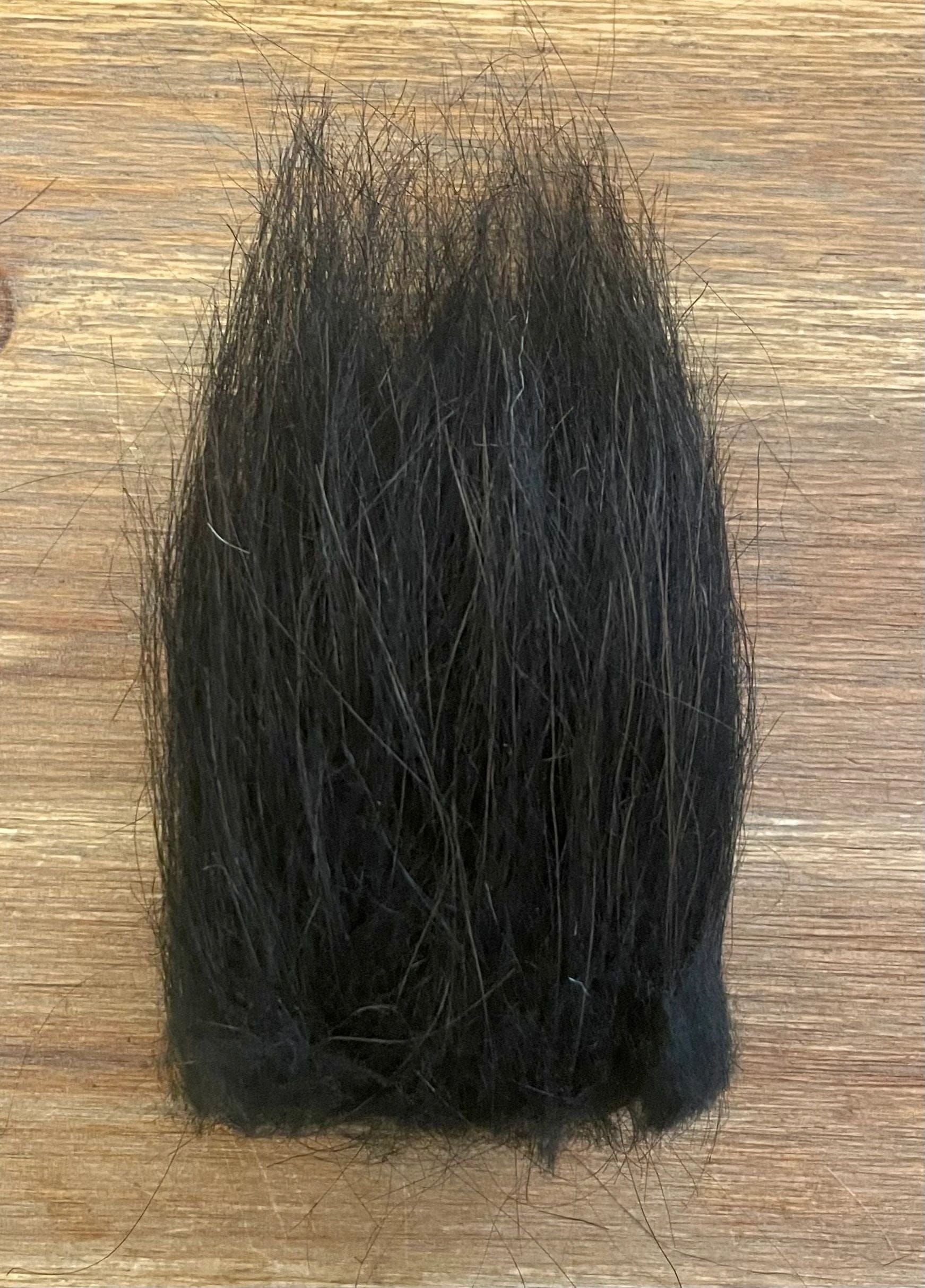
Squimpish Fur from Squimpish Flies is a dynamic, synthetic fiber blend integrated onto a fabric backing, engineered to mimic the taper, movement, and underfur-to-guard-hair ratio of premium natural bucktail. Designed specifically for tying massive predator patterns, this material sheds water instantly and maintains an expansive silhouette without the debilitating water weight associated with natural hair. It excels in heavy saltwater currents for striped bass and offshore pelagics, as well as turbulent freshwater musky and pike fisheries, serving the progressive tyer who requires durable, large-profile baitfish imitations that remain light enough to cast all day.
The material features translucent guard hairs stretching from 5 to 10 inches in length, supported by a coarser, crimped underfur that forces the longer fibers to flare naturally when tied down. These synthetic fibers resist tangling and are heat-pliable, allowing tyers to permanently set a specific profile or curve into the fly using warm water or a hairdryer. The thin, flexible cloth backing holds the fibers securely, permitting tyers to harvest precise, tapered clumps or wrap narrow strips directly around the hook shank as a synthetic hackle.
How to Use It
To harvest the material for standard wings or tails, part the fibers on the patch to expose the fabric backing and cut your clump directly at the base to preserve the factory taper. Because of the dense, crimped underfur, you must aggressively comb out the bottom half of your cut clump to remove excess bulk before lashing it to the hook. Tying the harvested clump in reverse, known as a hollow tie, and pushing the fibers back with a thread dam maximizes the volume, perfectly replicating the flaring properties of natural bucktail.
Why We Like It
Squimpish Fur completely eliminates the unpredictable grading and sourcing issues associated with natural bucktail by providing a consistent, endless supply of ultra-long tapered fibers. The synthetic construction ensures the material absorbs zero water, keeping foot-long articulated flies remarkably aerodynamic and reducing angler fatigue during long casting sessions. The specialized blend of matte underfur and translucent guard hairs generates a lifelike, pulsing swimming action in the water that stiff, extruded synthetics simply cannot replicate.
Squimpish Fur vs Extra Select Craft Fur
Extra Select Craft Fur utilizes a similar cloth-backed synthetic design but maxes out at 3 to 4 inches in length with a densely packed, cotton-like underfur. Squimpish Fur extends up to 10 inches and employs a stiffer, crinkled underfur that actively supports and flares the longer guard fibers, making it the required material for baitfish patterns exceeding six inches. Extra Select Craft Fur remains strictly limited to smaller baitfish profiles, crab bodies, and articulated trout streamers where extreme length and structural flaring are unnecessary.
Example Flies
Hollow Fleye: Bob Popovic's classic design utilizes Squimpish Fur tied in reverse along the hook shank to build a massive, translucent profile that sheds water instantaneously. The crimped underfur of the synthetic material flares against the thread dams, creating a structured baitfish shape that maintains its volume in heavy saltwater rips without collapsing.
Musky Double Deceiver: This articulated pattern leverages the 10-inch length of Squimpish Fur in the tail section to generate an undulating, snake-like swimming action. Tyers blend contrasting colors of the fur by hand to match specific forage like white suckers or yellow perch, relying on the material's water-shedding properties to keep the massive double-shanked fly castable on a heavy-duty 10-weight rod.
Beast Fleye: Replacing premium, hard-to-find 6-inch bucktail, Squimpish Fur is tied on monofilament extensions using the hollow tie method to construct flies exceeding 12 inches in overall length. The synthetic guard hairs taper naturally to a fine point, accurately replicating the deep silhouette of large menhaden or herring while resisting the shearing teeth of northern pike and offshore predators.