



Description
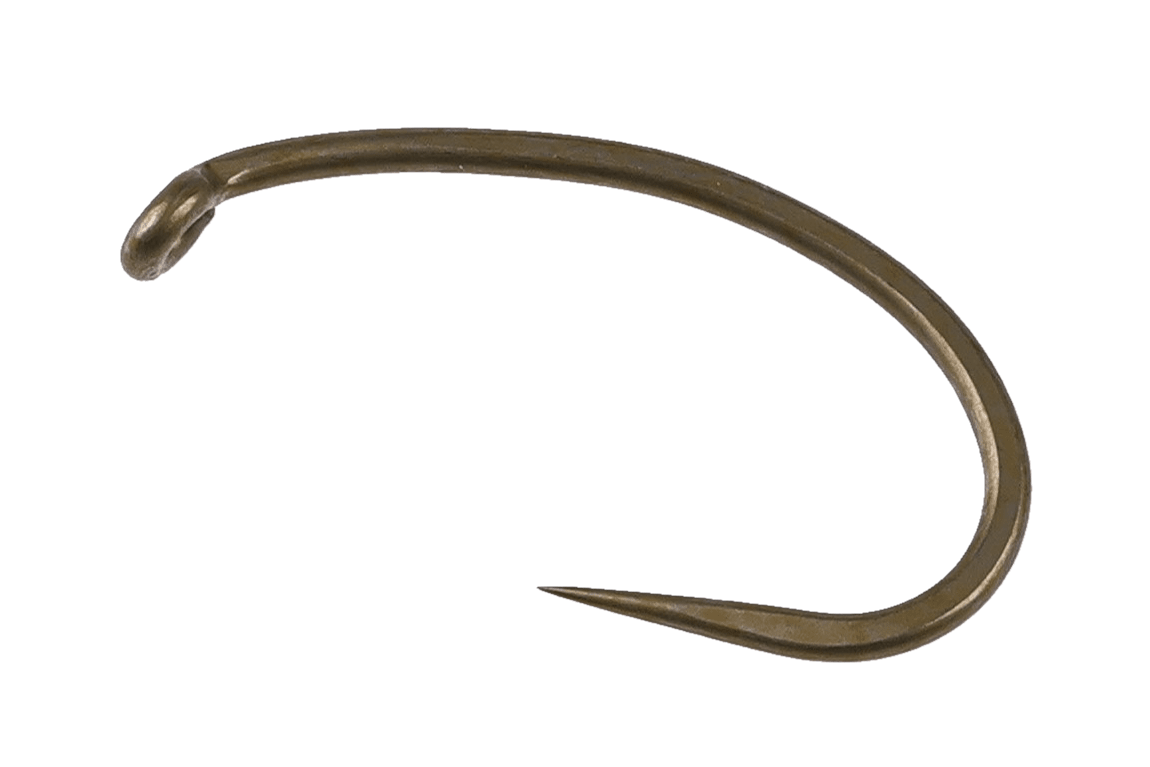
The Daiichi 1920 is a Czech-style nymph hook with a curved shank, the eye positioned to encourage point-up presentation, and design that works well for a variety of nymph patterns including caddis pupae, scuds, and Czech nymphs. Designed for competition-style Czech nymphing, this hook features a heavy wire that helps it sink efficiently in fast water. The curved shank and point-up geometry give the fly natural movement when stripped or retrieved with short, jerky motions, making it effective for dancing nymphs along the bottom.
The york bend creates a curved profile that imitates the natural segmentation of aquatic insects. Pair that with heavy wire and a curved shank, and you've got a hook that sinks on its own, holds big fish, and gives you the real estate to build a buggy thorax and trailing abdomen without crowding the eye.
The point-up geometry is the whole point. Strip it, pause, strip it, and the fly noses down and lifts like a fleeing crayfish or a leech humping along the bottom. That point-up geometry also means fewer hangups in the rocks, which matters when you're fishing weighted nymphs deep where the fish actually are.
Why We Like It
The point-up orientation is the feature that earns its keep. The curved york bend and hook geometry work together to encourage the fly to ride upright in the water column. That's a real advantage for tyers chasing trout in fast water and smallmouth bass on the swing.
The heavy wire is the other reason we reach for it. It sinks faster than standard nymph wire and won't flex out when a big brown decides to use the current against you. The curved shank gives you room for full-bodied nymph patterns without running the dressing into the eye. It's a specialist hook, and it does its one job well.
Example Flies
Czech-Style Nymph: The 1920 was designed for Czech nymphing competition and tight-line fishing. The point-up orientation and heavy wire give the fly its jigging action, and the curved shank provides a realistic insect profile. This hook excels in the demanding conditions of competitive nymphing.
Woolly Bugger (Leech variant): Tie a marabou-tailed leech or bugger on the 1920 and the point-up geometry turns a flat-riding fly into a jigging one. The point-up ride lets you bounce it along the bottom for trout and bass with far fewer snags, and the heavy wire helps it get down. This is a substitute application rather than the traditional streamer-hook recipe, but tyers choose it specifically for the jig action and the snag resistance over rocky bottoms.
Crayfish Pattern: Larger sizes of the 1920 give crayfish imitations a lifelike, segmented look thanks to the curved york bend. The point-up ride mimics a crayfish backing away with claws raised, which is exactly the posture that triggers smallmouth bass and big trout. The long shank gives you room to build out the body and pincers without crowding.
Stonefly Nymph: Stonefly nymphs are long and segmented, and the curved shank with the york bend matches that shape without forcing it. The heavy wire sinks the fly into the fast, broken water where stoneflies live, and the point-up ride keeps the hook clear of the rocks they cling to.
Daiichi 1920 Matte Bronze Hooks vs Daiichi 1770:
The 1770 is the original swimming nymph hook, while the 1920 is a separate Czech-style scud hook line designed for different applications. The 1770 features a straight eye and fine wire for more delicate swimming nymph presentations. If you want a lighter swimming nymph that drifts more naturally in slower water, the 1770 still makes sense. If you want your fly to ride point-up, sink on its own, and dodge the rocks with Czech-style precision, go with the 1920.
Daiichi 1920 Matte Bronze Hooks vs a standard jig hook (60-degree eye):
A 60-degree jig hook paired with a slotted tungsten bead is the modern Euro nymph standard, and it rides point-up too. The difference is shape: the jig hook is short and compact for tight, beadhead jig nymphs, while the 1920 gives you a curved shank built for a wider range of nymph patterns. Reach for the jig hook when you're tying small, weighted point-up nymphs for tight-line work. Reach for the 1920 when you want a curved profile for Czech-style nymphing across a wider range of pattern types.
⚠️ Final Sale Policy
Some options of this product are discontinued or on sale and are sold as final sale. These items are NOT eligible for returns. Thank you for your understanding.