






























Buy 12+ Flies, Get a Fly Box for $5
Description
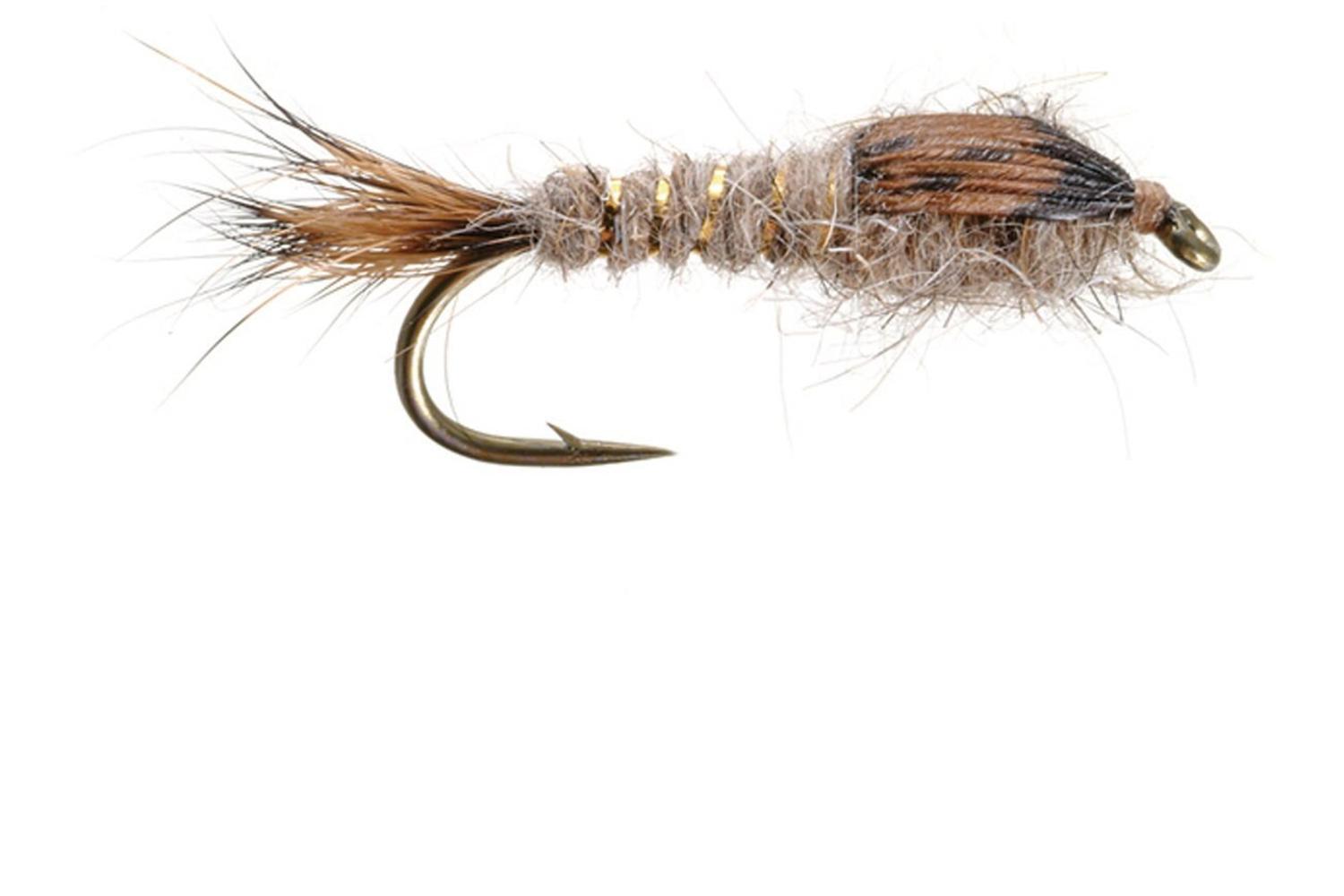
The Gold Ribbed Hares Ear is the fly that refuses to retire. With roots stretching back well over a century, this nymph has outlasted every trend in fly fishing for one simple reason: it catches fish. Everywhere. All the time. Tied by Umpqua Feather Merchants, this tungsten bead version takes the classic pattern and gives it the weight to get down where the fish actually live. Whether you're chasing trout in a freestone river or prospecting a spring creek, this is the first nymph that should go in your box and the last one you should ever take out.
What It Imitates
The beauty of the Hares Ear is that it doesn't imitate one thing perfectly. It imitates everything pretty well. The scraggly hare dubbing body and turkey wingcase give it the general profile of a mayfly nymph, a small stonefly nymph, or even a caddis larva. Fish don't see a species when they look at this fly. They see food.
How To Use It
Dead-drift this fly under an indicator or tight-line nymph it through runs and riffles. The tungsten bead gets it down fast, so you spend more time in the strike zone and less time waiting for your rig to sink. It works beautifully as the point fly in a two-nymph setup, pulling a lighter dropper into the feeding lane behind it.
Pick apart pocket water with it. Swing it through the tail of a pool. Drop it into the deep slots along undercut banks where bigger trout hold. In still water, try a slow retrieve near the bottom of a brookie pond. The tungsten head gives you the versatility to fish it in places a standard brass bead version simply can't reach.
When To Use It
This is a twelve-month pattern. When there's no obvious hatch happening and you need a searching nymph, tie on a Hares Ear. It shines during pre-hatch periods when mayflies and stoneflies are active on the bottom but haven't started emerging yet. Cloudy days and slightly off-color water are prime conditions, as the gold ribbing catches just enough light to draw attention without spooking wary fish. In clear, low water, size down to an 18 or 20. When flows are up and visibility drops, go with a 10 or 12 and let the tungsten do its job.
Why We Like It
We like it because it works when nothing else does and still works when everything else does, too. The tungsten bead is the key upgrade here. It sinks significantly faster than brass, which means you're fishing productively in heavy current where a standard Hares Ear just tumbles along above the fish. Umpqua ties these cleanly and consistently, so you're not sorting through a bin of wonky proportions. Sizes 12 through 16 are the sweet spot for most trout water, but keep a few 18s and 20s around for tailwaters. Available in Natural, which is the only color this fly has ever needed.
Comparisons
Gold Ribbed Hares Ear vs Pheasant Tail Nymph:
These two are the bread and butter of any nymph box, and you honestly need both. The Pheasant Tail is slimmer and more refined, making it a better match during specific mayfly hatches like BWOs or PMDs. The Hares Ear is buggier and more impressionistic, which makes it a stronger searching pattern when you don't know what's on the menu. If I had to pick one fly for an unfamiliar river, I'm reaching for the Hares Ear every time.
Gold Ribbed Hares Ear vs Prince Nymph:
The Prince Nymph is an attractor pattern with flashy white biots and a peacock herl body that doesn't really mimic a specific insect. The Hares Ear, by contrast, actually looks like something that lives under a rock. In pressured water where trout have seen a lot of flies, the natural profile of the Hares Ear will outperform the Prince. Save the Prince for faster water and aggressive fish that respond to flash.
Gold Ribbed Hares Ear vs Soft Hackle Hares Ear:
A Soft Hackle Hares Ear swaps the wingcase for a swept-back hackle collar, turning it into a wet fly meant to be swung on the drift. It excels during emerger activity when insects are moving through the water column. The standard Gold Ribbed version is built to sit on the bottom and dead-drift like a nymph that hasn't started its ascent yet. Think of the soft hackle as the sequel. You want the original in your box first.
Due to the handmade nature of this product, the item you receive may vary slightly from the photos. Flies that are not individually packaged are not returnable.