




Trident Fly Fishing is a full-service fly shop. We spend a lot of time testing gear and writing reviews to give you all of the tools to make your next trip a success. We are not a blog or a review site, and there are no ads. 100% of our funding comes from your gear purchases, so if this review helps with your next fly fishing adventure, please help support us by buying your next fly rod from us.

Grab the wrong rod weight for Permit and you’ll blow your one shot of the week. Show up to a Steelhead river with a 5wt and you’re a spectator. The rod you choose matters more than almost any other variable in fly fishing, and it changes dramatically from species to species. We built this guide to cut through the confusion - a quick-reference chart plus species-by-species breakdowns covering line weights, rod lengths, and the reasoning behind each recommendation. Whether you’re rigging for Bluegill in a farm pond or Tarpon in the Keys, you’ll find what you need below.
Line Weight & Length Chart
Find Your Fly Rod
Pick the species you're chasing and we'll match you to a rod weight and length.
| Species | Line Weight | Length |
|---|---|---|
| Trout | 1-6 | 6' - 10' |
| Atlantic Salmon | 7-9 | 9' - 14' |
| Bluefin Tuna | 13+ | up to 9' |
| Bonefish | 6-9 | 9' |
| Carp | 5-8 | 9' |
| False Albacore (Little Tunny) | 8-10 | 9' |
| Giant Trevally | 11-12 | 9' |
| Golden Dorado | 7-10 | 8' - 9' |
| Grayling | 3-5 | 9' |
| King Salmon | 9-10 | 9' - 14' |
| Largemouth Bass | 6-9 | 8' - 9' |
| Mahi-Mahi | 7-10 | 8' - 9' |
| Marlin | 15+ | up to 9' |
| Muskie | 10-12 | 8' - 9' |
| Pike | 8-10 | 8' - 9' |
| Panfish | 0-4 wt | 6' - 9' |
| Peacock Bass | 7-10 | 8' - 9' |
| Permit | 8-10 wt | 9' |
| Redfish | 6-10 | 9' |
| Roosterfish | 10-12 | 9' |
| Sailfish | 12+ | up to 9' |
| Silver Salmon | 7-9 | 9' - 14' |
| Landlocked Salmon | 5-8 | 9' - 11' |
| Smaller Pacific Salmon | 6-8 | 9' |
| Smallmouth Bass | 5-8 | 8' - 9' |
| Steelhead | 6-8 | 9' - 13' |
| Striped Bass | 7-10 | 8' - 9' |
| Tarpon | 10-12 | 9' |
Trout

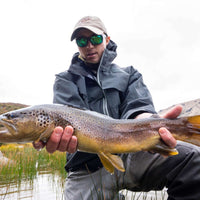
Arguably the most iconic form of fly fishing, angling for trout spans a wide array of techniques, water types, and locations. Because of this diversity, trout rods come in an equally wide variety of lengths and line weights, many designed for a specific discipline, such as dry fly fishing, European nymphing, streamer fishing, and more. Generally, a 9’ 5wt will cover most trout fishing scenarios, although there can be exceptions depending on where you intend to fish and what techniques will be used. For small creeks and spring creeks, a 4wt or even a 3wt is a better fit. For streamer-heavy days on bigger water, step up to a 6wt. And for dedicated tightline nymphing, check out our euro nymphing rod guide.
Atlantic Salmon

Atlantic Salmon can be targeted using a variety of techniques, from skating dry flies to swinging traditional wet flies. Depending on the scenario, anglers can use single-handed or two-handed spey and switch rods to target Atlantics, which can range in length from 9 feet to 14 feet.
Bluefin Tuna
One of the fastest fish species in the sea, the Bluefin Tuna requires stout fly rods that can withstand hard runs and long battles. Most Bluefin anglers opt for a 13wt or heavier, around 8.5 feet long. If you’re targeting trophy Tuna well above 100 lbs, a 15wt or even a 16wt may be necessary.
Bonefish

Bonefish are one of the most popular saltwater flats species due to their abundance, their willingness to eat a fly, and their propensity to feed on shallow, clear flats. The entire experience of sighting, hooking, and fighting a lightning-fast Bonefish is one that many anglers will remember forever. Most anglers prefer a 9’ 8wt fly rod for targeting these ‘silver bullets’, which offers enough power to cast a shrimp pattern into a stiff wind. Some situations, however, require a lighter rod such as a 6wt or 7wt. A great example of this would be wading in very skinny flats where skittish fish require a delicate presentation.
Carp
Carp are an often-overlooked species by most fly anglers. They’re fantastic gamefish that can be as challenging as they are rewarding. Although many species of carp can be targeted on the fly, nearly all of them require delicate presentations and plenty of pulling power once hooked. A 9’ 7wt fly rod tends to be a universal Carp rod for many anglers, although some situations may call for lighter or heavier rods depending on the conditions and the size of flies you’re fishing.
False Albacore

Also known as ‘Little Tunnys’, False Albacore are among the most exciting saltwater species to target on a fly rod due to their speed and inclination to blitz schools of bait. Depending on factors like wind and fly size, anglers generally choose from 9’ 8-10 wts for these underrated gamefish.
Giant Trevally
Referred to as the ‘gangsters of the flats’, Giant Trevally are among the most impressive saltwater predator species in the world. These cousins of the Jack Crevalle can grow to weights exceeding 80 pounds and will hammer baitfish patterns with spectacular speed and power. To target GTs, most anglers will fish a 9’ rod in the 11-12 wt range. Although smaller ‘Geets’ can be caught with a 10wt, you never know when a bigger fish will show up, so it pays off to be prepared with a more robust rod.
Golden Dorado
Fly fishing for Golden Dorado combines amazing travel experiences with large, predatory freshwater fish. Found primarily in the jungle rivers and deltas of Bolivia, Argentina, Paraguay, and Uruguay, these metallic-colored predators will destroy large streamer patterns in the hunt for food. Intrepid anglers target Golden Dorado using fast-action 7-10 wt rods that can turn over meaty flies at a distance.
Grayling

Found primarily in northern latitudes, Grayling are beautiful and eager to eat flies - especially dry flies! Because of this, a 9’ 3-5wt rod with a medium action is a great choice for targeting Grayling.
King Salmon

Also known as Chinook Salmon, Kings are the biggest and strongest of the five Pacific Salmon species. Like other salmon species, they can be targeted with single-hand or double-hand spey rods, depending on factors like the fishery, season, and the flies you’ll be fishing. King Salmon rods can range from 9’ 9wts to 14’ 10 wts. For a deeper dive, see our guide on how to choose a fly rod for Pacific Salmon.
Largemouth Bass

Perhaps one of the most popular game fish in the United States, Largemouth Bass should not be overlooked as a fly rod target. These powerful warm water fish are known for their willingness to attack large streamers and surface flies like poppers and mice. Depending on the fishery and how you’ll target them, you can choose 6-9wt rods in the 8-9’ range.
Mahi Mahi
Mahi Mahi are one of the fastest-growing, and most beautifully colored fish in the ocean. These predatory gamefish will attack baitfish patterns and poppers with reckless abandon during the right conditions. For smaller schoolies, a 9’ 7-8wt rod will work great. For bigger bull Mahi, you’ll want a 9wt or even a 10wt to put the wood to them.
Marlin
Catching a marlin on the fly is considered a pinnacle achievement by avid bluewater anglers, and can be challenging to say the least. Whether you’re utilizing a bait-and-switch method, or sight-casting to blitzing fish, you’ll generally want at least a 12-weight rod for this formidable fish, and even a 15-weight rod can be optimal. Of course, this can depend entirely on the fishery and the conditions, so you should research what’s recommended before any Marlin trip.
Musky
Fly fishing for musky usually requires lots of blind casting of huge flies and plenty of patience. Known for their visual eats that often occur just inches from the rod tip, Musky are a unique predator species with a loyal, almost cult-like following of anglers. Historically, 9’ 10-12 wt rods were the norm for Musky fishing, however there now exist purpose-built 8’ and 8.5’ rods designed to throw big musky patterns all day, offering a lower swing weight and easier figure-8s.
Pike

Another species of Esox, the Pike is the Musky’s little brother. But don’t let that fool you, they’re still voracious ambush predators that will aggressively strike giant flies close to the rod tip. Most Pike anglers prefer an 8-9’ rod in either 8, 9, or 10 weight. These should be stiff rods capable of throwing large, air-resistant flies all day long.
Panfish

Panfish is a general family of fish that includes Bluegill, Sunfish, Crappie, and Perch, among others. These species are some of the most beginner-friendly on the fly rod, often willing to eat dry flies, nymphs, and small streamers with reckless abandon. To target them, you’ll want nothing heavier than a 9’ 4wt rod unless you’re faced with windy conditions or longer casting scenarios. Personally, I love a fiberglass 3wt for Panfish because it’s fun to cast and makes even a small fish feel much bigger.
Peacock Bass

Known for their exotic coloration and brute strength, Peacock Bass are a freshwater species typically found in tropical jungle environments such as in northern South America and around the equator. Fooling a big Peacock often requires casting big attractor streamers and covering lots of water. Ideal rods are 8-9’ in length with a fast action. Depending on the fishery, you may need as light as a 7wt or as hefty as a 10wt.
Permit

Some anglers call Permit the ‘Black-Tailed Devil’, an appropriate nickname for a fish that has likely frustrated more fly anglers than any other species throughout history. Permit are a highly discerning and elusive flats species that require an extremely accurate fly placement to get them to even consider eating. Because permit flies are usually heavily weighted crab patterns, a fast-action fly rod is needed to deliver your presentation. 9’ 9 wts are the most universal Permit rods, however, you may opt for an 8wt or a 10 wt depending on conditions and what your guide recommends.
Redfish

Red Drum, aka Redfish, are a popular game fish found throughout the southern United States in marshes and muddy flats near surrounding bays or inlets. They are known for their willingness to take flies and their propensity to feed in extremely skinny water. Because Redfishing is typically a sight-fishing game, the right rod to choose depends on factors such as the typical casting length, the depth of the flat, and the size of the fly you’re throwing. For smaller ‘Rat Reds’, you can get away with a 9’ 6-7wt. For medium to large ‘Bull Reds’, you’ll want at least an 8wt, and maybe up to a 10wt if you’re fishing deeper water and heavier flies. For more detail, read our guide on how to choose a fly rod for Redfish.
Roosterfish

Roosterfish are a unique apex predator found in Central America, primarily in Mexico, Costa Rica, and Panama. They’re known for their blistering-quick assaults on baitfish in the surf, often requiring quick, accurate casts at a distance. Most Roosterfish anglers prefer a fast-action 10-12 wt rod that is 9’ in length. Practice your casting well in advance of your trip, because you may only get a few shots in a week and you want each one to count!
Sailfish
Cousins of the Marlin, Sailfish are a bluewater species that take a lot of dedication to catch on the fly. These powerful billfish are a fast-swimming predator that will destroy brightly colored squid and baitfish imitations, often hunting in groups. Intrepid Sailfish anglers will need at least a 9’ 12wt, with some situations calling for even heavier rods and lines.
Silver Salmon
Coho Salmon, aka Silver Salmon, are one of the five Pacific Salmon species and are known for their incredible strength and size. Fly anglers can target Silvers using single-handed or two-handed rods, depending on the size of the river and personal preference. For single-handed rods, a fast-action 10’ 8wt is customary, however, you could get away with a 7wt or a 9wt in some situations. For two-handed rods, many anglers prefer an 11-13’ 7-8wt rod.
Landlocked Salmon
Landlocked Salmon are found primarily in the Northeast from New England into eastern Canada, and this category could also include Kokanee Salmon found in the western US. The majority of Landlocked fishing is either with streamers or nymphs, so ideal rods depend on the water you’re fishing and your desired technique. For nymphing, most anglers will choose a 9-11’ 5-6 wt rod. For streamers, a 9’ 6-8wt rod should get the job done.
Smaller Pacific Salmon

Sockeyes, Pinks, and Chum comprise the ‘smaller’ Pacific Salmon species and are all fantastic targets for fly anglers. Most anglers will target these species using single-handed rods in the 9’ 6-8wt range. For two-handed aficionados, an 11’ 7wt switch rod makes a perfect tool for these fun anadromous game fish.
Smallmouth Bass
Another iconic warm water game fish, the Smallmouth Bass is one of the most enjoyable and accessible species you can throw a fly at. These ambush predators love feeding near structure and will pounce on everything from hoppers and popping frogs to streamers and even nymphs. Depending on the size of water and the rig you’re throwing, you could have success with anything from a 9’ 5wt to an 8’ 8wt. There are lots of great modern rods designed for throwing larger ‘swim flies’ such as game changers, typically shorter rods with a low swing weight and lots of lifting power. Be sure to research the water size and typical flies in your area before selecting a rod.
Steelhead

Steelhead are anadromous Rainbow Trout that return to rivers and streams seasonally to spawn. Their trophy potential and overall beauty make them a highly sought-after game fish along the west coast from California up into British Columbia and Alaska. Angling for Steelhead can be done with Spey rods, switch rods, or single-handed rods, all depending on the size of water and (to some degree) angler preference. Spey rod considerations would be up to 13’ 8wts for big water and heavy dredging. Our favorite Steelhead switch rod is the trusty 11’ 7wt. And finally, a solid single-handed option would be a 9-10’ 6wt. For a deeper dive into single-hand options, see our guide on how to choose a fly rod for Steelhead. Research the fishery thoroughly before selecting a Steelhead rod, as each river system will offer its own unique set of challenges and requirements.
Striped Bass

Striped Bass are typically associated with the Northeastern coast, but can be found as far south as Florida in the wintertime. This classic American game fish is known for aggressively blitzing baitfish in bays, marshes, and in the surf. To target Stripers, you’ll want a fast-action 7-10wt fly rod from 8-10 feet in length. We especially like rods that are designed to throw more aggressive fly line tapers, such as the Atlas Signature Series.
Tarpon

Known as the ‘Silver King’, Tarpon are considered to be one of the most exciting species on the planet available to fly anglers. Large adult Tarpon are migratory fish that travel along the eastern coast and into the Gulf of Mexico and the Caribbean seasonally. These old brutes can grow to impressive sizes exceeding 100 lbs and typically require 11-12 wt 9-foot rods. By contrast, Juvenile Tarpon are found in mangrove lagoons and estuaries and can be targeted with 9’ 9-10 wts.
Conclusion
Choosing the right fly rod can be tricky, but it's important to choose one that is well-suited for the type of fish you're trying to catch. Consider variables like the size of the fly you're fishing, the size of the water, and what your guide recommends. If you're just getting started and want quality gear without breaking the bank, check out our best budget fly rods roundup. And if you need help pairing a reel with your new rod, browse our fly reel collection.
Comments
(0)No comments yet. Be the first!